Chorus Aviation Reports $13.8 Million Q2 2026 Net Income

Co-Founder & CEOAviation News Editor delivering trusted coverage across the global aviation industry.

Chorus Aviation reported a Q2 2026 net income of $13.8 million as KADEX Aero Supply integration offset contracted declines in its leasing business.
Key Takeaways
- •Chorus Aviation reports Q2 2026 net income of $13.8 million.
- •KADEX Aero Supply acquisition contributes $16.4 million in Q2 revenue.
- •Leverage ratio improves to 1.5x, down from 1.7x at end of 2025.
- •Four Dash 8-400 aircraft sold in Q2 for proceeds of $40.4 million.
During Chorus Aviation Q2 2026, the Canadian holding company navigated contracted declines in its leasing business by accelerating its aerospace aftermarket expansion. The company's performance was bolstered by the recent KADEX Aero Supply acquisition and parts sales, which offset expected rate adjustments under the Jazz Aviation CPA. These results highlight how Chorus is actively managing its Air Canada Express fleet while diversifying its underlying earnings streams.
The shift in earnings composition reflects a deliberate strategic transition for Chorus. While contracted changes under the Capacity Purchase Agreement (CPA) with Air Canada reduced fixed margins and leasing revenues, the integration of KADEX Aero Supply Limited (KADEX) and Voyageur Aviation's parts business contributed an additional $6.5 million to Adjusted EBITDA. This diversification helps insulate Chorus from regional airline capacity fluctuations, providing a more resilient cash flow profile to support long-term capital allocation plans.
Core Financial Performance and Asset Sales
For the three months ended June 30, 2026, Chorus reported Adjusted EBITDA of $50.7 million, down slightly from $51.3 million in Q2 2025. This $0.6 million decrease was driven by a $2.1 million reduction in aircraft leasing revenue under the CPA and a contracted $4.5 million decline in Fixed Margin and incentive revenue. However, these losses were largely offset by Voyageur's parts sales and the newly integrated KADEX business, which was acquired on April 1, 2026. KADEX generated $16.4 million in revenue and $1.2 million in net income during its first quarter under Chorus ownership, performing ahead of initial management projections.
Adjusted Net Income rose to $19.1 million, an increase of $5.0 million year-over-year. This growth was aided by a $2.8 million positive foreign exchange variance, a $2.5 million gain on the sale of property and equipment, and a $2.1 million decrease in depreciation expenses following aircraft divestments. Conversely, GAAP net income fell by $18.6 million to $13.8 million, primarily due to a negative non-cash change in net unrealized foreign exchange of $19.7 million.
On the Toronto Stock Exchange (TSX), where Chorus trades under the symbol CHR, the company continued to execute its capital return strategy. Under its renewed Normal Course Issuer Bid (NCIB) authorized by the TSX, Chorus repurchased and cancelled 616,891 Common Shares during the quarter at a weighted average price of $23.97 per share, totaling $14.8 million. Combined with $2.5 million in dividend payments, Chorus returned $17.3 million to shareholders in Q2 2026.
Historical Context and Fleet Modernization
Chorus's current diversification strategy mirrors its historical precedent from 2015, when it acquired Voyageur Aviation. That transaction marked the company's first major step beyond its core Air Canada contract, introducing specialty charter, engineering, and parts provisioning. Similarly, the KADEX acquisition reinforces this secondary growth pillar.
Under the foundational CPA with Air Canada, which was extended in January 2019 to run through 2035, Jazz Aviation continues to manage the Air Canada Express regional network. While the CPA guarantees long-term revenue stability through a fixed margin, it is subject to scheduled rate step-downs. To maintain asset value, Jazz is executing a comprehensive cabin refurbishment program funded by Air Canada. This program covers 39 owned aircraft leased under the CPA after 2026, including upgrading the interiors, adding Wi-Fi, and installing new lightweight seats on Embraer 175 (E-175) and Bombardier CRJ900 (CRJ900) regional jets, as well as selected De Havilland Canada Dash 8-400 (Dash 8-400) turboprops.
The Revenue Diversification Strategy
The financial results from Q2 2026 demonstrate the structural transition of Chorus from a pure-play regional ACMI (aircraft, crew, maintenance, and insurance) provider to an integrated aviation services and logistics group. Historically, the company relied almost exclusively on the Air Canada CPA for its cash flow. However, the predictable step-downs in CPA leasing rates require a counter-cyclical revenue stream. By expanding into high-margin, recurring aftermarket parts distribution via KADEX and Voyageur, Chorus is building an ecosystem where parts provisioning, maintenance, repair, and overhaul (MRO), and pilot training offset the natural maturation of its aircraft leasing portfolio. This strategy lowers the company's risk profile, as evidenced by the improvement in its leverage ratio to 1.5x from 1.7x at the end of 2025.
Upcoming Fleet Transitions and Upgrades
Chorus is progressing with its asset monetization program to fund its long-term capital allocation plan of $500 million to $550 million between 2026 and 2029.
- December 2026: Chorus expects to complete the sale of the remaining two Dash 8-400 aircraft out of a nine-aircraft package negotiated in 2025. This transaction is expected to generate approximately US $14.4 million in net proceeds, adding to the seven units already sold (including four sold in Q2 2026 for $40.4 million).
- September 15, 2026: Record date for the declared cash dividend of $0.11 per share, with payment scheduled for September 30, 2026.
- Ongoing Refurbishments: The Air Canada-funded passenger cabin retrofits for the E-175 and CRJ900 fleets will continue through the year, enhancing the passenger experience on Air Canada Express routes.
The Shift to High-Margin Aftermarket Services
For aviation investors, Chorus's performance proves that regional operators can successfully pivot away from single-customer concentration. By reinvesting CPA-derived cash flows into high-return aerospace supply chain assets like KADEX, Chorus is establishing a diversified business model that maintains strong liquidity ($203.6 million) while consistently returning capital to shareholders.
Frequently Asked Questions
- How did the KADEX Aero Supply acquisition perform in Q2 2026?
- The KADEX Aero Supply acquisition performed ahead of management expectations, contributing $16.4 million in revenue and $1.2 million in net income during its first full quarter under Chorus Aviation's ownership.
- What is the status of Chorus Aviation's Dash 8-400 aircraft sales?
- Chorus Aviation has sold seven of the nine Dash 8-400 aircraft planned for divestment, including four sold in Q2 2026 for $40.4 million. The remaining two aircraft sales are expected to close by December 2026.
- How is Jazz Aviation upgrading its Air Canada Express fleet?
- Jazz Aviation is executing an extensive cabin refurbishment program for 39 owned aircraft, including Embraer 175, Bombardier CRJ900, and Dash 8-400 models. The upgrades, funded by Air Canada, feature new lightweight seats, larger overhead bins, and enhanced Wi-Fi connectivity.
Get breaking commercial aviation news and expert airline analysis at omniflights.com. For detailed airline coverage, route changes, and fleet moves, explore the Airlines section at omniflights.com/airlines.
Written by Hardik Vishwakarma
Co-Founder & Aviation News Editor leading initiatives that improve trust and visibility across the global aviation industry. Covers airlines, airports, safety, and emerging technology.
Visit ProfileYou Might Also Like
Discover more aviation news based on similar topics
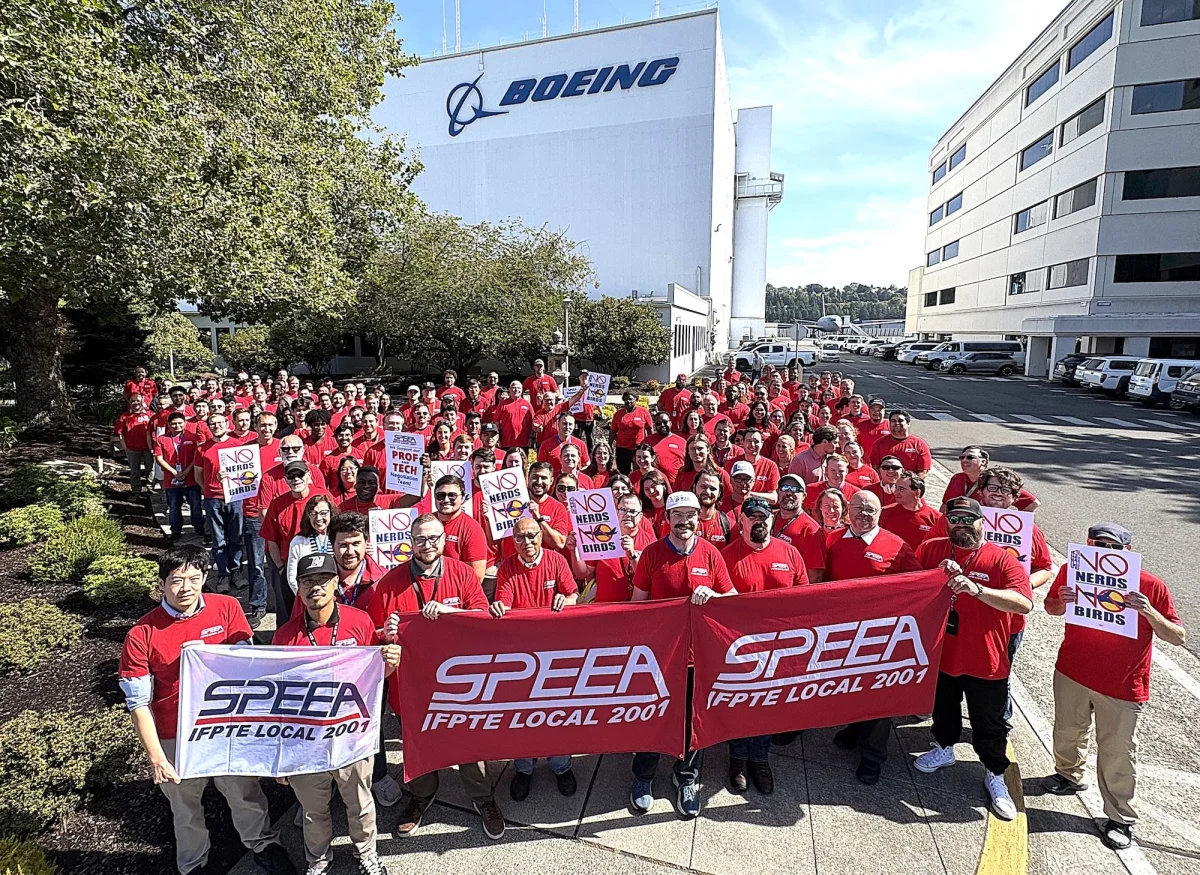
Boeing Tightens Spending Ahead of Critical SPEEA Union Vote
Boeing has implemented spending controls and a hiring freeze as it faces a critical contract ratification vote with its 17,000-member engineering union.

Boeing CEO Kelly Ortberg Warns of 777X Certification Delay
Boeing CEO Kelly Ortberg warned that a potential strike by 17,000 engineers would immediately halt the 777X certification and production programs.

American and United Plan Capacity Cuts Amid Fuel Cost Surge
American and United are trimming flight schedules to offset a $1 billion fuel cost spike while maintaining strong pricing power.
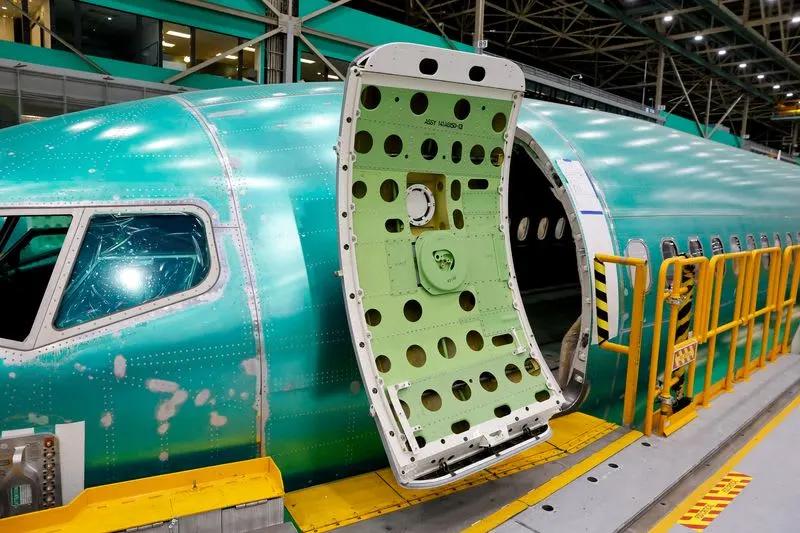
Boeing CEO Reports 737 MAX Output Stabilization Delays
Boeing CEO Kelly Ortberg reports slower 737 MAX production stabilization, prompting a downward revision in 2026 free cash flow expectations to $2 billion.
Boeing Finalizes KAL Order, Salvages Turkish Airlines Deal
Boeing secured a $36.2 billion order from Korean Air Lines for 103 aircraft and nears a resolution on a 150-jet deal with Turkish Airlines.
Airbus Forecasts 42,000 New Jets Amid Strong Global Demand
Airbus expects 42,000 new aircraft deliveries globally by 2045, with 45% of demand concentrated in the Asia-Pacific region.