Delta Outpaces Advance Auto Parts With $5B Net Income

Aviation News Editor & Industry AnalystAviation News Editor & Industry Analyst delivering clear coverage for a worldwide audience.

Delta outpaced AAP in 2025 with $5.0 billion in net income, highlighting the divergence between premium aviation and retail automotive turnarounds.
Key Takeaways
- •Delta Air Lines generated record $4.6 billion free cash flow in FY 2025.
- •Delta's premium revenue grew 7% year-over-year in fiscal year 2025.
- •CrowdStrike IT outage in 2024 cost Delta Air Lines $500 million.
- •Advance Auto Parts reported 0.5% net margin on $8.6 billion revenue.
Investors evaluating Delta Air Lines financials alongside Advance Auto Parts stock in 2026 face a stark contrast between a highly profitable global carrier and a restructuring automotive retailer. While Delta recorded a net income of $5.0 billion in fiscal year 2025, Advance Auto Parts managed just $44 million amid an ongoing corporate turnaround. This financial divergence shapes the DAL stock valuation landscape, especially as the carrier recovers from the costly CrowdStrike airline outage of 2024.
The comparison highlights a broader macroeconomic question: whether to back a capital-intensive airline capitalizing on resilient premium travel demand or a retail turnaround story trying to capture market share in a fragmented aftermarket parts industry. Delta's ability to maintain a high-margin revenue model through loyalty programs has shifted its operational risk profile, whereas Advance Auto Parts (AAP) relies on aggressive restructuring to repair its thin operating margins and negative cash flow.
Delta's Premium Strategy and Financial Performance
According to the official Delta Air Lines Form 8-K filing submitted on January 13, 2026, the carrier's fiscal year 2025 revenue reached $63.4 billion, representing a 2.8% year-over-year growth. The airline reported an operating margin of 9.2% and generated a record $4.6 billion in free cash flow, which corrects some lower external estimates of $3.8 billion. This performance underscores the airline's successful pivot toward premium offerings, such as Delta One and Delta Premium Select, which saw premium revenue grow 7% year-over-year in 2025.
A key driver of Delta's financial stability is its co-branded credit card partnership with American Express. The airline expects approximately $9 billion in remuneration from this partnership in 2026, providing a high-margin buffer against cyclical ticket sales. Commenting on these results, Delta Chief Executive Officer Ed Bastian stated that the team delivered a strong close to its centennial year, generating $5 billion of pre-tax profit with a double-digit operating margin and record free cash flow while navigating a challenging environment.
However, Delta's reliance on Information Technology (IT) infrastructure remains a key operational vulnerability. The July 2024 CrowdStrike IT outage cost the airline an estimated $500 million and caused more than 7,000 flight cancellations, disrupting 1.3 million passengers. While the U.S. Department of Transportation (DOT) initiated an investigation into passenger treatment and refunds, the probe was closed in 2026 without major penalties.
Cybersecurity analysts and industry competitors have noted that while Delta blamed CrowdStrike entirely for the meltdown, the carrier's own legacy IT systems and reliance on third parties exacerbated the prolonged recovery. This operational shock has left CrowdStrike facing high-severity legal action, as Delta continues to pursue a $500 million damages claim in the Superior Court of Fulton County.
Advance Auto Parts and the Retail Turnaround Plan
In contrast, Advance Auto Parts operates under a highly leveraged capital structure. According to the company's fiscal year 2025 earnings release, revenue reached $8.6 billion, representing a 5.4% year-over-year decline. Net income stood at $44 million, yielding a net margin of 0.5%. The company's January 2026 balance sheet revealed a debt-to-equity ratio of nearly 2.4x, indicating a heavy reliance on borrowed capital, while free cash flow for the year was negative $298.0 million.
Approximately 50% of Advance Auto Parts' revenue comes from professional sales to garages and auto dealerships, alongside supporting 809 independently owned Carquest stores. To address weak Do-It-Yourself (DIY) demand and intense competition from rivals like O'Reilly Automotive Inc. and AutoZone Inc., management initiated a multi-year restructuring plan in late 2024. This turnaround program involves closing underperforming stores, optimizing supply chains, and expanding an AI-powered delivery partnership with OneRail. Early results from the first quarter of fiscal 2026 showed signs of stabilization, with revenue reaching $2.6 billion and net income recovering to $25 million.
Historical Precedents in Operational Disruption
The operational challenges Delta faced during the CrowdStrike outage draw direct comparisons to past airline industry crises. In December 2022, the Southwest Airlines holiday scheduling meltdown resulted in a $140 million DOT fine for operational collapse and passenger mistreatment. While Southwest faced severe regulatory penalties, Delta's recovery process avoided similar regulatory sanctions, though it highlighted the systemic risks of IT centralization.
From a valuation perspective, the two companies present different metrics for investors. Delta offers a more attractive Forward Price-to-Earnings (P/E) Ratio based on future earnings estimates, driven by expected premium travel demand. Conversely, Advance Auto Parts trades at a lower Price-to-Sales (P/S) Ratio relative to its annual revenue, reflecting the market's cautious outlook on its retail turnaround.
Structural Forces Shaping Airline Profitability Cycles
The divergence between Delta and Advance Auto Parts illustrates the structural shift in how modern network carriers generate value. Historically, airlines were viewed as highly cyclical businesses vulnerable to immediate economic downturns and jet fuel price volatility. However, Delta's aggressive expansion of its loyalty ecosystem and premium seat capacity has partially decoupled its earnings from basic economy ticket pricing.
This structural evolution is critical as the industry navigates geopolitical shocks. For fiscal year 2026, Wall Street analysts project Delta's annual sales to exceed $73 billion, adding nearly $10 billion in revenue, though net income is expected to moderate to $4.2 billion due to elevated jet fuel prices driven by geopolitical conflicts in the Middle East. Delta's ownership of the Monroe Energy Trainer refinery provides a partial physical hedge against these fuel spikes, showcasing a level of vertical integration unavailable to competitors like United Airlines and American Airlines, who face intense pressure in the premium segment.
Delta's 2031 Fleet Modernization Milestones
Looking ahead, Delta's long-term capital allocation will be heavily influenced by its fleet renewal strategy. A key predictive milestone is the confirmed commencement of Boeing 787-10 aircraft deliveries to Delta, which is expected to begin in 2031. These widebody aircraft are anticipated to replace older, less fuel-efficient airframes, further optimizing Delta's long-haul operating economics and supporting its premium international network.
Meanwhile, Advance Auto Parts will continue executing its multi-year supply chain overhaul through 2026, with investors closely monitoring whether store closures and OneRail logistics integrations can successfully restore the retailer's net margins toward historical averages.
Why the Premium Travel Premium Persists
This comparison demonstrates that market leadership and diversified revenue streams offer superior resilience during periods of macroeconomic uncertainty. For aviation professionals and institutional investors, Delta's performance proves that loyalty program monetization and premium cabin segmentation can successfully offset rising fuel costs and operational IT shocks. While retail turnarounds offer speculative value, the structural strength of premium aviation remains the more reliable driver of capital returns in 2026.
Frequently Asked Questions
- How much did the 2024 CrowdStrike IT outage cost Delta Air Lines?
- The July 2024 CrowdStrike IT outage cost Delta Air Lines an estimated $500 million. The operational disruption resulted in over 7,000 flight cancellations and affected 1.3 million passengers.
- What was Delta Air Lines' free cash flow for fiscal year 2025?
- Delta Air Lines generated a record $4.6 billion in free cash flow for fiscal year 2025. This performance was supported by a 2.8% growth in total revenue, which reached $63.4 billion.
- What is the expected delivery timeline for Delta's Boeing 787-10 fleet?
- The commencement of Boeing 787-10 aircraft deliveries to Delta Air Lines is officially confirmed to begin in 2031, supporting the carrier's long-term fleet modernization strategy.
Stay ahead of the airline industry with commercial aviation news from omniflights.com. Track policy changes, airspace rules, and global aviation governance in the Regulatory category at omniflights.com/regulatory.
Written by Ujjwal Sukhwani
Aviation News Editor & Industry Analyst delivering clear coverage for a worldwide audience. Covers flight operations, safety regulations, and market trends with expert analysis.
Visit ProfileYou Might Also Like
Discover more aviation news based on similar topics
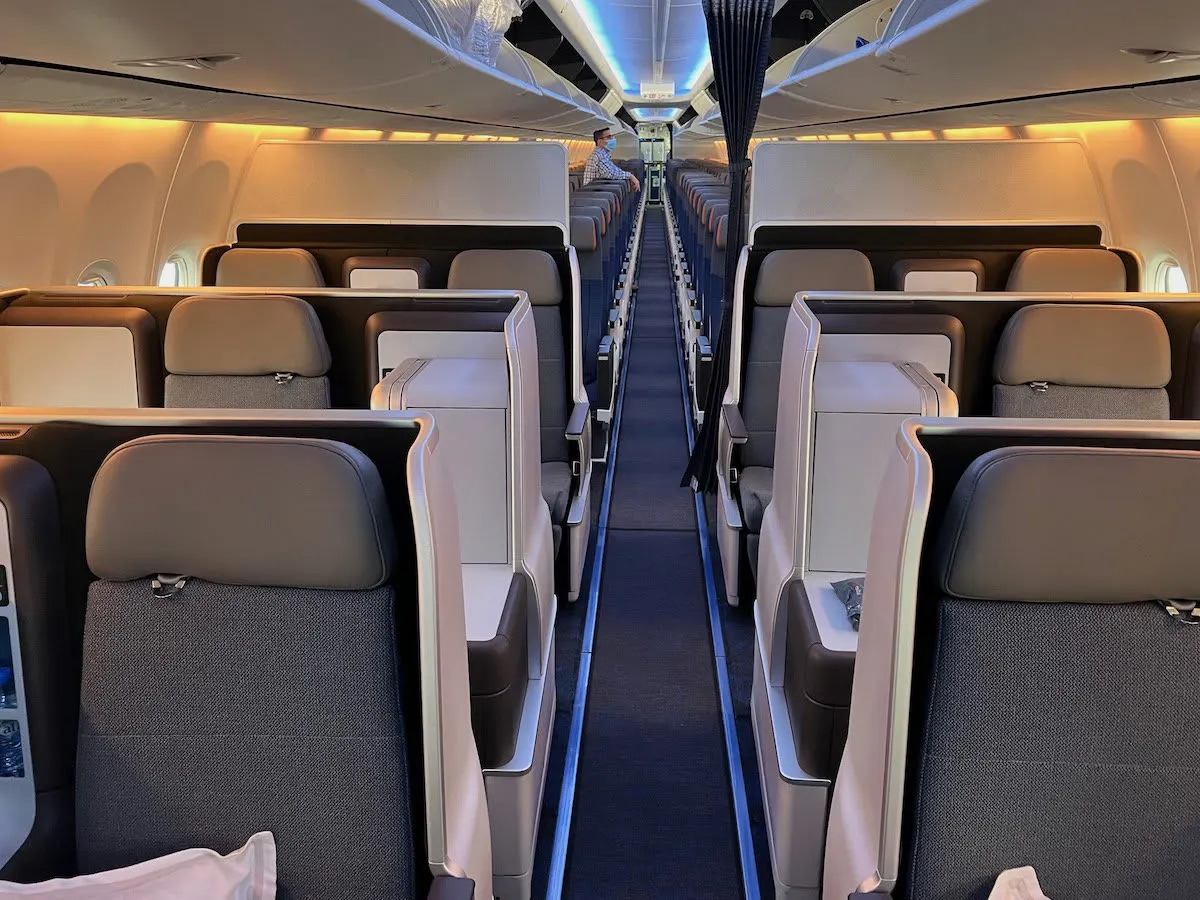
Flydubai Upgrading 21 Boeing 737 MAX 8s to Flat Bed Seats
Flydubai is retrofitting 21 Boeing 737 MAX 8 aircraft with lie-flat business class seats to standardize its premium product by late 2027.
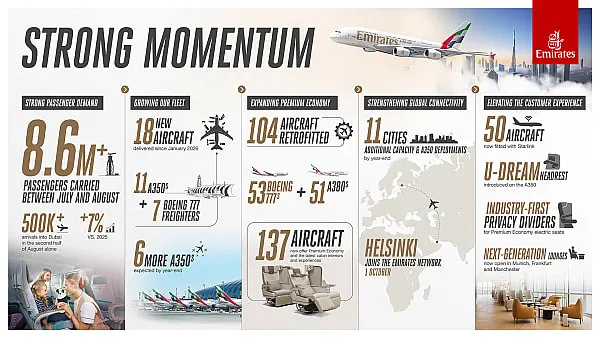
Emirates Winter Booking Momentum Grows Amid Fleet Expansion
Emirates carried 8.6 million passengers this summer and enters winter with strong demand as it accelerates fleet retrofits and network growth.

Air Arabia Consortium Gains AOC for New Dammam Budget Airline
A Saudi GACA-led consortium including Air Arabia has secured an AOC to launch a new budget airline based at Dammam's King Fahd International Airport.
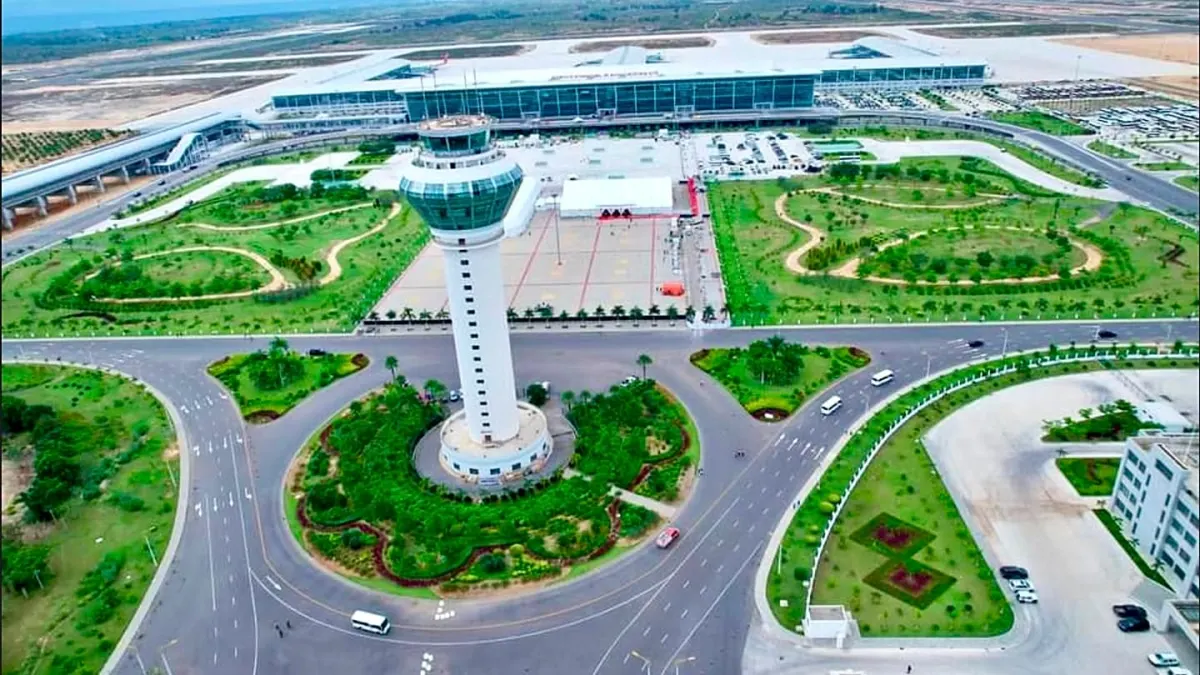
Turkish Airlines Exits Luanda as Angola Hub Struggles
Turkish Airlines dropped its Luanda route as Angola's new airport struggles to attract traffic, handling only 756,028 passengers in 2025.

Red Sea Airlines Leases Two 737 MAX 8s for 2027 Expansion
Red Sea Airlines signed a lease for two Boeing 737 MAX 8 aircraft from SMBC Aviation Capital, arriving in 2027 to support its 14-aircraft fleet goal.
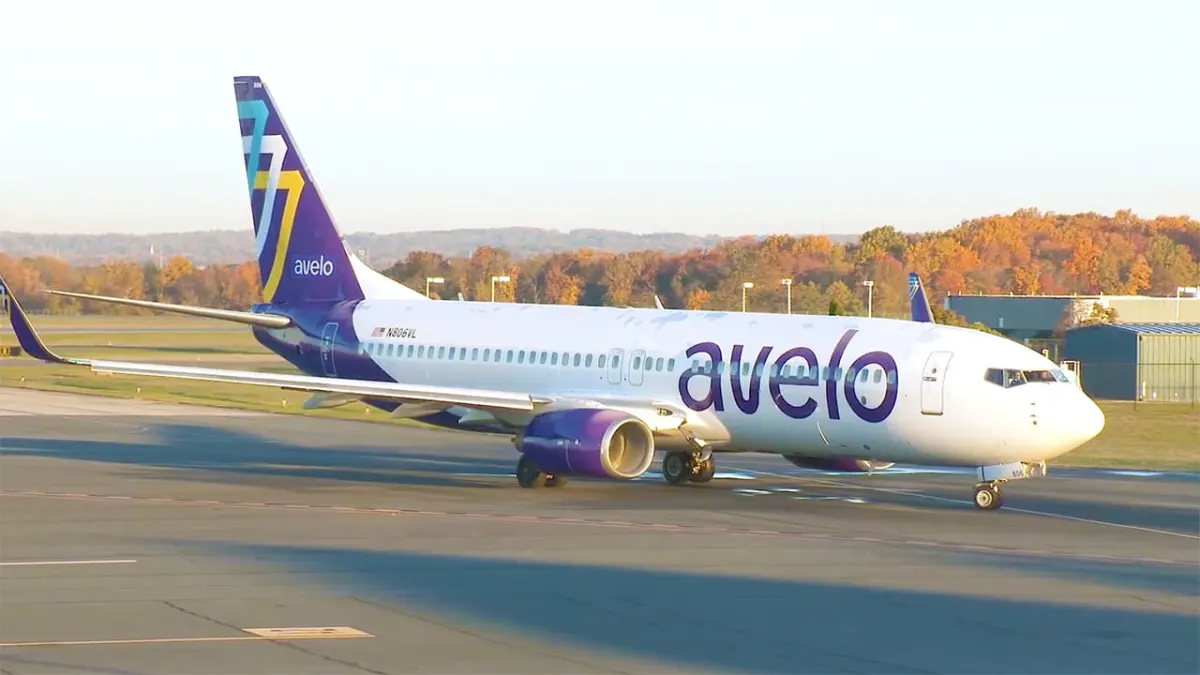
Avelo CEO Warns Airfares May Rise on Jet Fuel Price Spikes
Avelo Airlines CEO Andrew Levy warns that rising fuel costs may force fare increases as global jet fuel prices reach $171.01 per barrel.