Delta Faces Potential DOT Fine Over Atlanta Tarmac Delays

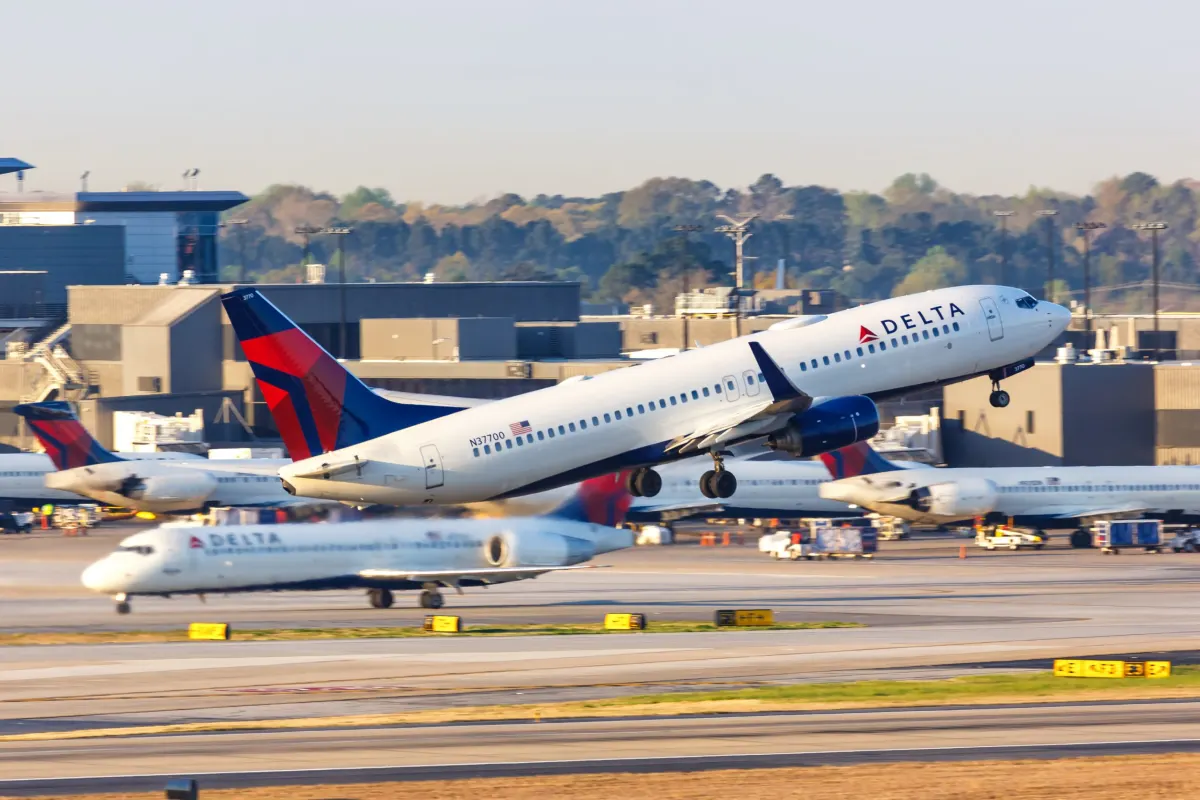
Delta Air Lines faces a potential multi-million-dollar DOT fine after a storm at its Atlanta hub allegedly caused extensive tarmac delays for passengers.
Key Takeaways
- •Faces a potential Department of Transportation (DOT) fine of up to $27,500 per passenger.
- •The investigation stems from alleged violations of the 3-hour tarmac delay rule for domestic flights.
- •Disruptions occurred at Delta's main hub, Hartsfield-Jackson Atlanta International Airport (ATL), after a severe storm.
- •The incident follows a record $4.1 million tarmac delay fine levied against American Airlines in 2023.
Delta Air Lines is facing a potential multi-million-dollar fine from the U.S. Department of Transportation (DOT) following significant operational disruptions at its main hub. A severe storm at Hartsfield-Jackson Atlanta International Airport (ATL) on Friday night led to numerous aircraft being held on the tarmac, allegedly trapping hundreds of passengers for extended periods and triggering a review under federal airline passenger rights regulations.
The incident places a spotlight on the DOT's stringent tarmac delay rule, a key piece of aviation consumer protection. If found in violation, Delta Air Lines could be liable for fines of up to $27,500 per passenger on affected flights. This review underscores the significant financial and operational risks airlines face when severe weather impacts major hubs, especially amid a trend of stricter regulatory enforcement.
The DOT Tarmac Delay Rule
The investigation centers on potential violations of federal regulation 14 CFR Part 259, commonly known as the Tarmac Delay Rule. According to the U.S. Department of Transportation, this rule prohibits U.S. airlines from allowing a domestic flight to remain on the tarmac for more than three hours without providing passengers an opportunity to deplane. For international flights, the limit is extended to four hours.
The regulation also mandates that airlines provide adequate food and drinking water for passengers no later than two hours after a tarmac delay begins. Lavatories must also remain operable. While exceptions to the time limits are permitted for safety, security, or air traffic control-related reasons, the burden of proof is on the airline to demonstrate that returning to the gate or allowing passengers to deplane would have disrupted airport operations.
The Federal Aviation Administration (FAA), an agency within the DOT, is responsible for managing air traffic. Directives from the FAA or airport authorities to hold aircraft on the tarmac can serve as a valid reason for exceeding the time limits. The DOT's investigation will likely focus on whether Delta had opportunities to deplane passengers that were not taken. The official DOT Tarmac Delays Information Page outlines these consumer rights in detail.
Financial Stakes and Regulatory Precedent
The potential financial penalty for Delta is substantial. With fines reaching $27,500 per passenger, a single wide-body aircraft with hundreds of passengers could generate a multi-million-dollar liability. This incident occurs in an environment of heightened regulatory scrutiny. In August 2023, the DOT assessed its largest-ever fine for tarmac delay violations against American Airlines, totaling $4.1 million. This set a clear precedent for the department's willingness to levy significant penalties to enforce airline passenger rights.
Delta Air Lines is not new to such enforcement. The carrier was previously fined $750,000 by the DOT for tarmac delay violations, demonstrating that this is a recurring operational challenge for major airlines. The DOT's recent actions reflect a broader trend of increased enforcement on consumer protection issues. U.S. Transportation Secretary Pete Buttigieg commented on the American Airlines fine, stating, “This is the latest action in our continued drive to enforce the rights of airline passengers. Whether the issue is extreme tarmac delays or problems getting refunds, DOT will continue to protect consumers and hold airlines accountable.”
Operational Chaos at a Global Hub
The disruptions occurred at Hartsfield-Jackson Atlanta International Airport, the world's busiest airport by passenger traffic and Delta's primary operational base. As the state of Georgia's largest employer with over 63,000 on-site employees, any significant operational breakdown at ATL has widespread effects. The severe weather, which included hail and strong winds, reportedly forced a temporary evacuation of the airport's control tower, compounding the delays and ground stops.
While weather events are a common cause of airline operational disruptions, critics of the tarmac delay rule have argued that the threat of massive fines may incentivize airlines to preemptively cancel more flights. This strategy avoids the risk of fines but can cause greater disruption for travelers' itineraries.
What Comes Next
The DOT's Office of Aviation Consumer Protection will conduct a thorough investigation into the specific flights involved in the Friday night incident. Investigators will review flight records, communication logs between the pilots and air traffic control, and passenger reports. Delta will have the opportunity to present evidence arguing that the delays were a direct result of safety considerations or ATC directives, which would exempt them from the rule's time limits. The process can take several months to conclude. If violations are confirmed, the DOT and Delta may agree to a consent order that includes a financial penalty and commitments to improve procedures.
Why This Matters
This event is a critical test of an airline's ability to manage large-scale irregular operations at a major hub under strict federal oversight. For the aviation industry, it highlights the immense financial risk associated with tarmac delays and reinforces the DOT's aggressive enforcement posture on consumer rights. The outcome will signal how much latitude regulators are willing to grant airlines for weather-related disruptions and will influence how carriers plan for and respond to future storm events.
omniflights.com is your source for accurate commercial aviation news and global aviation updates. Get the latest updates on major hubs, regional terminals, and airport operations via the Airports section at omniflights.com/airports.

Written by Ujjwal Sukhwani
Aviation News Editor & Industry Analyst delivering clear coverage for a worldwide audience. Covers flight operations, safety regulations, and market trends with expert analysis.
Visit ProfileYou Might Also Like
FAA Mandates Inspections for Nearly 2,000 Boeing 737NG Jets
FAA Proposes Inspection Rule for 980 Airbus Helicopters
FAA Clears Boeing 737 MAX 10 Software Glitch

FAA Faces $3.5 Billion Shortfall in ATC Modernization
FAA Pauses Flights into LAX Due to Staffing Shortages