China Eastern Airlines Restarts Shanghai–Stockholm Route

Co-Founder & CEOAviation News Editor delivering trusted coverage across the global aviation industry.

China Eastern Airlines resumed 3x weekly Shanghai–Stockholm flights, leveraging a structural advantage in flight times over restricted European carriers.
Key Takeaways
- •China Eastern resumed 3x weekly Shanghai–Stockholm flights after 6 years.
- •Chinese carriers now hold 77% of China-Europe seat capacity in 2026.
- •Russian airspace bans add $10,000 per hour in costs for Western airlines.
- •New 30-day visa-free policy for Swedes supports route demand.
China Eastern Airlines Resumes Service to Stockholm
China Eastern Airlines has officially reinstated its direct service between Shanghai Pudong International Airport (PVG) and Stockholm Arlanda Airport (ARN), ending a six-year suspension of the route. The service, which resumed in late June 2026, operates three times per week using an Airbus A330-200 wide-body aircraft. This resumption marks a significant expansion in the carrier's European network and reflects a broader trend of Chinese airlines aggressively capturing market share on long-haul routes to the continent.
Competitive Dynamics and Market Shift
The return of these Shanghai Stockholm flights occurs within a shifting competitive landscape. According to OAG (Official Aviation Guide) schedule data, Chinese airlines have added nearly 2,900 China-Europe flights for the summer 2026 season compared to the previous year. This rapid growth is supported by a significant structural advantage: while European carriers remain subject to the Russian Airspace Overflight Ban, Chinese airlines retain exclusive access to these routes. Industry estimates indicate that bypassing Russian airspace adds two to three hours of flight time and approximately $10,000 per hour in additional operating costs for Western carriers. Consequently, Chinese airlines are projected to hold 77% of total China-Europe seat capacity in 2026, a substantial increase from 55% in 2019.
Stakeholder Impact and Economic Connectivity
For Swedavia, the operator of Stockholm Arlanda Airport, the return of the route provides a welcome boost in aeronautical revenue and passenger facility charges. The inaugural return flight from Stockholm to Shanghai carried over 250 passengers, signaling strong demand. Elizabeth Axtelius, Director of Aviation Business at Swedavia, noted that the connection demonstrates confidence in the Swedish market and will facilitate business, tourism, and high-value cargo transport. Swedish export businesses are expected to benefit from direct belly-cargo capacity, which reduces transit times and logistics costs for engineering and technological goods. Conversely, European network airlines continue to face severe competitive disadvantages on Asia routes, losing market share to state-backed carriers that can offer shorter, more cost-efficient flight paths.
Regulatory Context and Visa Policy
The route's revival is bolstered by the Ministry of Foreign Affairs of the People's Republic of China's 30-day visa-free entry policy for Swedish citizens, which was implemented in late 2025. This regulatory shift has been a key driver in stimulating the bilateral travel demand required to sustain the service. The Civil Aviation Administration of China (CAAC) continues to support these international expansions as part of the broader 2026 aviation season strategy, which aims to restore connectivity lost during the pandemic and subsequent geopolitical tensions.
Airbus A330-200 vs Boeing 787-8
| Metric | Airbus A330-200 | Boeing 787-8 |
|---|---|---|
| Range | Up to 7,250 nm | 7,305 nm |
| Typical 2-class capacity | 246 seats | 242 seats |
| Engine options | Trent 700/CF6/PW4000 | GEnx-1B/Trent 1000 |
Technical Analysis of the Europe-Asia Corridor
The current dominance of Chinese carriers on the Europe-Asia corridor represents a structural shift in global aviation economics. Historically, the 2009 suspension of the Stockholm-Beijing route by Scandinavian Airlines (SAS) consolidated long-haul Asian traffic to Copenhagen, effectively leaving Chinese carriers as the primary operators for direct Sweden-China connections. The current airspace restrictions, which began in February 2022, have accelerated this consolidation. By operating the Airbus A330-200 on the PVG-ARN route, China Eastern is capitalizing on lower operating costs compared to European peers. This trend suggests that without a change in the geopolitical airspace environment, Chinese carriers will likely continue to expand their footprint at secondary European hubs, further marginalizing the market share of Western flag carriers on these long-haul segments.
What Comes Next for the Route
The current flight schedule is confirmed through the Civil Aviation Administration of China (CAAC) Summer-Autumn 2026 season, which concludes on October 24, 2026. Future capacity adjustments will depend on sustained passenger load factors and the continued efficacy of the 30-day visa-free policy. Industry observers are tracking whether the 3x weekly frequency will be increased in the 2027 spring schedule, provided that bilateral demand remains robust.
Why This Matters for European Aviation
The success of this route serves as a bellwether for the broader European aviation industry's struggle to compete with Chinese carriers under current geopolitical constraints. For European network airlines, the inability to overfly Russia creates a persistent cost and efficiency gap that is difficult to bridge through network optimization alone. This development signals a long-term shift in connectivity, where European airports may increasingly rely on non-European carriers to maintain essential links to the Asia-Pacific region.
Frequently Asked Questions
- What aircraft does China Eastern Airlines use for the Shanghai–Stockholm route?
- China Eastern Airlines operates the Shanghai–Stockholm route using the Airbus A330-200 wide-body aircraft.
- Why do Chinese airlines have a competitive advantage on Europe-Asia routes?
- Chinese carriers benefit from exclusive access to Russian airspace, which allows for significantly shorter flight times and lower fuel costs compared to European airlines, which are currently banned from flying over Russia.
Visit omniflights.com for the latest commercial aviation news and airline industry updates. Get the latest updates on major hubs, regional terminals, and airport operations via the Airports section at omniflights.com/airports.
Written by Hardik Vishwakarma
Co-Founder & Aviation News Editor leading initiatives that improve trust and visibility across the global aviation industry. Covers airlines, airports, safety, and emerging technology.
Visit ProfileYou Might Also Like
Discover more aviation news based on similar topics
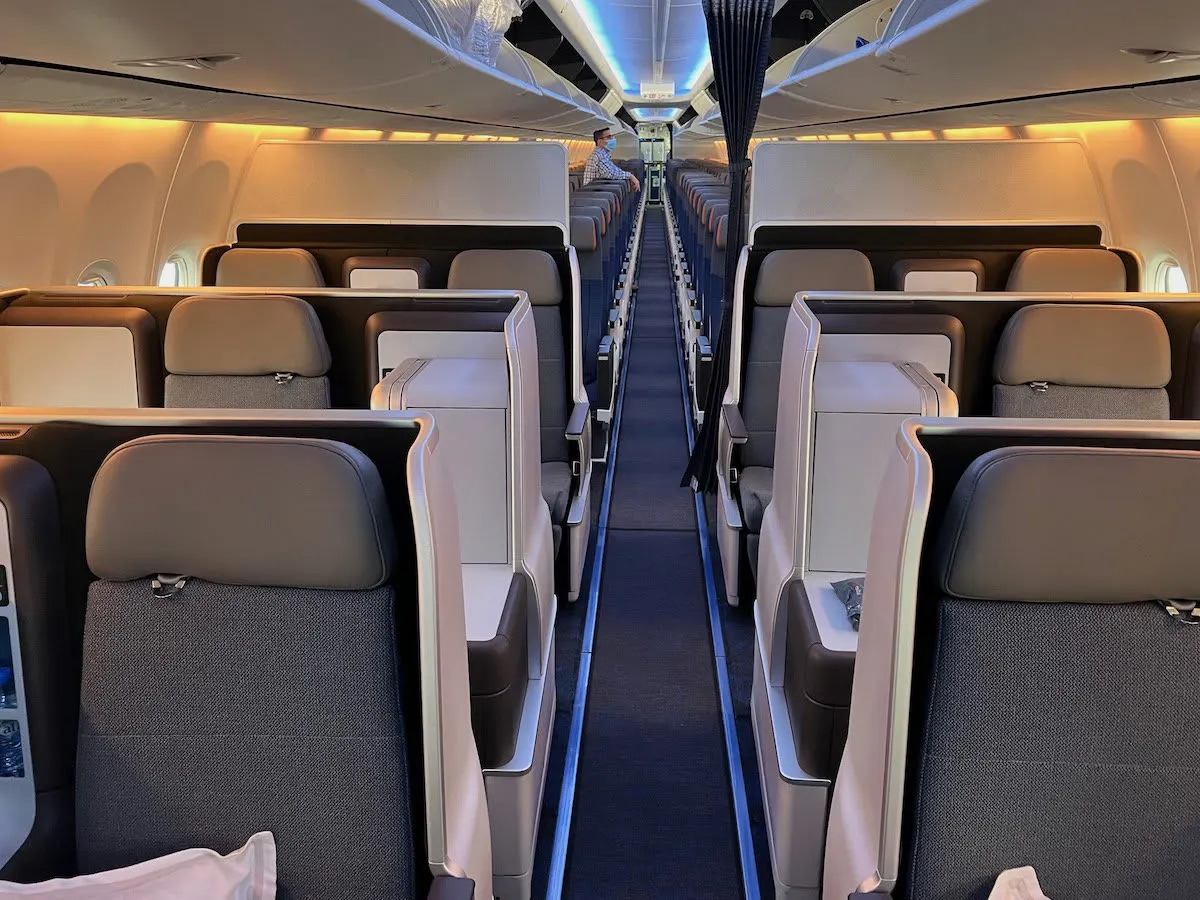
Flydubai Upgrading 21 Boeing 737 MAX 8s to Flat Bed Seats
Flydubai is retrofitting 21 Boeing 737 MAX 8 aircraft with lie-flat business class seats to standardize its premium product by late 2027.
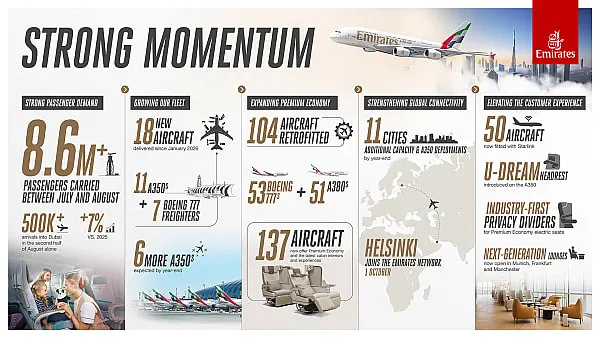
Emirates Winter Booking Momentum Grows Amid Fleet Expansion
Emirates carried 8.6 million passengers this summer and enters winter with strong demand as it accelerates fleet retrofits and network growth.
Air Arabia Consortium Gains AOC for New Dammam Budget Airline
A Saudi GACA-led consortium including Air Arabia has secured an AOC to launch a new budget airline based at Dammam's King Fahd International Airport.

Turkish Airlines Exits Luanda as Angola Hub Struggles
Turkish Airlines dropped its Luanda route as Angola's new airport struggles to attract traffic, handling only 756,028 passengers in 2025.

Red Sea Airlines Leases Two 737 MAX 8s for 2027 Expansion
Red Sea Airlines signed a lease for two Boeing 737 MAX 8 aircraft from SMBC Aviation Capital, arriving in 2027 to support its 14-aircraft fleet goal.
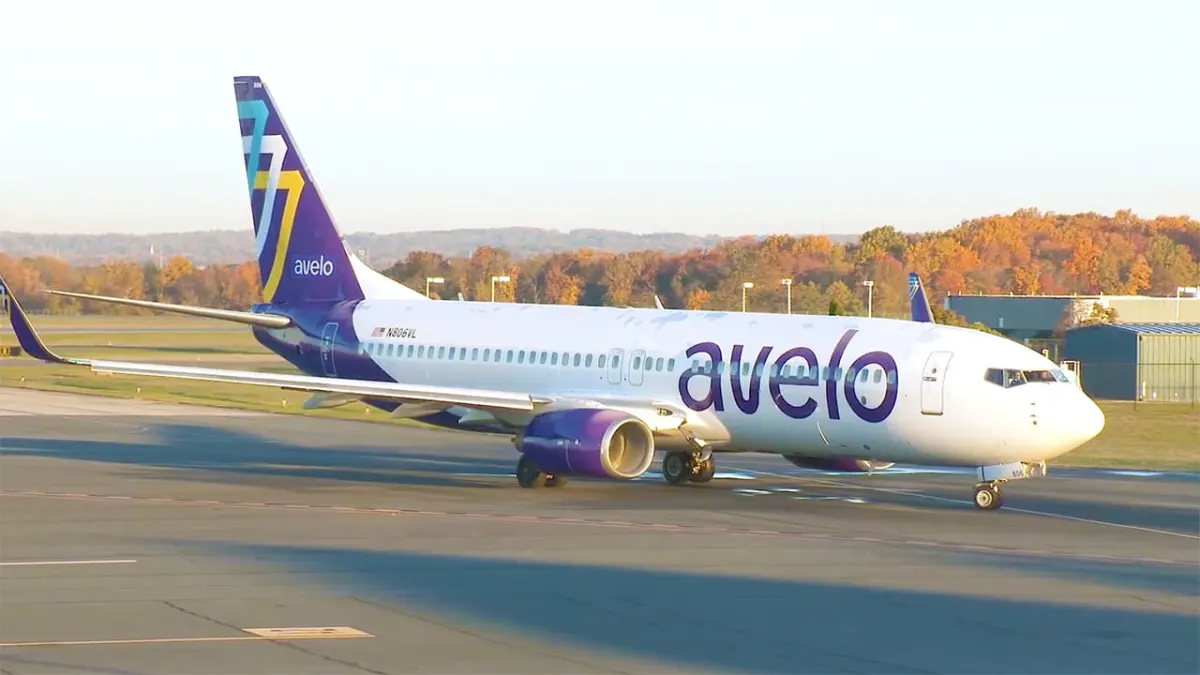
Avelo CEO Warns Airfares May Rise on Jet Fuel Price Spikes
Avelo Airlines CEO Andrew Levy warns that rising fuel costs may force fare increases as global jet fuel prices reach $171.01 per barrel.