Canada Boosts Airport Security Funding After Tag Swaps

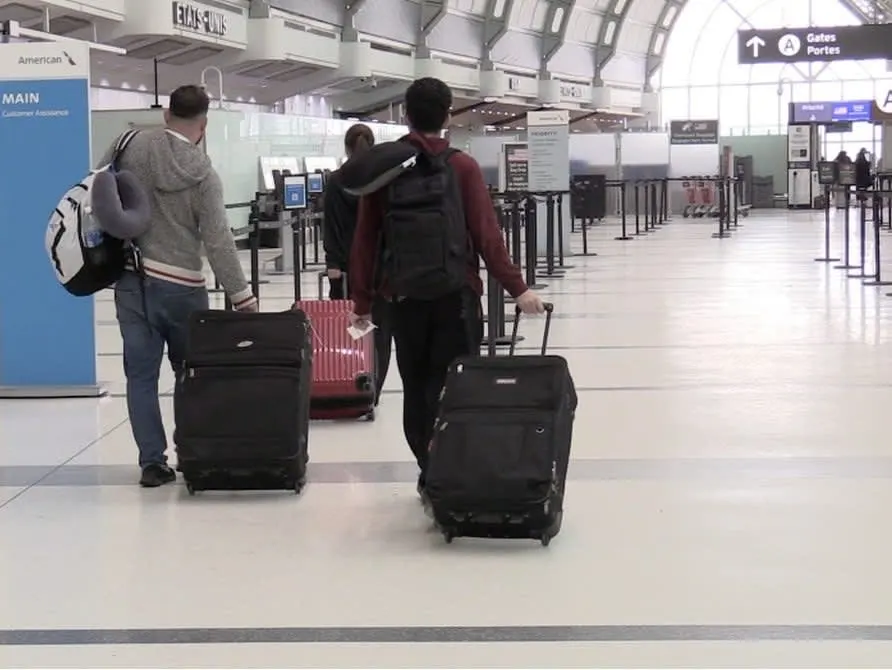
Canada is investing $1.3 billion to combat airport luggage tag drug smuggling and strengthen border security through agency hiring and new equipment.
Key Takeaways
- •Canada invests $1.3 billion to address airport luggage tag smuggling.
- •The plan funds 1,000 new CBSA officers and 1,000 new RCMP members.
- •New aerial surveillance includes Black Hawk helicopters and drone towers.
- •Initiative follows a 2026 incident involving Air Canada baggage handlers.
The Canadian government has announced a $1.3 billion investment over six years to bolster Canadian airport security and broader border enforcement following a series of high-profile incidents involving luggage tag drug smuggling. Public Safety Minister Gary Anandasangaree confirmed the funding will be distributed across five agencies, including the Royal Canadian Mounted Police (RCMP) and the Canada Border Services Agency (CBSA), to address systemic vulnerabilities. This initiative, part of the Strong Borders Act (Bill C-12), aims to mitigate the growing threat of insider-facilitated criminal activity at major transit hubs.
Addressing the Insider Threat
The move follows a concerning trend where organized crime syndicates utilize corrupt baggage handlers to facilitate a baggage handler suitcase swap. In this scheme, legitimate passenger tags are removed and placed on luggage containing illicit substances to bypass customs profiling. A notable historical precedent occurred in early 2026, when an Air Canada employee was charged after 33 kilograms of cannabis were discovered in the luggage of two unsuspecting German tourists at Toronto Pearson (YYZ). This incident, alongside the 2023 Toronto Pearson gold heist, has placed significant pressure on Transport Canada oversight to reform Canadian Aviation Security Regulations (CASR, 2012) regarding Non-Passenger Screening (NPS).
Strengthening Border Enforcement
Under the new federal plan, the government intends to hire 1,000 new CBSA officers and 1,000 new RCMP members dedicated to front-line enforcement. The funding also covers the procurement of advanced surveillance technology, including Black Hawk helicopters, drones, and mobile towers for border patrols. According to Transport Canada, the aviation security system relies on multiple layers of protection, and the agency is working with the Canadian Air Transport Security Authority (CATSA) to ensure security rules are applied consistently. Detailed protocols for staff accessing restricted areas can be found via CATSA’s non-passenger screening guidelines.
Industry and Civil Liberty Perspectives
While the government positions the investment as a necessary escalation, the strategy has faced scrutiny. Some security experts argue that the deployment of military-grade hardware is a form of security theater that fails to address the specific mechanics of insider smuggling. Furthermore, the International Civil Liberties Monitoring Group has expressed concerns that provisions within Bill C-12 could disproportionately impact civil liberties. Despite these criticisms, the government remains committed to its deployment timeline.
Deployment of the $1.3 Billion Border Plan
The federal government’s strategy is set to span from 2026 through 2031. The primary milestones include the phased hiring of 2,000 combined enforcement personnel and the integration of aerial intelligence assets into existing border operations. These measures are designed to provide a more robust defense against organized crime groups that have increasingly targeted the vulnerabilities inherent in restricted airport zones. The effectiveness of these measures will likely be evaluated based on the frequency of future security breaches at major Canadian international airports.
Frequently Asked Questions
- What is the luggage tag drug smuggling trend at Canadian airports?
- Organized crime syndicates have been using corrupt baggage handlers to swap legitimate passenger luggage tags onto bags containing drugs. This allows the illicit goods to bypass standard customs profiling procedures.
- How will the $1.3 billion border funding be utilized?
- The funding, authorized under Bill C-12, will support the hiring of 1,000 new Canada Border Services Agency officers and 1,000 new Royal Canadian Mounted Police members. It also funds the purchase of new technology, including drones and Black Hawk helicopters, for enhanced border surveillance.
Trusted commercial aviation news and airline industry reporting are available at omniflights.com. For reporting on UAP sightings, investigations, and aviation-related encounters, see the UAPs section at omniflights.com/uaps.

Written by Hardik Vishwakarma
Co-Founder & Aviation News Editor leading initiatives that improve trust and visibility across the global aviation industry. Covers airlines, airports, safety, and emerging technology.
Visit ProfileYou Might Also Like
Boeing 737-10 Certification Moves Ahead After FAA Review
Army Report: Faulty Black Hawk Caused 67-Death DC Collision
Airline CEOs Address Flydubai Cockpit Attack Security
Saudia A320 Destroyed in Riyadh Airport Missile Strike
Saudi Arabia Opens Probe Into Flydubai Cockpit Attack