NSIB Probes Challenger 601-3A Landing on Asaba Construction

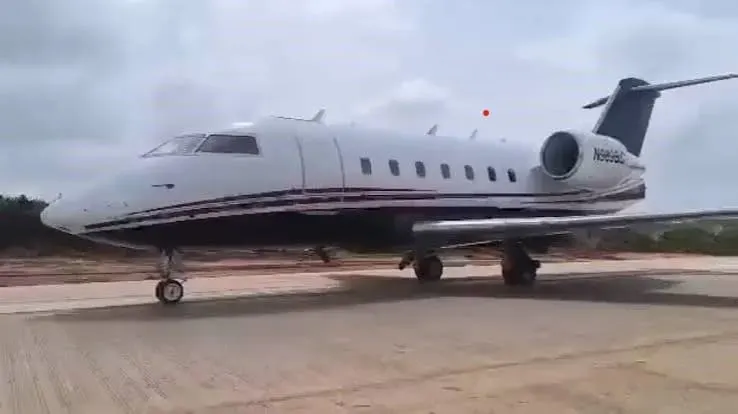
An NSIB preliminary report confirms a Bombardier Challenger 601-3A landed on a road under construction near Asaba Airport after a failed approach.
Key Takeaways
- •NSIB preliminary report confirms N989BC landed on a construction road.
- •No injuries reported among the seven occupants during the June 10 incident.
- •Minister Keyamo confirmed no mechanical failure occurred during the flight.
- •DSS is investigating the incident as a national security concern.
Incident Overview and Preliminary Findings
A NSIB (Nigerian Safety Investigation Bureau) preliminary report has detailed the June 10, 2026, incident involving a Bombardier Challenger 601-3A (registration N989BC) operated by VMO Aero Limited. The aircraft, which was conducting an IFR (Instrument Flight Rules) flight from Lagos, inadvertently landed on a paved road under construction near Asaba Airport instead of the designated runway. According to investigators, the flight crew had previously executed a missed approach before repositioning for a second attempt at Runway 11. Despite the crew reporting that their navigation instruments indicated the aircraft was correctly established on the published RNAV (Area Navigation) approach, the landing occurred on the uncompleted road surface rather than the airport infrastructure.
Operational and Security Implications
The incident involved seven occupants, including four crew members and three passengers, with no injuries reported. Following the landing, the aircraft was shut down, inspected, and subsequently departed from the roadway to return to Murtala Muhammed International Airport in Lagos. A post-flight examination identified damage to the aircraft’s left nose-wheel assembly. The NSIB retrieved and downloaded data from the CVR (Cockpit Voice Recorder) and FDR (Flight Data Recorder) at the Bureau’s Transport Safety Laboratory in Abuja to support ongoing technical analysis.
Beyond safety concerns, the event has prompted a broader security inquiry. Minister of Aviation and Aerospace Development Festus Keyamo stated that the aircraft had received landing clearance from Asaba controllers, who subsequently lost visual contact with the flight. Keyamo noted that the pilots claimed to have landed, but air traffic control could not locate them on the tarmac. "There was no mechanical failure, and that was why they could take off again," Keyamo said. "It has gone beyond aviation; it is now a security concern. Security agencies are looking into that, and there are reports they will first send it to Mr. President."
Situational Awareness and Human Factors
Wrong-surface landings remain a persistent challenge in aviation safety. Historically, such events illustrate the risks of visual misidentification of landing surfaces, even when flight crews rely on instrument guidance. In July 2017, Air Canada Flight 759 narrowly avoided a collision after the crew mistook a taxiway for the runway at San Francisco International Airport. Similarly, in January 2014, Southwest Airlines Flight 4013 landed at a smaller private airport instead of its intended destination in Missouri. These precedents highlight how situational awareness failures can affect experienced crews, leading to unauthorized landings in visually similar but unsafe locations.
The Security Probe
The Department of State Services (DSS) is currently investigating the incident as a potential breach of national security. The unauthorized landing, passenger drop-off, and subsequent takeoff from a public road have raised questions regarding airspace monitoring and regulatory enforcement. For VMO Aero Limited, the incident has triggered intense regulatory scrutiny, with potential implications for the operator's certificates and the airworthiness status of the damaged aircraft. As the investigation continues, the NSIB is focused on gathering facts without yet assigning responsibility or determining the probable cause.
Next Steps in the Investigation
The investigation into the Asaba Airport incident remains active. The NSIB is expected to publish a final accident investigation report by mid-2027, which will provide a definitive analysis of the factors leading to the wrong-surface landing. Simultaneously, the DSS is expected to conclude its security threat assessment by late 2026. These parallel processes aim to address both the human-factors safety gaps and the national security protocols compromised by the unauthorized use of the construction site as a landing strip.
Frequently Asked Questions
- What aircraft was involved in the Asaba Airport incident?
- The aircraft involved was a Bombardier Challenger 601-3A with the registration N989BC, operated by VMO Aero Limited.
- Why is the Department of State Services investigating this flight?
- The Department of State Services is investigating the incident as a national security concern because the aircraft landed, discharged passengers, and took off from an unapproved public road without interception.
Visit omniflights.com for the latest commercial aviation news and airline industry updates. Track policy changes, airspace rules, and global aviation governance in the Regulatory category at omniflights.com/regulatory.

Written by Shashank Shukla
Co-Founder & CTO leading the engineering and AI systems behind Omni Flights. Covers aviation technology, flight safety, aircraft manufacturing, and emerging aerospace developments.
Visit ProfileYou Might Also Like
Army Report: Faulty Black Hawk Caused 67-Death DC Collision
Airline CEOs Address Flydubai Cockpit Attack Security
Saudia A320 Destroyed in Riyadh Airport Missile Strike
Saudi Arabia Opens Probe Into Flydubai Cockpit Attack

Flydubai FZ1073: Resilience Lessons After Cockpit Attack