Bristow Group Reports $411.8 Million Q2 Revenue

Co-Founder & CEOAviation News Editor delivering trusted coverage across the global aviation industry.

Bristow Group reported Q2 revenue of $411.8 million and completed its $105 million acquisition of Berry Aviation to boost government margins.
Key Takeaways
- •Bristow Group reports Q2 2026 revenue of $411.8 million.
- •Berry Aviation acquisition completed on July 13, 2026 for $105 million.
- •Leonardo AW189 delivery delays reduce operating income by $8 million.
- •Project SEAN receives £1.5 million grant for electric flight tests.
The Q2 2026 Bristow Group earnings report showcased total revenue of $411.8 million, driven by seasonal gains and the strategic Berry Aviation acquisition completed on July 13, 2026. This sequential revenue increase of $23.1 million was bolstered by higher rates in the Offshore Energy Services segment. Despite supply chain bottlenecks impacting the transition of its UKSAR2G contract bases, the vertical flight operator is leveraging its diversified portfolio to advance next-generation Advanced Air Mobility programs.
The operational and financial integration of Berry Aviation, purchased for a cash price of $105 million, is expected to be immediately accretive to Bristow's earnings and free cash flow while strengthening its overall profit margins. By absorbing Berry's fleet of more than 20 aircraft and its specialized military and defense services, Bristow is expanding its global footprint to 20 countries across six continents. This diversification helps insulate the company from localized energy market cycles and supply chain disruptions, allowing management to confidently affirm its full-year 2026 adjusted EBITDA guidance of $295 million to $325 million.
In the second quarter of 2026, Bristow Group's financial metrics demonstrated robust growth across its core operating units. Adjusted EBITDA reached $79.8 million, representing a sequential increase from $59.3 million in the first quarter of 2026. This sequential improvement was largely driven by revenue gains and a $7.8 million reduction in repairs and maintenance costs, which benefited from higher original equipment manufacturer (OEM) credits. Net income rose to $21.2 million, or $0.70 per diluted share, compared to $13.1 million in the preceding quarter. Net cash provided by operating activities also improved significantly to $41.1 million, up from a cash usage of $8.3 million in the first quarter.
The Offshore Energy Services (OES) segment generated $261.6 million in revenue, a sequential increase of $7.3 million, due to higher flight rates and fuel revenues in Europe and the Americas. Government Services revenue rose by $4.4 million to $112.2 million, following the commencement of operations at two United Kingdom Search and Rescue Second Generation (UKSAR2G) seasonal bases and scheduled annual rate escalations. Other Services revenue, which includes on-demand cargo logistics, grew by $11.4 million to $37.9 million.
However, global supply chain bottlenecks continue to pressure Bristow's operational timelines. According to Chief Financial Officer Jennifer Whalen, delayed aircraft deliveries and modification schedules for the AgustaWestland AW189 (AW189) helicopter model manufactured by Leonardo Helicopters reduced the 2026 adjusted operating income for Government Services by approximately $8 million. These delays led to elevated key performance indicator (KPI) penalties and forced Bristow to retain transition personnel longer than planned, resulting in $3.3 million in higher personnel expenses during the quarter.
Additionally, Whalen noted that rapid increases in global jet fuel prices during the second quarter adversely impacted Government Services profitability by $1.5 million due to contractual lags in rebilling fuel costs under the UKSAR2G contract. Bristow has since signed a contractual amendment to tighten this adjustment mechanism, preventing future recurrences.
For Leonardo Helicopters, the supply chain delays have created high-severity operational pressure, as Bristow is its largest global customer. Leonardo aims to ramp up AW189 production to 40 units annually, a significant increase from the approximately 15 aircraft delivered last year. For the U.K. Maritime and Coastguard Agency, the delayed modifications have slowed the full transition of search and rescue bases. Meanwhile, Berry Aviation's employees and operations are being integrated into Bristow's Government Services and Other segments, bringing specialized intelligence, surveillance, and reconnaissance (ISR), maintenance, repair, and overhaul (MRO), and Unmanned Aerial Systems (UAS) capabilities to the combined entity.
Bristow's strategic pivot toward government contracts mirrors historical precedents in its portfolio management. In August 2022, Bristow acquired British International Helicopter Services (BIH), integrating its operations to expand its footprint in U.K. military and government aviation services. The Berry Aviation acquisition follows this exact trajectory, allowing Bristow to leverage public-private partnerships as Western governments face budgetary pressures and rising defense spending.
While mature energy markets like the North Sea remain stable but flat, Bristow is shifting its OES assets to higher-growth offshore basins. Chief Executive Officer Chris Bradshaw noted that the company is seeing increased offshore flight activity in Africa, Brazil, and Suriname. To align with this high-margin strategy, Bristow is actively pursuing the sale of its Norway Offshore Energy Services business, though the timing remains subject to market conditions.
The Supply Chain Bottlenecks Shaping Super-Medium Helicopter Fleet Dynamics
The persistent delivery delays of the Leonardo AW189 super-medium helicopter highlight a broader structural challenge within the global aerospace supply chain. As offshore energy activity recovers and governments outsource search and rescue operations, demand for modern, twin-engine vertical lift platforms has outpaced OEM manufacturing capacity. Leonardo's target of producing 40 AW189 units annually, compared to just 15 deliveries in the previous year, represents a steep ramp-up that has met component shortages. For operators like Bristow, these delays push contract transition timelines "to the right," incurring immediate financial penalties and elevated holding costs for redundant flight crews. However, this tight supply dynamic also creates a high-barrier-to-entry market, supporting higher charter rates and asset utilization once aircraft are successfully deployed.
Regulatory Certifications and Key Component Recovery Timelines
Looking ahead, several critical milestones will dictate Bristow's operational and financial trajectory:
- Leonardo AW189 Component Recovery (Expected Q4 2026 – Q1 2027): Leonardo Helicopters expects to restore key component supply chains to recovery status, allowing Bristow to finalize delayed aircraft modifications.
- UKSAR2G and Irish Coast Guard Transition Normalization (Expected Early 2027): Excess personnel costs and transition expenses are expected to roll off as contract transitions conclude.
- Advanced Air Mobility Commercialization Milestones (Ongoing): Bristow is tracking regulatory type certifications from the Federal Aviation Administration (FAA), the European Union Aviation Safety Agency (EASA), and the U.K. Civil Aviation Authority (CAA).
- Project SEAN Scotland Demonstration Flights (Expected 2027): Supported by a £1.5 million grant from the U.K. Department for Transport, the Project SEAN consortium launch aims to advance electric aviation testing across Scotland's Highlands and Islands.
Why Government Contract Diversification Matters to Lessors and Investors
This operational shift signals a fundamental reorganization of Bristow's risk profile. By balancing cyclical offshore energy transport with stable, long-term government search and rescue contracts, the company secures highly predictable cash flows. For investors and aircraft lessors, this dual-engine business model mitigates the volatility of the oil and gas sector while positioning Bristow as an early operational leader in the commercialization of electric vertical flight.
Frequently Asked Questions
- What is the financial impact of the Berry Aviation acquisition on Bristow Group?
- Bristow Group completed the acquisition of Berry Aviation on July 13, 2026, for a cash purchase price of $105 million. The deal is expected to be immediately accretive to Bristow's earnings and free cash flow while expanding its government services portfolio with defense contracts across six continents.
- How have supply chain delays affected Bristow Group's operations?
- Delays in Leonardo AW189 helicopter deliveries and modifications reduced Bristow's 2026 adjusted operating income for Government Services by approximately $8 million. These delays resulted in key performance indicator penalties and extended transition costs due to keeping personnel on longer than planned.
- What is Project SEAN and how is it funded?
- Project SEAN is an advanced air mobility initiative led by Bristow Group to test electric aviation services in Scotland. The project is supported by a £1.5 million grant from the United Kingdom Department for Transport.
Visit omniflights.com for the latest commercial aviation news and airline industry updates. Stay informed on aviation incidents, investigations, and best practices in the Safety category at omniflights.com/safety.
Written by Hardik Vishwakarma
Co-Founder & Aviation News Editor leading initiatives that improve trust and visibility across the global aviation industry. Covers airlines, airports, safety, and emerging technology.
Visit ProfileYou Might Also Like
Discover more aviation news based on similar topics
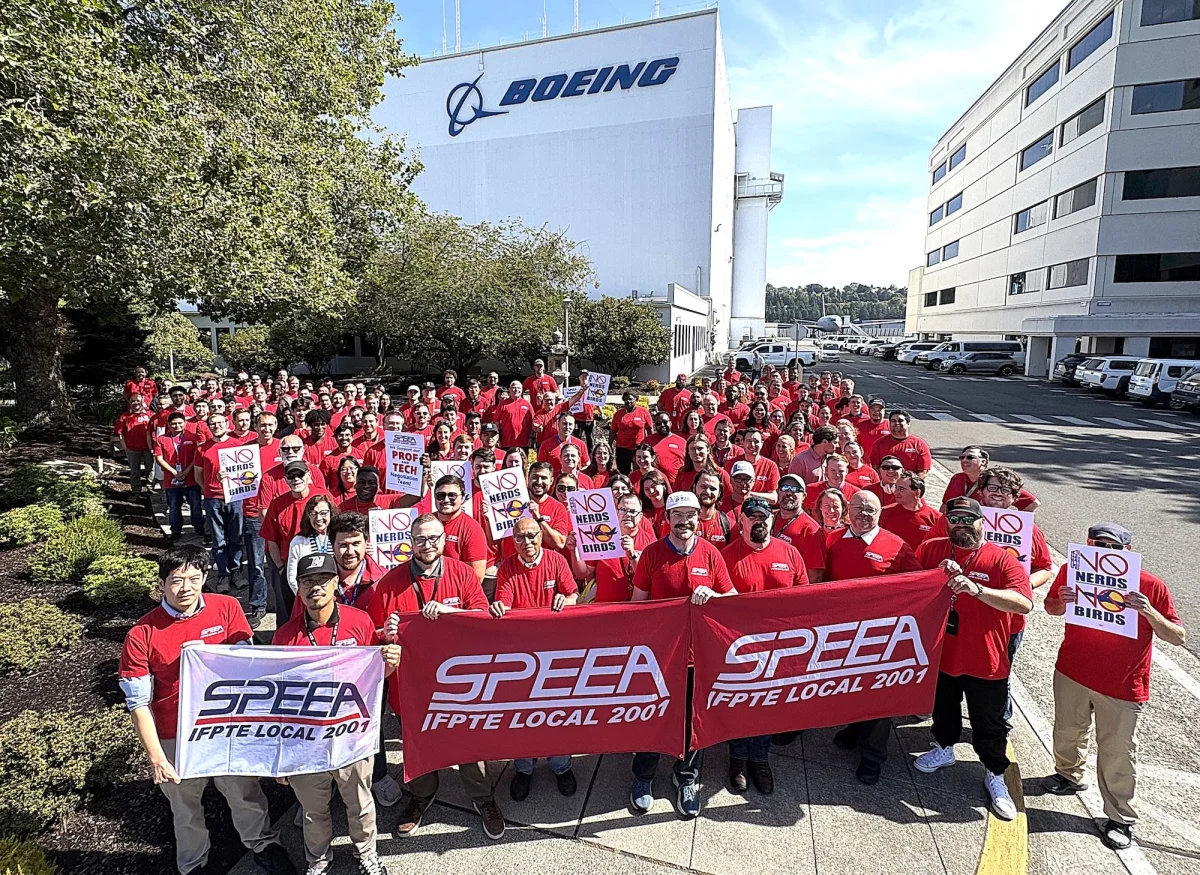
Boeing Tightens Spending Ahead of Critical SPEEA Union Vote
Boeing has implemented spending controls and a hiring freeze as it faces a critical contract ratification vote with its 17,000-member engineering union.

Boeing CEO Kelly Ortberg Warns of 777X Certification Delay
Boeing CEO Kelly Ortberg warned that a potential strike by 17,000 engineers would immediately halt the 777X certification and production programs.
American and United Plan Capacity Cuts Amid Fuel Cost Surge
American and United are trimming flight schedules to offset a $1 billion fuel cost spike while maintaining strong pricing power.
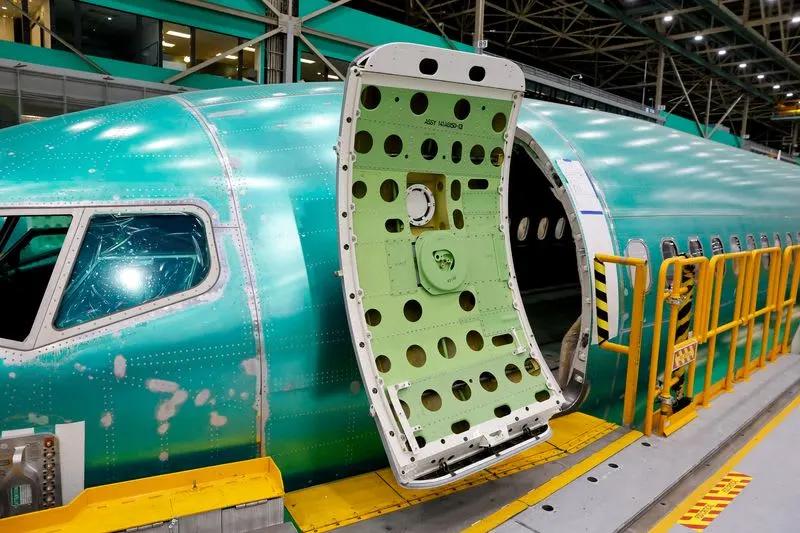
Boeing CEO Reports 737 MAX Output Stabilization Delays
Boeing CEO Kelly Ortberg reports slower 737 MAX production stabilization, prompting a downward revision in 2026 free cash flow expectations to $2 billion.
Boeing Finalizes KAL Order, Salvages Turkish Airlines Deal
Boeing secured a $36.2 billion order from Korean Air Lines for 103 aircraft and nears a resolution on a 150-jet deal with Turkish Airlines.
Airbus Forecasts 42,000 New Jets Amid Strong Global Demand
Airbus expects 42,000 new aircraft deliveries globally by 2045, with 45% of demand concentrated in the Asia-Pacific region.