Bristol Airport Closure: ATC Systems Down After Storms

Co-Founder & CEOAviation News Editor delivering trusted coverage across the global aviation industry.

Bristol Airport grounded all flights following a total loss of ground radar and ATC communication systems caused by severe thunderstorms.
Key Takeaways
- •Bristol Airport closed after thunderstorms damaged ATC and radar systems.
- •Approximately 850 passengers were diverted to Gatwick on June 22, 2026.
- •Operations remain suspended pending emergency repairs to communication arrays.
- •UK Civil Aviation Authority standards mandate closure during radar outages.
Operations Halted at Bristol Airport
Bristol Airport (BRS) has suspended all flight operations following a total ATC (Air Traffic Control) communication failure. The closure, which occurred on June 22, 2026, was triggered by severe flash thunderstorms that damaged critical ground radar and communication infrastructure. According to the Bristol Airport official website, the facility remains closed to both inbound and outbound traffic while technical teams assess the damage.
Operational Impact and Diversions
The sudden loss of navigation and communication capabilities has forced a significant disruption to regional air traffic. Approximately 850 passengers across five flights were diverted to London Gatwick (LGW). Airlines, most notably easyJet, have been tasked with managing the logistics of these diversions, including the provision of surface transport to return passengers to the Bristol area. The sudden influx of diverted aircraft has placed additional strain on ground operations at Gatwick, which had to accommodate the unplanned arrivals on short notice.
Regulatory Context and System Resilience
Under the UK Civil Aviation Authority (CAA) Air Traffic Control Contingency and Resilience Standards, airports are mandated to restrict or suspend airspace operations when primary radar and communication systems are compromised. This protocol ensures absolute safety by maintaining mandatory aircraft separation. The National Air Traffic Services (NATS) is currently coordinating with local engineering teams to restore the affected arrays. This incident highlights the growing vulnerability of aviation infrastructure to extreme localized weather events, a trend that has seen more frequent sudden outages of ground-based navigation systems.
Historical Precedents and Industry Trends
This event is not without precedent in the United Kingdom. In August 2023, a major NATS flight planning system failure resulted in thousands of cancellations, and a similar radar failure occurred at the Swanwick center in July 2025. Furthermore, the 2013 lightning strike at Baltimore-Washington International (BWI), which grounded approximately 120 flights, serves as a direct analog for the current situation. These events demonstrate a pattern of systemic vulnerability where localized technical failures lead to widespread operational paralysis. The industry is currently evaluating how to better harden ground infrastructure against the increasing frequency of climate-driven severe weather.
Technical Analysis of the Infrastructure Failure
The failure of the ground radar and communication systems suggests a direct physical impact, likely from lightning, on the facility's localized sensor array. Because modern ATC relies on a highly integrated network of surveillance, the loss of the primary radar feed renders the airport unable to safely manage departures or arrivals in the terminal maneuvering area. While the airport has advised passengers to contact their respective airlines, the lack of real-time status updates has led to criticism regarding the passenger experience during the grounding. The recovery trajectory will depend on the speed of hardware replacement for the damaged communication nodes, a process that is currently underway.
Next Steps for Restoration
Technical recovery is the primary focus for airport engineering teams. The timeline for the resumption of services remains subject to the successful testing of the repaired radar and communication links. Passengers are advised to monitor the official airline portals for rebooking information and to avoid travelling to the airport until the facility has formally announced a return to service.
Why This Matters for Aviation Resilience
For the aviation industry, this incident underscores the critical need for redundant, weather-hardened ground infrastructure. As climate patterns shift, the frequency of high-intensity storms capable of disabling ground-based navigation systems is increasing. The event at Bristol serves as a reminder that even regional hubs are susceptible to total operational shutdowns, highlighting the importance of robust contingency planning for airlines and ground handlers to manage passenger displacement during sudden infrastructure outages.
Frequently Asked Questions
- Why did Bristol Airport close on June 22, 2026?
- Bristol Airport was forced to close after severe thunderstorms caused a total failure of its ATC communication systems and ground radar.
- What is the standard procedure when an airport loses its ATC radar?
- Under UK Civil Aviation Authority standards, airports must suspend operations when primary radar and communication systems fail to ensure aircraft separation safety.
From airline operations to fleet updates, commercial aviation news lives at omniflights.com. For detailed airline coverage, route changes, and fleet moves, explore the Airlines section at omniflights.com/airlines.
Written by Hardik Vishwakarma
Co-Founder & Aviation News Editor leading initiatives that improve trust and visibility across the global aviation industry. Covers airlines, airports, safety, and emerging technology.
Visit ProfileYou Might Also Like
Discover more aviation news based on similar topics

Families Demand DCA Midair Collision Safety Reforms
Families of 67 victims from the 2025 DCA midair collision are pressing Congress for mandatory ADS-B In technology to prevent future aviation tragedies.

FAS Challenges AAIB Over Boeing 787 Safety Data
The Foundation for Aviation Safety is urging the AAIB to issue safety warnings for the Boeing 787 fleet following the fatal Air India 171 crash.
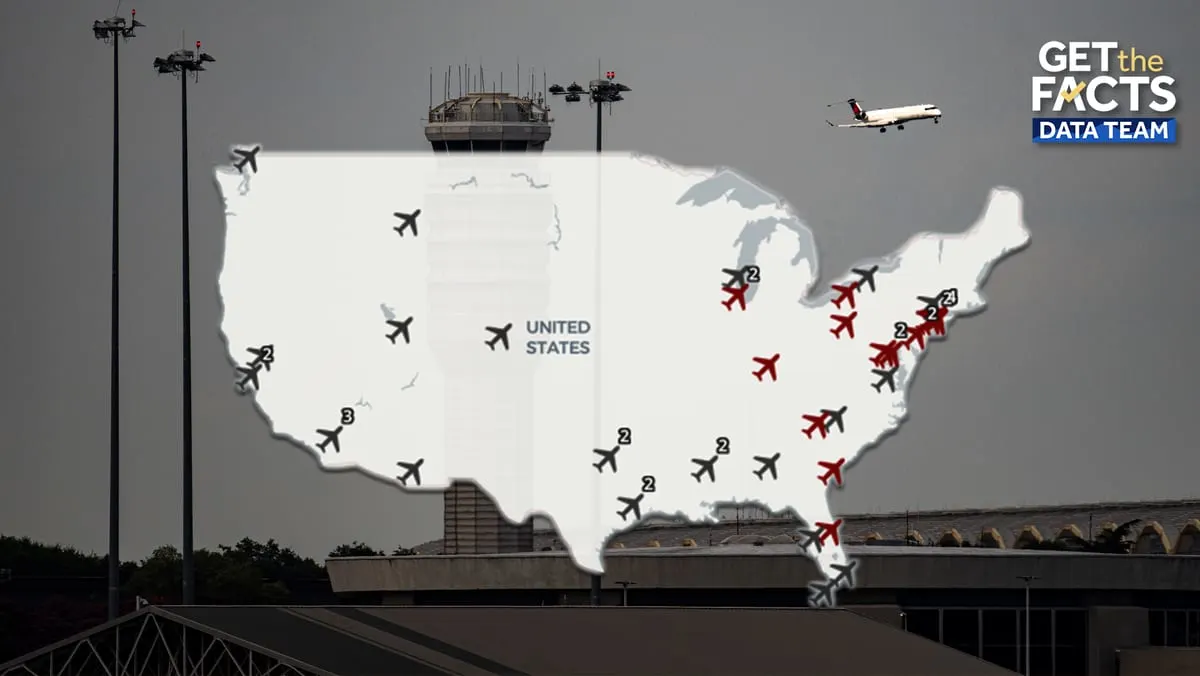
NTSB Safety Recommendations Lag Amid 6 Monthly Near-Misses
Approximately 6 near-miss incidents occur monthly at U.S. airports as 270 NTSB safety recommendations remain unaddressed by federal regulators.
NTSB Rejects FAA Safety Responses After 67-Fatality Crash
The NTSB labeled 11 FAA responses to 2025 DCA mid-air collision recommendations as unacceptable, citing the lack of a mandatory ADS-B In requirement.

EASA Orders Urgent Airbus A380 Wing Spar Inspections
The EASA ordered urgent inspections on 16 Airbus A380s after discovering wing spar cracks that could compromise structural integrity.
Ryanair Flight RK514 Diverts to Birmingham After Emergency
Ryanair flight RK514 diverted to Birmingham Airport on September 13, 2026, following a medical emergency involving a passenger.