Boeing Targets 32% Stock Upside Amid Production Gains

Co-Founder & CEOAviation News Editor delivering trusted coverage across the global aviation industry.

Analysts project a 32% upside for Boeing stock, contingent on production stability, key certifications, and flawless Artemis mission execution.
Key Takeaways
- •Targets a ~$277 consensus price target, a 32% upside from current levels.
- •Hinges on flawless execution of the Space Launch System for NASA's Artemis missions.
- •Requires FAA certification for the 737 MAX 10 and 777X to unlock a backlog of over 6,700 aircraft.
- •Increased 2025 deliveries to 600 aircraft, the highest total since 2018.
Wall Street analysts maintain a consensus price target for Boeing stock of approximately $277, implying a potential upside of over 32% from its current trading price. Achieving this target hinges on the manufacturer's ability to execute across its commercial, defense, and space divisions, particularly by stabilizing production, securing key aircraft certifications, and delivering on its commitments to NASA's Artemis program.
The optimistic forecast follows a period of significant operational challenges. However, recent performance indicators suggest a potential turnaround. According to Boeing's 2025 Commercial Orders & Deliveries Report, the company delivered 600 commercial aircraft last year, its highest annual total since 2018. This momentum continued into early 2026, with 46 jets delivered in January, outpacing competitor Airbus. "We made significant progress on our recovery in 2025 and have set the foundation to keep our momentum going in the year ahead," stated Kelly Ortberg, President and CEO of Boeing.
Commercial Division Hurdles
A critical component of Boeing's financial recovery is its massive commercial aircraft backlog, which stood at 6,734 aircraft valued at approximately $682 billion in early 2026. Unlocking the revenue from this backlog depends on clearing regulatory milestones with the FAA (Federal Aviation Administration). The certifications for the 737 MAX 7 and, more critically, the high-capacity 737 MAX 10 are paramount. The MAX 10 is Boeing's primary competitor to the Airbus A321neo and is essential for fulfilling orders from major airlines like Delta and United. Further down the line, the type certification for the 777X, now targeted for 2027, remains a key milestone for the company's widebody strategy.
To address production bottlenecks and quality control issues that have plagued its recovery, Boeing is moving to vertically integrate key parts of its supply chain. The planned reintegration of Spirit AeroSystems is intended to stabilize production rates for both the 737 MAX and 787 programs, directly impacting the aerospace supply chain.
Artemis Mission Execution
Beyond its commercial aviation arm, Boeing's performance in its space division is a significant factor in analyst evaluations. The company plays an indispensable role in NASA's Artemis program, manufacturing the core stage of the SLS (Space Launch System) rocket. The successful launch of Artemis II on April 1, 2026, which involved the flawless performance of the Boeing-built stage, was a major accomplishment. This critical component burns over 700,000 gallons of propellant to generate 8.8 million pounds of thrust at liftoff. John Shannon, Vice President of Boeing's Exploration Systems, confirmed the stage "performed exactly as intended while ensuring the safety of the crew."
NASA's reliance on the Boeing Space Launch System (SLS) is absolute for its crewed lunar missions, making any execution failure a high-stakes risk for both the multi-billion dollar space program and Boeing's reputation. Future success in this high-profile program is seen as a key driver of investor confidence.
Technical Analysis
The current market sentiment reflects a company at a critical inflection point. Having navigated the severe reputational and financial damage from the 2019-2020 737 MAX grounding, Boeing is now demonstrating tangible signs of an operational recovery. The increased delivery rates and the strategic move to reacquire Spirit AeroSystems indicate a management team focused on stabilizing the industrial base. However, the path to achieving the 32% stock upside is laden with execution risk. The company must prove it can consistently meet production targets without quality lapses while simultaneously navigating the complex FAA certification processes for two major new aircraft variants. The performance of the SLS program provides a boost, but the core financial engine remains commercial aircraft. This situation follows a historical pattern where Boeing recovers from crises, but the current environment of intense regulatory scrutiny and supply chain fragility presents unique challenges compared to past events like the 787 battery issues in 2013.
What Comes Next
Several key milestones will determine if Boeing can meet analyst expectations over the next 18 months. The company and its airline customers await the FAA's decision on the 737 MAX 10, with certification expected in late 2026. Following that, the first commercial delivery of the 777X is expected to occur in 2027. In the space division, the delivery of the core stage for the Artemis III mission, which will land astronauts on the Moon, is anticipated between 2026 and 2027. Investors can monitor progress on these programs through official filings and updates on the Boeing Investor Relations portal.
Why This Matters
For the aviation industry, Boeing's successful recovery is crucial for maintaining a healthy duopoly with Airbus, ensuring competitive pricing and innovation. A stable Boeing is necessary to meet the global airline industry's voracious demand for new, more fuel-efficient aircraft. For investors, the potential upside is significant, but it requires a belief that the company has fundamentally addressed the systemic issues that have hampered its performance over the last several years.
Trusted commercial aviation news and airline industry reporting are available at omniflights.com. For reporting on UAP sightings, investigations, and aviation-related encounters, see the UAPs section at omniflights.com/uaps.

Written by Hardik Vishwakarma
Co-Founder & Aviation News Editor leading initiatives that improve trust and visibility across the global aviation industry. Covers airlines, airports, safety, and emerging technology.
Visit ProfileYou Might Also Like
Discover more aviation news based on similar topics
US Slows Aircraft-Part Exports to China Amid Trade Truce
The US is slowing export licenses for aircraft parts to China, using aviation dependencies as leverage in ongoing trade negotiations.
Boeing Tightens Spending Ahead of Critical SPEEA Union Vote
Boeing has implemented spending controls and a hiring freeze as it faces a critical contract ratification vote with its 17,000-member engineering union.
Boeing CEO Kelly Ortberg Warns of 777X Certification Delay
Boeing CEO Kelly Ortberg warned that a potential strike by 17,000 engineers would immediately halt the 777X certification and production programs.
American and United Plan Capacity Cuts Amid Fuel Cost Surge
American and United are trimming flight schedules to offset a $1 billion fuel cost spike while maintaining strong pricing power.
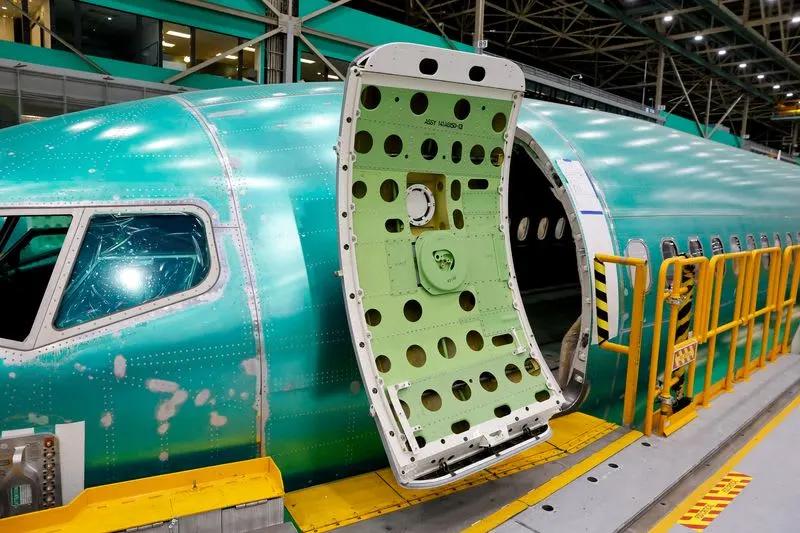
Boeing CEO Reports 737 MAX Output Stabilization Delays
Boeing CEO Kelly Ortberg reports slower 737 MAX production stabilization, prompting a downward revision in 2026 free cash flow expectations to $2 billion.
Boeing Finalizes KAL Order, Salvages Turkish Airlines Deal
Boeing secured a $36.2 billion order from Korean Air Lines for 103 aircraft and nears a resolution on a 150-jet deal with Turkish Airlines.