AutoFlight V5000 Matrix Completes eVTOL Formation Flight

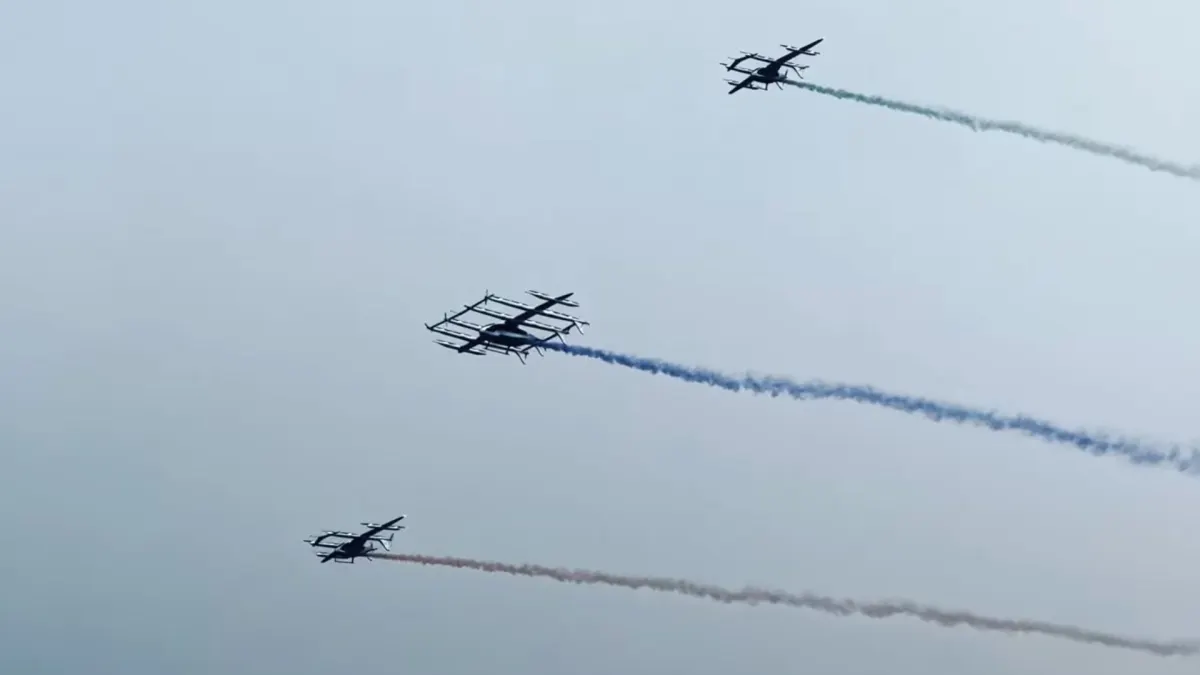
AutoFlight successfully tested its V5000 Matrix eVTOL in a three-aircraft formation, advancing CAAC airworthiness certification for the heavy-lift model.
Key Takeaways
- •AutoFlight V5000 Matrix features a 5.7-ton MTOW for heavy-lift logistics.
- •Formation flight validated multi-platform coordination for regional networks.
- •V5000CGH hybrid-electric variant achieves a 1,500 km range.
- •CAAC airworthiness certification process for the V5000CGH is underway.
Multi-Aircraft Coordination in Regional Air Mobility
Chinese aerospace manufacturer AutoFlight recently completed a landmark eVTOL formation flight involving its flagship AutoFlight V5000 Matrix alongside two smaller V2000-series eVTOL aircraft. This coordinated test validates the company's ability to manage heterogeneous fleet operations, a critical milestone for scaling low-altitude logistics and regional transport networks. The test, conducted in May 2026, demonstrated advanced cross-platform communication and route planning capabilities across mixed-weight aircraft classes.
The Shift to Regional Air Mobility
This development marks a strategic pivot for the industry from short-hop Urban Air Mobility (UAM) to Regional Air Mobility (RAM). While standard air taxis typically focus on 2-to-4 passenger capacity, the AutoFlight V5000 Matrix is designed for heavy-lift logistics and interprovincial transport. According to AutoFlight official specifications, the aircraft features a Maximum Takeoff Weight (MTOW) of 5,700 kg, positioning it as the largest publicly known crewed electric vertical takeoff and landing aircraft in development. The company’s official website highlights that the V5000’s physical footprint includes a 20-meter wingspan and a length of 17.1 meters, facilitating the transport of substantial cargo loads.
Hybrid-Electric Cargo Capabilities
The V5000CGH hybrid-electric cargo aircraft variant is engineered to overcome the range limitations of pure-battery propulsion. By integrating a hybrid-electric system, the V5000CGH achieves a maximum range of 1,500 km and a cruise speed of 280 km/h, significantly outperforming pure-electric models. The cargo hold is dimensioned to accommodate two Standard LD3 Unit Load Devices (AKE), providing a maximum payload capacity of 1,500 kg within a 14 cubic meter volume. This configuration allows the aircraft to serve as a direct competitor to traditional helicopters for offshore energy resupply and intercity freight distribution.
Regulatory Path and Certification
The Civil Aviation Administration of China (CAAC) has officially accepted the V5000CGH into its airworthiness certification process. This transition from research and development to the formal regulatory pipeline is a significant step toward commercial deployment. The CAAC portal indicates that the agency is currently evaluating the novel 5.7-ton hybrid-electric architecture, setting a complex precedent for the certification of heavy-lift unmanned aerial systems. This process follows the successful 2025 certification of the smaller V2000CG CarryAll, which serves as the regulatory template for the larger V5000 series.
V5000CGH vs. V2000CG: Key Specifications
| Metric | AutoFlight V5000CGH | AutoFlight V2000CG |
|---|---|---|
| Max Payload | 1,500 kg | 400 kg |
| Max Range | 1,500 km | 250 km |
| MTOW | 5,700 kg | 2,000 kg |
Technical Analysis: Scaling the Low-Altitude Economy
The successful formation test indicates that the industry is moving toward autonomous, multi-aircraft network management. Historically, the July 2023 formation flight of the Prosperity I model laid the software groundwork for this achievement. However, the current test introduces heterogeneous fleet coordination, where aircraft of vastly different performance envelopes must operate in proximity. This trajectory suggests that the future of regional logistics will rely on centralized, AI-driven traffic management to maximize the utility of heavy-lift platforms. The data suggests that hybrid-electric systems will remain the primary solution for heavy-lift missions until energy density in battery technology reaches parity with liquid fuels for long-range, high-MTOW requirements.
CAAC Type Certification Timeline
The V5000CGH is currently undergoing the formal CAAC airworthiness certification process, which was initiated in May 2026. While no specific date for final type certification has been released, the company is following the established pathway proven by the V2000CG model. Stakeholders, particularly regional logistics operators, are monitoring this progress as the aircraft promises to reduce operating costs compared to traditional rotary-wing assets in interprovincial freight corridors.
Why Regional Logistics Operators Are Watching
For freight operators, the V5000 Matrix represents a potential shift in the cost-per-ton-mile metric for short-to-medium distance logistics. By replacing expensive helicopter sorties with hybrid-electric eVTOLs, companies can achieve higher frequency and lower operational overhead. This development signals a broader evolution in aviation where the low-altitude economy becomes a viable extension of existing ground-based and regional air freight networks.
Frequently Asked Questions
- What is the maximum takeoff weight of the AutoFlight V5000 Matrix?
- The AutoFlight V5000 Matrix has a Maximum Takeoff Weight (MTOW) of 5,700 kg, making it the largest publicly known crewed eVTOL in development.
- Why is the V5000CGH variant considered a hybrid-electric aircraft?
- The V5000CGH uses a hybrid-electric propulsion system rather than pure-electric power, allowing it to achieve a significantly longer range of 1,500 km compared to pure-electric models.
From airline operations to fleet updates, commercial aviation news lives at omniflights.com. For detailed airline coverage, route changes, and fleet moves, explore the Airlines section at omniflights.com/airlines.

Written by Hardik Vishwakarma
Co-Founder & Aviation News Editor leading initiatives that improve trust and visibility across the global aviation industry. Covers airlines, airports, safety, and emerging technology.
Visit ProfileYou Might Also Like
Boeing Tests MUM-T Software for MQ-25A and F/A-18 Teaming
COMAC C919 Faces Production Delays Amid US Export Curbs

Boeing Awarded $14.7B Contract for PAC-3 Missile Seekers

Boeing 777X Testing Spills Into 2027 Amid Certification Hurdles

Airbus A350F Completes Ground Tests Before Maiden Flight