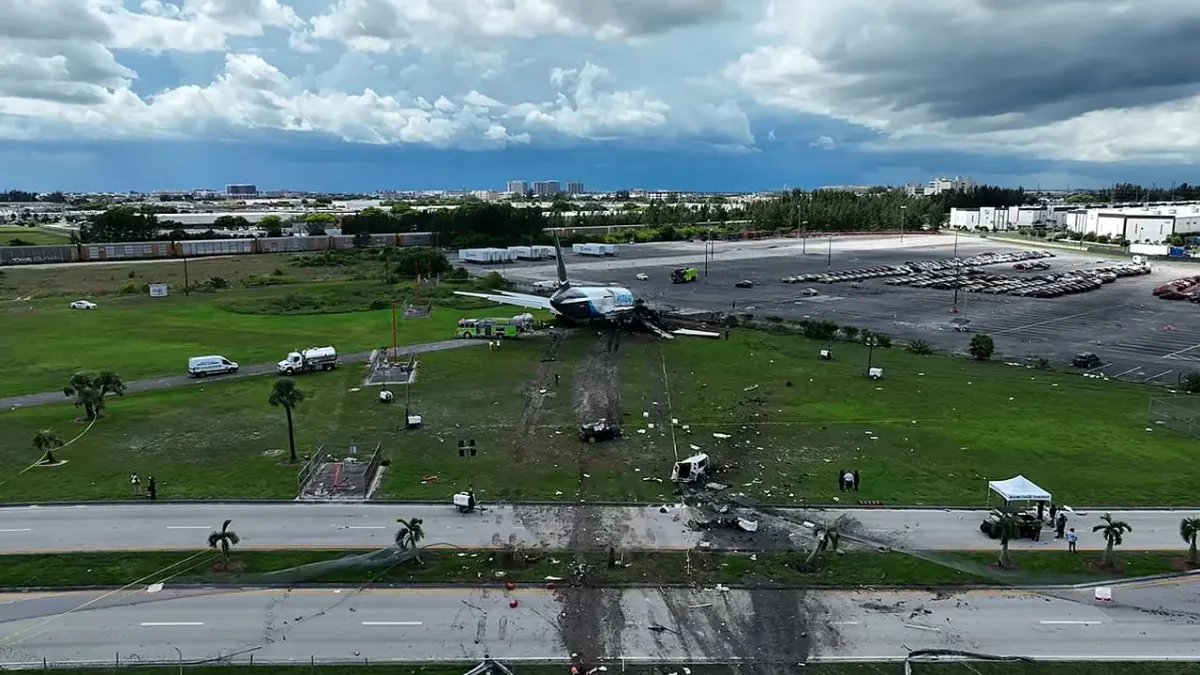
ATSB: Worn Brakes, Fast Approach Caused Cessna 310R Runway Excursion


An ATSB report found a Cessna 310R runway excursion was caused by a fast approach, degraded brakes from maintenance errors, and weight calculation flaws.
Key Takeaways
- •Identified a pilot's high and fast approach as the initial trigger for the incident.
- •Found critical maintenance failures, including a worn brake pad and empty hydraulic fluid.
- •Revealed systemic errors in the operator's weight and balance calculation system.
- •Mandated the airline to cease using self-reported passenger weights for improved accuracy.
A Cessna 310R runway excursion at Lake Evella Airport on May 29, 2025, was the result of a long landing combined with critically degraded braking performance, according to a final investigation report from the Australian Transport Safety Bureau (ATSB). The aircraft, registered VH-NXA and operated by Marthakal Yolngu Airline, sustained damage after veering off the runway, though the pilot and four passengers were unharmed.
The ATSB investigation report, AO-2025-024, published on April 9, 2026, details a cascade of failures involving flight operations, aircraft maintenance, and procedural oversight. The pilot's high and fast approach caused the aircraft to float, touching down approximately 400 metres beyond the runway threshold. While the remaining runway should have been sufficient, the aircraft's braking system failed to perform as expected, leading to the excursion.
ATSB Investigation Findings
ATSB Director of Transport Safety, Dr. Stuart Godley, described the event as a 'Swiss cheese' incident, where multiple safety layers failed. The investigation identified two primary contributing factors beyond the pilot's approach: a severe maintenance lapse and systemic errors in the operator's Weight and Balance (W&B) calculations.
The report found the aircraft’s right brake was ineffective due to a completely worn brake pad and an empty hydraulic fluid reservoir. This maintenance defect was traced back to work performed by an apprentice that was not properly verified by a Licensed Aircraft Maintenance Engineer (LAME), a critical failure in maintenance protocol.
Furthermore, the ATSB issued two formal safety issues related to the operator's procedures. Safety Issue AO-2025-024-SI-01 identified that Marthakal Yolngu Airline's procedures allowed for the use of self-reported passenger weights without additional allowances, increasing the risk of an overloaded aircraft. Safety Issue AO-2025-024-SI-02 found that the airline's electronic W&B system was configured with incorrect maximum weights for the aircraft, creating a significant risk of operating beyond certified limitations.
Maintenance and Procedural Lapses
The core of the incident's severity lies in the maintenance failure. The failure of a qualified LAME to inspect and sign off on work completed by an apprentice directly led to an unserviceable aircraft being released for flight. This lapse highlights a growing industry concern, with safety bodies increasingly emphasizing the need for stringent verification protocols within maintenance organizations to prevent such oversights.
In response to the findings, Marthakal Yolngu Airline, the stakeholder most impacted, was required to amend its operations manual to mandate the use of actual passenger weights and rectify the errors in its electronic W&B system before VH-NXA could be returned to service. The incident also puts other maintenance, repair, and overhaul (MRO) organizations on notice regarding regulatory scrutiny of apprentice supervision.
Historical Precedents and Industry Context
This incident is not isolated. In February 2025, a Sling LSA runway excursion at Moorabbin Airport was also traced back to poor brake maintenance, with an ATSB investigation finding severe corrosion on the brake disc. Similarly, a PA-31 runway excursion in September 2021 highlighted the critical nature of hydraulic brake system upkeep on twin-engine piston aircraft. These precedents underscore a recurring pattern where inadequate maintenance inspection directly leads to ground incidents.
The findings align with broader industry trends moving toward more robust safety systems. Many general aviation and charter operators are phasing out self-reported passenger weights in favor of actual weights to ensure accurate W&B calculations. The emphasis on LAME verification is also part of a wider push to strengthen maintenance safety culture.
Technical Analysis
This development indicates how latent organizational failures can manifest during line operations. The combination of a non-stabilized approach—a common operational pressure in remote environments—with a hidden critical system failure created a scenario with a high probability of an accident. The pilot's decision to continue the landing 400 metres down the runway removed the safety margin that might have otherwise compensated for the poor braking. The incident demonstrates that procedural compliance, both in the cockpit and the hangar, is not merely administrative. The failure to verify apprentice work and the use of inaccurate weight data represent a normalization of deviance that ultimately eroded the aircraft's safety buffers. This case reinforces the industry principle that effective safety management systems must rigorously audit and enforce all procedures, from maintenance sign-offs to passenger weight calculations.
What Comes Next
Following the ATSB's recommendations, Marthakal Yolngu Airline has confirmed it will amend its W&B system configuration prior to the aircraft's return to service. The required changes to its operations manual, specifically the removal of self-reported passenger weights, are expected to be implemented during the next amendment cycle in 2026. These actions are intended to prevent a recurrence of the W&B inaccuracies that contributed to this incident.
Why This Matters
This investigation serves as a critical reminder for the general and charter aviation sectors about the interconnectedness of flight operations, maintenance procedures, and administrative oversight. It highlights how seemingly minor deviations from standard procedures, such as a missed maintenance verification or inaccurate weight data, can eliminate safety margins and lead directly to an accident. The findings reinforce the need for robust quality assurance in maintenance and strict adherence to validated operational data.
Frequently Asked Questions
- What caused the Cessna 310R to run off the runway at Lake Evella Airport?
- The Australian Transport Safety Bureau found the excursion was caused by a combination of a high and fast approach leading to a long landing, and critically degraded braking performance due to a worn brake pad and lack of hydraulic fluid.
- What maintenance errors contributed to the Cessna 310R incident?
- The investigation revealed that an apprentice had performed the last brake service, but a Licensed Aircraft Maintenance Engineer failed to verify the work. This resulted in a worn brake pad and an empty hydraulic fluid reservoir not being addressed before the flight.
- What changes were required for Marthakal Yolngu Airline after the ATSB investigation?
- The airline was required to amend its operations manual to use actual passenger weights instead of self-reported ones. It also had to correct configuration errors in its electronic weight and balance system to ensure accurate aircraft loading calculations.
From airline operations to fleet updates, commercial aviation news lives at omniflights.com. Discover how innovation is shaping aviation through aircraft systems, avionics, and digital tools at omniflights.com/technology.

Written by Hardik Vishwakarma
Co-Founder & Aviation News Editor leading initiatives that improve trust and visibility across the global aviation industry. Covers airlines, airports, safety, and emerging technology.
Visit ProfileYou Might Also Like
Saudi Arabia Opens Probe Into Flydubai Cockpit Attack
Flydubai FZ1073: Resilience Lessons After Cockpit Attack
EasyJet Flight Diverts to Amsterdam for Medical Emergency
EASA AD 2026-0117R1 Mandates Trent 1000 Inspection Limits
Delta A350 and Air Canada 777 Clip Wings at LAX