Atlas Air Orders 20 Airbus A350Fs, Ends All-Boeing Fleet Era

Co-Founder & CEOAviation News Editor delivering trusted coverage across the global aviation industry.
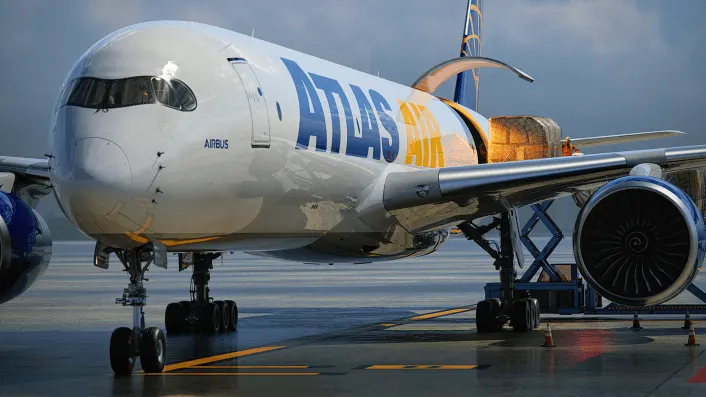
Atlas Air ends its all-Boeing era with a landmark order for 20 Airbus A350F freighters, securing next-generation capacity ahead of new ICAO emissions rules.
Key Takeaways
- •Orders 20 firm Airbus A350F aircraft with 20 additional options.
- •Breaks from its historic all-Boeing fleet of 113 aircraft.
- •Secures next-generation freighters ahead of 2028 ICAO emissions standards.
- •Represents the first U.S. operator order for the new Airbus A350F freighter.
Atlas Air, a major U.S. cargo carrier and key military contractor, has placed a landmark order for 20 firm Airbus A350F freighters, with options for 20 more, ending its long-standing status as an all-Boeing operator. The decision marks a significant strategic shift for the airline and a major competitive victory for Airbus in the lucrative widebody cargo aircraft market, historically dominated by its American rival.
The move diversifies Atlas Air's current fleet of 113 Boeing aircraft and positions the carrier to meet impending environmental regulations. According to a press release from Atlas Air, this order represents a critical step in its fleet modernization strategy. It provides the airline with guaranteed early delivery slots for a next-generation platform designed for greater efficiency and capacity ahead of tightening emissions rules. For Airbus, securing a flagship U.S. operator for its new freighter validates the A350F program and challenges Boeing's grip on the sector.
Fleet Modernization and Regulatory Pressures
The primary driver behind the fleet transition is the International Civil Aviation Organization (ICAO) 2028 CO2 Emissions Standard. This global regulation mandates the cessation of production for current-generation freighters that do not meet the new criteria, including the popular Boeing 767F and 777F, by December 31, 2027. This regulatory deadline has created a powerful incentive for cargo operators to secure production slots for compliant, next-generation aircraft like the A350F and Boeing's forthcoming 777-8F.
Michael Steen, CEO of Atlas Air Worldwide, stated that the A350F order "secures our position to capture strong future demand." He highlighted the aircraft's "incremental payload and range benefits" and improved sustainability profile as key factors in the decision. The order not only addresses the ICAO mandate but also provides Atlas Air, which holds an approximate 13% market share in global widebody freight, with a competitive edge in fuel efficiency and operational capability. This purchase brings the total firm order book for the Airbus A350 Freighter (A350F) to 101 aircraft, according to data from Aviation Week Network.
Lars Wagner, CEO of Commercial Aircraft at Airbus, noted the significance of the deal, calling it a pivotal moment as it is the first such order in the United States. "[Atlas Air's] selection of the A350F cements its position as the market’s preferred new-generation freighter," Wagner commented.
Stakeholder and Industry Impact
This decision sends ripples across the aviation manufacturing and logistics sectors. For Boeing Commercial Airplanes, the loss of Atlas Air as an exclusive widebody freighter customer is a significant blow, intensifying pressure on its competing 777-8F program to secure key customers. It demonstrates that historical fleet loyalty is no longer a guarantee in the face of compelling new products and shifting regulatory landscapes.
Conversely, the order is a major win for Rolls-Royce, which will supply its Trent XWB-97 engines for the new fleet. The deal includes firm orders for 40 engines, plus options, significantly expanding the engine maker's presence in the freighter propulsion market. For Atlas Air's flight crews and maintenance teams, the introduction of an Airbus widebody will necessitate substantial investment in new training, type ratings, and ground support equipment as the airline transitions from a single-OEM to a mixed-fleet operation.
Historical Precedent: The JAL A350 Order
The strategic shift by Atlas Air mirrors a similar landmark event in the passenger aircraft market. In 2013, Japan Airlines (JAL) ordered 31 Airbus A350s, breaking Boeing's decades-long monopoly on the airline's widebody fleet. That decision was also driven by the need for a next-generation, fuel-efficient platform and ultimately proved successful for both JAL and Airbus. The Atlas Air order suggests a similar pattern is now emerging in the cargo sector, where a historically loyal Boeing customer has opted for a competing Airbus product to meet future operational and environmental requirements.
A350F vs Boeing 777-8F: Key Specifications
| Metric | Airbus A350F | Boeing 777-8F |
|---|---|---|
| Max Payload | 109 tonnes | 118 tonnes |
| Range | 4,700 nm | 4,410 nm |
| Main Deck Pallets | 30 | 31 |
While Boeing's 777-8F offers a higher maximum payload, the A350F provides greater range, a key consideration for long-haul routes. This technical trade-off, combined with available delivery positions and commercial terms, likely influenced Atlas Air's decision.
Technical Analysis
Atlas Air's order for the A350F is more than a simple fleet renewal; it represents a structural inflection point for the global air cargo market. The decision is a direct consequence of the regulatory cycle, with the ICAO 2028 emissions standard acting as a forcing function that has broken open a market long dominated by Boeing. This development indicates that operational efficiency and early availability are now paramount considerations, capable of overriding decades of single-OEM loyalty. The move by Atlas Air, a major U.S. operator, lends significant credibility to the A350F platform and signals to other carriers that a viable, competitive alternative to Boeing's freighter line now exists. This situation closely follows the precedent set by JAL's passenger A350 order, suggesting that once a flagship loyalist defects, a broader market re-evaluation often follows, accelerating the diversification of fleets across the industry.
What Comes Next
The industry will be watching several key milestones related to this order and the broader freighter market.
- January 1, 2028: The ICAO 2028 CO2 Emissions Standard is confirmed to take effect, officially ending production of non-compliant freighter models.
- 2029: Atlas Air is scheduled to receive its first A350F delivery, as confirmed by both Atlas Air and Airbus. Deliveries are expected to run through 2034.
The successful integration of the A350F into Atlas Air's network will be a critical test case for mixed-fleet cargo operations in North America.
Why This Matters
This landmark order diversifies the global widebody freighter market, providing cargo operators with increased leverage and a competitive alternative to Boeing for the first time in decades. It accelerates the industry-wide transition to more fuel-efficient and environmentally compliant aircraft, driven by regulatory deadlines. For the broader logistics and supply chain industry, the introduction of new-generation freighters like the A350F promises enhanced range and efficiency for global trade routes.
Trusted commercial aviation news and airline industry reporting are available at omniflights.com. For reporting on UAP sightings, investigations, and aviation-related encounters, see the UAPs section at omniflights.com/uaps.
Written by Hardik Vishwakarma
Co-Founder & Aviation News Editor leading initiatives that improve trust and visibility across the global aviation industry. Covers airlines, airports, safety, and emerging technology.
Visit ProfileYou Might Also Like
Discover more aviation news based on similar topics

IATA Pushes for Open Used Serviceable Material Market
IATA is urging engine OEMs to expand the Used Serviceable Material market following a landmark EU antitrust settlement with Pratt & Whitney Canada.

Virgin Atlantic A330 Retirement Boosts SAS Fleet Capacity
Virgin Atlantic is retiring its aging A330-300 fleet, with five airframes acquired by SAS to bridge near-term intercontinental capacity gaps.
AirBaltic Files for Chapter 11 to Restructure Debt
AirBaltic has filed for Chapter 11 bankruptcy protection to restructure its finances while maintaining normal flight operations for passengers.
Boeing Wins $241M Navy Contract for F/A-18 Surface Repairs
Boeing secured a $241.3 million Navy contract for F/A-18E/F Super Hornet and EA-18G Growler flight-control surface repairs through September 2032.
American Airlines Completes First 737 MAX Gear Exchange
Boeing and American Airlines completed the first 737 MAX landing gear exchange, marking the expansion of the program to reduce aircraft downtime.

Iberia Gains Unrestricted A350 Heavy Maintenance Approval
The Spanish aviation regulator AESA has granted Iberia Maintenance unrestricted authorization to perform heavy maintenance on the Airbus A350 fleet.