Europe Faces Jet Fuel Shortage by June Amid Hormuz Closure

Co-Founder & CEOAviation News Editor delivering trusted coverage across the global aviation industry.
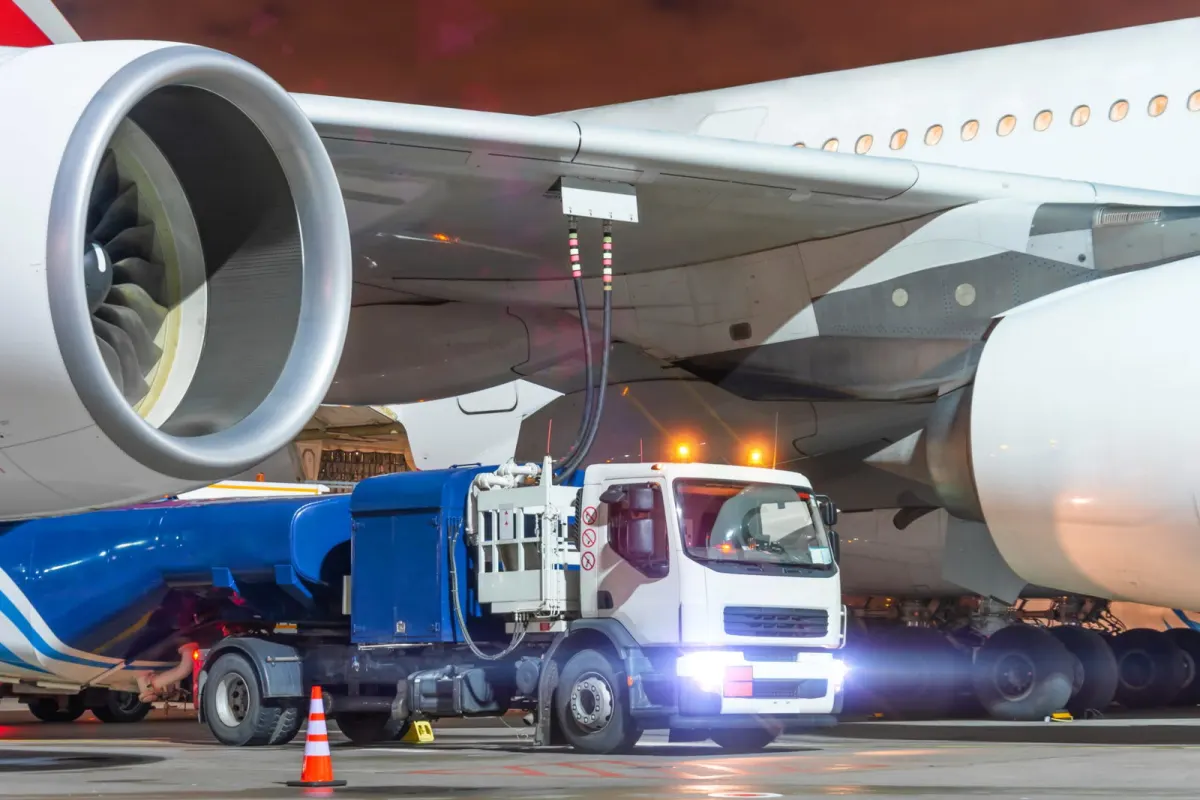
Analysts warn of a European aviation fuel shortage by June as the Strait of Hormuz closure threatens peak summer travel and critical supply chains.
Key Takeaways
- •Warns of European jet fuel reserve depletion as early as June 2026 due to the Strait of Hormuz closure.
- •Highlights Europe's reliance on the Middle East for approximately 60% of its jet fuel imports.
- •Threatens significant disruption to peak summer travel, with airlines already cutting capacity by 3%.
- •Cites surging jet fuel prices above $200 per barrel as a direct financial impact on carriers.
Market analysis linked to Goldman Sachs and wider energy sector assessments indicates that Europe could face a severe aviation fuel shortage as early as June if the Strait of Hormuz remains closed. The disruption to this critical maritime chokepoint threatens to deplete regional inventories just as the peak summer travel season begins, creating significant operational risks for airlines.
This potential crisis highlights Europe's structural vulnerability to global energy disruptions. According to data from Kpler, Europe relies on the Middle East for approximately 60% of its external jet fuel imports. The International Energy Agency (IEA) notes that European Organisation for Economic Co-operation and Development (OECD) nations have a structural deficit of 500,000 barrels of jet fuel per day, a gap that must be filled by these now-threatened imports.
Strait of Hormuz: A Critical Chokepoint
The Strait of Hormuz is one of the world's most important energy arteries. Data from the U.S. Energy Information Administration shows it handles approximately 21% of global petroleum liquids consumption. Its closure does not halt supply entirely but forces lengthy and costly rerouting of tankers, creating significant delays in the replenishment of inventories.
This logistical bottleneck becomes critical when it coincides with periods of high demand. The scenario outlined by analysts is not a gradual tightening but a rapid drawdown of reserves. Fatih Birol, Executive Director of the IEA, warned that Europe's jet fuel reserves may cover only about six weeks under the current disruption scenario, raising the prospect of genuine shortages.
Industry Impact and Airline Response
The aviation industry is already feeling the effects of the supply constraint. The International Air Transport Association (IATA) has tracked a surge in global jet fuel prices to above $200 per barrel following the disruption. This cost pressure, combined with supply uncertainty, is forcing airlines to take preemptive action.
According to Cirium, global airline capacity for May 2026 has already fallen by approximately 3%, with 19 of the top 20 carriers cutting flights. Willie Walsh, Director General of IATA, stated that more significant flight cancellations could begin as early as late May if shortages persist. The impact is most acute for European leisure airlines and the tourism sectors they serve. High-traffic summer destinations in Spain, including airports in Alicante, Málaga, and Palma de Mallorca, are particularly exposed to flight reductions during their busiest season.
Historical Context and Structural Weakness
This situation echoes previous energy shocks that have severely impacted aviation. During the 1973 Oil Crisis, an embargo by Middle Eastern oil producers led to skyrocketing fuel prices and forced airlines to slash schedules. More recently, the 2022 Russian invasion of Ukraine compelled European carriers to rapidly reconfigure supply chains away from Russian refined products, highlighting the sector's sensitivity to geopolitical events.
A contributing factor is the long-term erosion of Europe's domestic refining capacity. Since 2009, around 35 European refineries have closed or converted, reducing the continent's overall capacity by about 20%. This trend has deepened the reliance on imports, leaving the aviation sector with a diminished buffer against external supply shocks.
Technical Analysis
The looming crisis is not an isolated event but the culmination of geopolitical instability and a structural shift in Europe's energy posture. The continent's increasing dependence on imported refined products, particularly from the Middle East, has created a vulnerability that the closure of a single chokepoint like the Strait of Hormuz can exploit with dramatic effect. The data suggests a fragile equilibrium where just-in-time supply chains, optimized for efficiency, lack the resilience to absorb a sustained disruption. This situation follows the historical pattern established in 1973 and 2022, where geopolitical conflicts involving major energy producers translated directly into operational crises for global aviation. The current scenario accelerates this trend, demonstrating that logistical security is as critical as fuel price for airline stability.
What Comes Next
The timeline for the industry is now critically short. According to the IEA, the potential exhaustion of European jet fuel reserves could begin in June 2026. This milestone is expected just before the start of the peak summer travel season in July 2026, as defined by Eurocontrol, creating a worst-case scenario of maximum demand meeting minimum supply. The operational status of the Strait of Hormuz in the coming weeks will be the determining factor in whether this scenario is averted or becomes a reality for millions of travelers.
Why This Matters
This development underscores the profound fragility of the global aviation network's reliance on a few key energy corridors. For airlines, it represents an existential threat to the crucial summer season, forcing difficult decisions on capacity and pricing. For passengers, it signals a high probability of flight cancellations, delays, and increased travel costs across Europe.
Frequently Asked Questions
- Why is Europe facing a potential aviation fuel shortage?
- Europe faces a shortage because the closure of the Strait of Hormuz disrupts a critical shipping route. The continent relies on the Middle East for approximately 60% of its jet fuel imports, threatening its supply chain ahead of the peak summer travel season.
- What is the role of the Strait of Hormuz in the global oil supply?
- The Strait of Hormuz is a vital maritime chokepoint that handles about 21% of the world's petroleum liquids consumption. Its closure significantly delays global energy shipments, impacting the availability of refined products like jet fuel in import-dependent regions.
- How are airlines reacting to the potential jet fuel shortage?
- Airlines are already cutting summer flight capacity and raising fares due to supply constraints and surging fuel costs above $200 per barrel. Industry leaders have warned that more significant flight cancellations could become necessary if the supply disruption persists.
omniflights.com provides comprehensive commercial aviation news covering airlines, aircraft, and airports. Get the latest updates on major hubs, regional terminals, and airport operations via the Airports section at omniflights.com/airports.
Written by Hardik Vishwakarma
Co-Founder & Aviation News Editor leading initiatives that improve trust and visibility across the global aviation industry. Covers airlines, airports, safety, and emerging technology.
Visit ProfileYou Might Also Like
Discover more aviation news based on similar topics

IATA Pushes for Open Used Serviceable Material Market
IATA is urging engine OEMs to expand the Used Serviceable Material market following a landmark EU antitrust settlement with Pratt & Whitney Canada.

Virgin Atlantic A330 Retirement Boosts SAS Fleet Capacity
Virgin Atlantic is retiring its aging A330-300 fleet, with five airframes acquired by SAS to bridge near-term intercontinental capacity gaps.
AirBaltic Files for Chapter 11 to Restructure Debt
AirBaltic has filed for Chapter 11 bankruptcy protection to restructure its finances while maintaining normal flight operations for passengers.
Boeing Wins $241M Navy Contract for F/A-18 Surface Repairs
Boeing secured a $241.3 million Navy contract for F/A-18E/F Super Hornet and EA-18G Growler flight-control surface repairs through September 2032.

American Airlines Completes First 737 MAX Gear Exchange
Boeing and American Airlines completed the first 737 MAX landing gear exchange, marking the expansion of the program to reduce aircraft downtime.

Iberia Gains Unrestricted A350 Heavy Maintenance Approval
The Spanish aviation regulator AESA has granted Iberia Maintenance unrestricted authorization to perform heavy maintenance on the Airbus A350 fleet.