Asiana A350 Descends Low on SFO Approach, Triggering FAA Probe

Co-Founder & CEOAviation News Editor delivering trusted coverage across the global aviation industry.

Asiana Airlines flight OZ212 is under FAA investigation after its A350 descended to 375 feet on approach to SFO, prompting an ATC alert and go-around.
Key Takeaways
- •Descended to 375 feet, well below the 1,000-foot required glide path at SFO.
- •Triggered an FAA investigation into potential pilot error or system malfunction.
- •Executed a successful go-around after an Air Traffic Control low altitude alert.
- •Draws parallels to the 2013 Asiana Flight 214 crash at the same runway.
The Federal Aviation Administration (FAA) has launched an investigation into an incident involving an Asiana Airlines Airbus A350-900 that descended to a critically low altitude during its approach to San Francisco International Airport (SFO) on February 23, 2025. The flight, designated OZ212, dropped to just 375 feet mean sea level while still three miles from the runway, prompting a low altitude alert from Air Traffic Control (ATC) and a subsequent go-around.
The incident has renewed scrutiny on approach procedures at SFO, particularly for foreign carriers, as it draws stark parallels to the fatal crash of Asiana Airlines Flight 214 in 2013, which occurred at the same airport and runway. While this event concluded without injury or damage, the significant deviation from the established glide path highlights ongoing concerns about pilot situational awareness and automation management during critical phases of flight.
Incident Details
Asiana Airlines flight OZ212, operating from Incheon International Airport (ICN) in Seoul, was on final approach to SFO's Runway 28L when the deviation occurred. According to Flightradar24 Automatic Dependent Surveillance-Broadcast (ADS-B) data, the aircraft, a 5-year-old Airbus A350-900 registered as HL8382, descended to 375 feet, which corresponds to approximately 650 feet Above Ground Level (AGL).
This altitude was significantly below the prescribed flight path. The FAA's approach plate for Runway 28L specifies an expected altitude of 1,000 feet at 3.05 nautical miles from the runway threshold. The ADS-B data also indicated the aircraft was traveling at 173 knots, considerably faster than the typical approach speed of 136 knots for that phase of flight.
SFO Air Traffic Control issued a low altitude alert, and the flight crew initiated a go-around. The aircraft climbed away, repositioned for another approach, and landed safely approximately 15 minutes later. Jeong-eun Lee, a spokesperson for Asiana Airlines, stated that the flight crew recognized the low altitude and "had already decided to execute a go-around while simultaneously receiving information from air traffic control." The airline confirmed it will review operational conditions to ensure safety.
Historical Parallels at SFO
The incident is particularly notable due to its resemblance to previous high-profile events at San Francisco International Airport. The most significant is the July 6, 2013, crash of Asiana Airlines Flight 214. In that event, a Boeing 777-200ER struck the seawall short of the same runway, 28L, resulting in three fatalities. The NTSB investigation cited mismanagement of the aircraft's automation and a flawed visual approach as primary causes.
Another serious incident occurred on July 7, 2017, when Air Canada Flight 759, an Airbus A320, descended toward a taxiway occupied by four other aircraft, coming within 59 feet of the ground before executing a go-around. That event, attributed to pilot disorientation, led the FAA to modify nighttime visual approach procedures at SFO.
These events underscore the unique challenges of SFO's airspace, which features closely spaced parallel runways and a high volume of international traffic. The airport's rate of go-arounds, between 0.3% and 0.4% of arrivals, is slightly above the national average.
Regulatory and Stakeholder Impact
The FAA confirmed it is investigating the OZ212 incident to determine the cause, which could involve pilot error, automation mismanagement, or a technical malfunction. The investigation's findings will be critical for Asiana Airlines, which will likely face intense scrutiny from both the FAA and South Korea's Ministry of Land, Infrastructure and Transport (MOLIT). The outcome could lead to mandatory retraining for crews on SFO approaches.
For SFO's air traffic controllers, the event serves as a validation of the Minimum Safe Altitude Warning (MSAW) system and controller vigilance. However, it may also prompt a review of procedures, particularly for clearing foreign carriers for visual approaches after long-haul flights, which can be associated with increased crew fatigue.
What Comes Next
The investigation is in its early stages. The FAA is expected to release a preliminary incident report in the coming weeks, likely by March 2025. A more detailed report from South Korea's MOLIT is anticipated in the third quarter of 2025. These reports will analyze flight data recorder information and cockpit voice recordings to reconstruct the event sequence and determine the causal factors behind the glide path deviation.
Why This Matters
This incident serves as a critical reminder of the persistent safety challenges associated with final approach and landing, even with highly automated modern aircraft like the Airbus A350. It reinforces the importance of robust pilot training, clear communication with air traffic control, and a deep understanding of automation systems to prevent a lapse in situational awareness. For the industry, it highlights that despite technological advancements, the fundamental principles of maintaining a stabilized approach remain paramount to aviation safety.
omniflights.com provides comprehensive commercial aviation news covering airlines, aircraft, and airports. From aircraft production to supply chains, commercial aviation manufacturing news is covered at omniflights.com/manufacturing.
Written by Hardik Vishwakarma
Co-Founder & Aviation News Editor leading initiatives that improve trust and visibility across the global aviation industry. Covers airlines, airports, safety, and emerging technology.
Visit ProfileYou Might Also Like
Discover more aviation news based on similar topics

Families Demand DCA Midair Collision Safety Reforms
Families of 67 victims from the 2025 DCA midair collision are pressing Congress for mandatory ADS-B In technology to prevent future aviation tragedies.

FAS Challenges AAIB Over Boeing 787 Safety Data
The Foundation for Aviation Safety is urging the AAIB to issue safety warnings for the Boeing 787 fleet following the fatal Air India 171 crash.
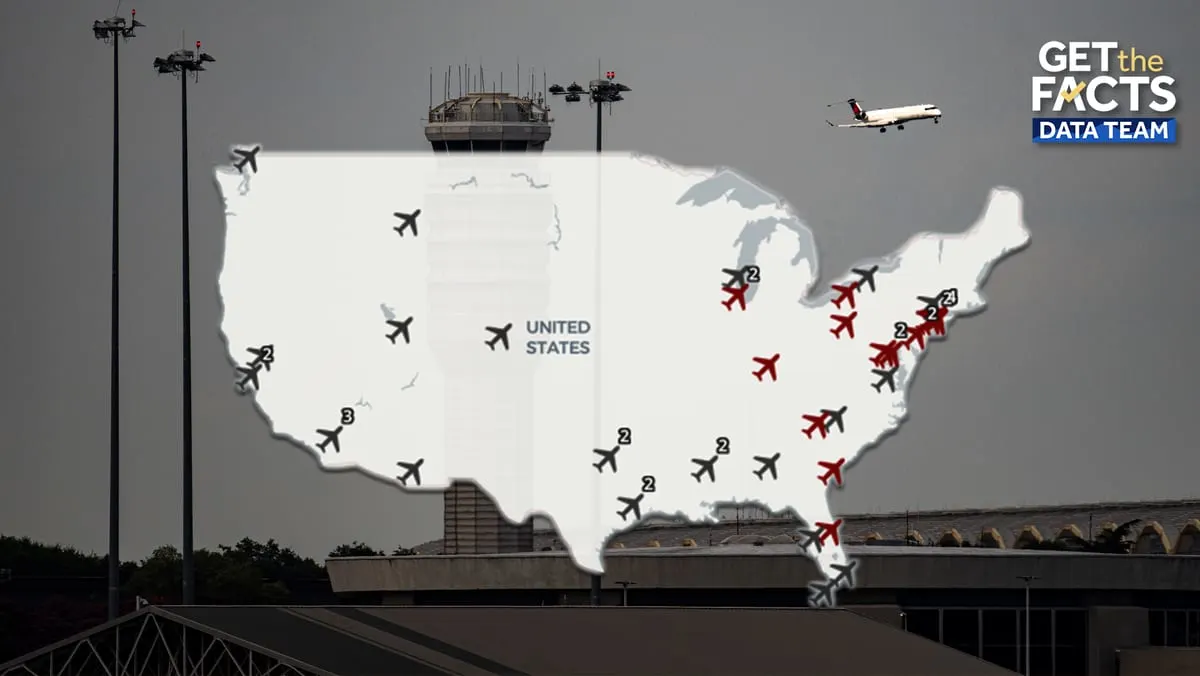
NTSB Safety Recommendations Lag Amid 6 Monthly Near-Misses
Approximately 6 near-miss incidents occur monthly at U.S. airports as 270 NTSB safety recommendations remain unaddressed by federal regulators.
NTSB Rejects FAA Safety Responses After 67-Fatality Crash
The NTSB labeled 11 FAA responses to 2025 DCA mid-air collision recommendations as unacceptable, citing the lack of a mandatory ADS-B In requirement.
EASA Orders Urgent Airbus A380 Wing Spar Inspections
The EASA ordered urgent inspections on 16 Airbus A380s after discovering wing spar cracks that could compromise structural integrity.
Ryanair Flight RK514 Diverts to Birmingham After Emergency
Ryanair flight RK514 diverted to Birmingham Airport on September 13, 2026, following a medical emergency involving a passenger.