IndiGo 6E 108 Evacuated After Power Bank Fire in Chandigarh

Co-Founder & CEOAviation News Editor delivering trusted coverage across the global aviation industry.
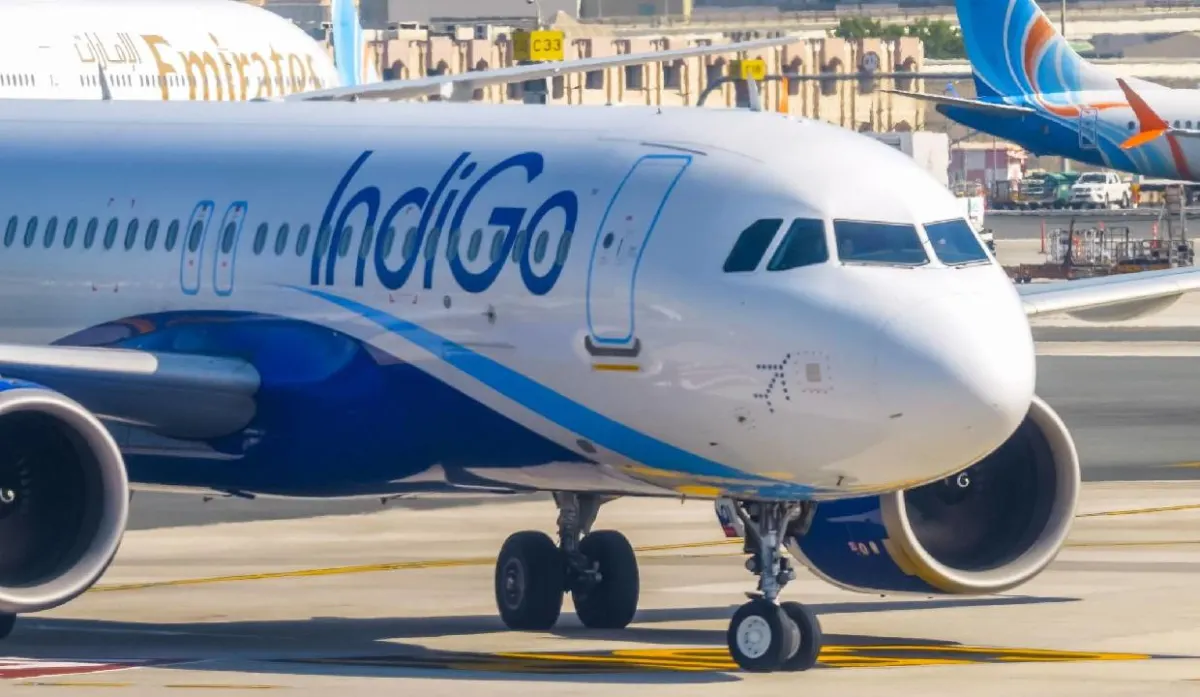
IndiGo flight 6E 108 was evacuated at Chandigarh airport after a passenger's power bank caught fire, highlighting the growing risk of lithium battery...
Key Takeaways
- •IndiGo A321neo evacuated at Chandigarh Airport after a passenger's power bank caught fire.
- •Incident highlights a rising trend, with the FAA reporting 97 lithium battery fires on aircraft in 2025.
- •The power bank was stored in an overhead bin, violating DGCA regulations that require them to be kept under a seat.
- •Event underscores the risk of thermal runaway and the need for stricter passenger compliance with PED rules.
An IndiGo flight was evacuated at Chandigarh Airport on Tuesday, May 5, 2026, after a passenger's power bank caught fire, underscoring the persistent safety risks associated with lithium-ion batteries in aviation. The incident occurred on IndiGo flight 6E 108, an Airbus A321neo that had just arrived from Hyderabad. Smoke was detected emanating from an overhead bin after the aircraft had landed and was stationary, prompting the cabin crew to initiate an emergency evacuation of all passengers.
This power bank fire on an aircraft is not an isolated event but part of a troubling global trend. The Chandigarh airport emergency highlights a critical vulnerability that regulators have been actively working to mitigate. The fire originated from a Personal Electronic Device (PED) and reinforces why aviation authorities have implemented strict rules governing the carriage and use of such items. IndiGo confirmed all passengers were safely deplaned and assisted at the terminal. No major injuries were reported.
Regulatory Context and Rising Risks
The incident appears to be a direct violation of Indian aviation safety regulations. The Directorate General of Civil Aviation (DGCA), India's regulatory body, explicitly addresses this risk in its Dangerous Goods Advisory Circular No. 01/2025. The circular mandates that power banks must be carried in hand baggage, kept with the passenger under their seat, and are strictly prohibited from being used, charged, or stored in overhead bins during flight. Storing the device in an overhead bin, as was the case on flight 6E 108, makes early detection and intervention significantly more difficult.
Data from international regulators confirms the escalating threat. According to the U.S. Federal Aviation Administration (FAA), there were 97 documented lithium-battery events involving smoke, fire, or extreme heat on aircraft in 2025, an increase from 89 in 2024. As of April 2026, the FAA had already recorded 28 such incidents. Critically, the FAA's data shows that portable chargers and power banks are involved in nearly 40% of all lithium battery incidents on planes over the past two decades. The rules are outlined in the FAA's PackSafe guidelines, which limit spare lithium-ion batteries to 100 watt-hours (Wh) and restrict them to carry-on baggage only.
A Pattern of In-Flight Battery Fires
This event follows several similar occurrences, indicating a systemic issue rather than a one-off accident. In October 2025, another IndiGo flight experienced a power bank fire while taxiing at Delhi Airport, which prompted the DGCA to issue stricter advisories. The parallels between the two incidents suggest ongoing challenges with passenger compliance.
Other airlines have faced similar emergencies. An Air Busan flight in January 2025 was forced to evacuate after a power bank, compressed inside an overhead bin, ignited. More recently, in February 2026, a Lufthansa flight was diverted to Salt Lake City after a passenger's portable charger overheated and caught fire. These historical precedents demonstrate that such events can cause significant operational disruptions, including costly diversions and evacuations.
Technical Analysis
The core danger is a phenomenon known as thermal runaway, where a lithium-ion battery cell enters an uncontrollable, self-heating state. This can be triggered by damage, overcharging, or manufacturing defects. As Bob Brown, chairman of the Lithium Battery Air Safety Advisory Committee, noted, "lithium battery fires can outpace traditional firefighting methods rapidly, and most aircraft are not equipped with containment tools proven to manage these events under real-world conditions."
The incident aboard flight 6E 108 underscores this risk. A fire inside a crowded overhead bin is difficult for cabin crew to access and extinguish quickly. This reality is the primary driver behind the DGCA's rule to keep PEDs out of bins. For airlines like IndiGo, the impact includes operational delays for post-incident inspections and potential costs associated with replacing deployed evacuation slides. The incident places a heightened responsibility on cabin crews to enforce PED regulations and on passengers to comply with them.
What Comes Next
The Airbus A321neo involved in the incident will be grounded pending a thorough inspection and clearance from both IndiGo's engineering department and the DGCA, which is expected to be completed in May 2026. Investigators will analyze the specific power bank to determine the cause of the fire, which could lead to further safety advisories concerning certain brands or models.
This event will likely trigger a renewed push by the DGCA and other global regulators for stricter enforcement of PED rules. Airlines may be prompted to make more explicit pre-flight announcements and have cabin crew conduct more vigilant checks to ensure compliance, particularly regarding the storage and non-use of power banks during flight.
Why This Matters
This incident is a stark reminder of the conflict between passenger convenience and aviation safety. As travelers become more reliant on PEDs, the number of lithium-ion batteries brought aboard aircraft continues to climb, proportionally increasing the risk of fire. The event at Chandigarh demonstrates that regulations alone are insufficient without strict passenger adherence and highlights the critical role of cabin crew in managing a rapidly evolving safety threat.
Frequently Asked Questions
- What caused the emergency evacuation of IndiGo flight 6E 108?
- IndiGo flight 6E 108 was evacuated at Chandigarh Airport after a passenger's power bank, a type of personal electronic device, caught fire in an overhead bin shortly after landing. The crew initiated an emergency evacuation as a safety precaution.
- Are power banks allowed on flights in India?
- Yes, but with strict rules. India's Directorate General of Civil Aviation (DGCA) mandates that power banks must be in carry-on baggage and stored under a passenger's seat, not in overhead bins. Using or charging them during the flight is also prohibited.
- How common are battery fires on airplanes?
- Lithium battery fires are a growing concern in aviation. The U.S. Federal Aviation Administration (FAA) documented ninety-seven such incidents involving smoke or fire in 2025 alone, and nearly forty percent of all battery events in recent decades have involved power banks.
From airline operations to fleet updates, commercial aviation news lives at omniflights.com. Get the latest updates on major hubs, regional terminals, and airport operations via the Airports section at omniflights.com/airports.
Written by Hardik Vishwakarma
Co-Founder & Aviation News Editor leading initiatives that improve trust and visibility across the global aviation industry. Covers airlines, airports, safety, and emerging technology.
Visit ProfileYou Might Also Like
Discover more aviation news based on similar topics

Families Demand DCA Midair Collision Safety Reforms
Families of 67 victims from the 2025 DCA midair collision are pressing Congress for mandatory ADS-B In technology to prevent future aviation tragedies.
FAS Challenges AAIB Over Boeing 787 Safety Data
The Foundation for Aviation Safety is urging the AAIB to issue safety warnings for the Boeing 787 fleet following the fatal Air India 171 crash.
NTSB Safety Recommendations Lag Amid 6 Monthly Near-Misses
Approximately 6 near-miss incidents occur monthly at U.S. airports as 270 NTSB safety recommendations remain unaddressed by federal regulators.
NTSB Rejects FAA Safety Responses After 67-Fatality Crash
The NTSB labeled 11 FAA responses to 2025 DCA mid-air collision recommendations as unacceptable, citing the lack of a mandatory ADS-B In requirement.
EASA Orders Urgent Airbus A380 Wing Spar Inspections
The EASA ordered urgent inspections on 16 Airbus A380s after discovering wing spar cracks that could compromise structural integrity.
Ryanair Flight RK514 Diverts to Birmingham After Emergency
Ryanair flight RK514 diverted to Birmingham Airport on September 13, 2026, following a medical emergency involving a passenger.