NTSB Adds Accident Findings to Public Safety Dashboard

Co-Founder & CEOAviation News Editor delivering trusted coverage across the global aviation industry.

The NTSB has updated its U.S. Civil Aviation Accident Dashboard to include findings data, allowing users to analyze causal factors of accidents.
Key Takeaways
- •Integrates accident 'findings' data for direct causal factor analysis.
- •Retires the separate General Aviation (GA) dashboard launched in 2023.
- •Consolidates all civil aviation accident data from 2008-2024 into one tool.
- •Enhances ability for researchers and operators to conduct safety trend analysis.
The National Transportation Safety Board (NTSB) has enhanced its primary NTSB accident dashboard with the integration of investigative findings, providing unprecedented public access to the causal factors behind aviation incidents. The update consolidates all civil aviation safety data into a single, interactive platform and officially retires the separate General Aviation dashboard launched in 2023.
This move significantly streamlines aviation accident findings analysis for researchers, safety managers, and pilots. Previously, identifying causal trends required manually reviewing individual, lengthy accident reports. Now, users can directly filter and visualize the NTSB's determined causes and contributing factors across thousands of events spanning from 2008 through 2024. This enhanced accessibility aligns with the NTSB's broader goal of leveraging its vast NTSB CAROL (Case Analysis and Reporting Online) Database for proactive safety improvements.
Dashboard Consolidation and New Features
The most significant change is the addition of “findings” as a searchable data field. These findings represent the conclusions reached by investigators regarding the probable cause(s) and contributing factors of an accident. By making this data queryable, the NTSB allows for macro-level analysis of safety trends, such as identifying recurring issues related to human factors, equipment malfunction, or environmental conditions.
The update also marks the retirement of the specialized General Aviation (GA) Accident Dashboard, which was introduced in 2023. All its functionalities have been merged into the main U.S. Civil Aviation Accident Dashboard, creating a single source of truth for all non-military aviation incidents. This consolidation simplifies the user experience and ensures that data from all sectors—including scheduled air carriers operating under 14 CFR Part 121 and commuter operations under 14 CFR Part 135—can be analyzed together.
Akbar Sultan, director of the NTSB Office of Research and Engineering, commented on the enhancement. "The integration of findings into the Civil Aviation Accident Dashboard gives users a more complete understanding of why accidents occur," Sultan stated. "This enhancement supports our mission to improve transportation safety by making critical investigative data more accessible and easier to analyze."
Impact on Aviation Stakeholders
The new dashboard features have a direct impact on several key groups within the aviation industry. For aviation safety researchers and academics, the ability to perform large-scale analysis on causal factors without manual data extraction from PDF reports is a transformative development. It enables more sophisticated and timely research into systemic safety risks.
Airlines and Part 135 operators will also benefit significantly. Safety Management System (SMS) teams can now benchmark their internal risk data against national trends in accident causation. This allows for more data-driven safety assurance and risk mitigation efforts, aligning internal procedures with the most prevalent factors identified in NTSB investigations.
For General Aviation pilots and instructors, the change requires a minor adjustment. They must now use the consolidated Civil Aviation Accident Dashboard instead of the retired GA-specific tool. However, the unified platform provides them with a more powerful tool to analyze trends relevant to their operations, which account for a significant portion of all aviation incidents.
A Broader Strategy for Data Accessibility
This dashboard update is not an isolated event but rather the latest step in the NTSB's ongoing effort to modernize public access to safety data. This trend was formalized with the 2020 launch of the CAROL database, which replaced a legacy system with a more powerful, multi-modal search tool. The introduction of the GA-specific dashboard in 2023 was another step, and its quick consolidation into the main dashboard signals the agency's commitment to creating a single, comprehensive data ecosystem.
The NTSB's approach reflects a broader industry trend towards enhanced public access and the consolidation of safety data tools. By making investigative data more interactive and queryable, the agency empowers the industry to shift from a reactive to a more predictive safety posture. Users seeking to master the platform's capabilities can reference the official NTSB CAROL Search Guide.
The legal foundation for this data collection is Title 49 CFR Part 830, which mandates the reporting of aircraft accidents and incidents to the NTSB, ensuring a steady flow of information for analysis.
Technical Analysis
This development indicates a strategic pivot by the NTSB from being a custodian of static investigation reports to a provider of dynamic, actionable safety intelligence. By unlocking findings data, the agency lowers the technical barrier for advanced safety analysis, enabling stakeholders to identify emerging risks before they lead to major incidents. The decision to retire the 2023 GA dashboard, despite its recent launch, underscores a disciplined strategy focused on platform unification rather than maintaining disparate, specialized tools. This move accelerates the trajectory established by the CAROL database, pushing the industry toward a future where predictive safety analytics are accessible not just to major carriers but to all segments of civil aviation. The dashboard is now a cornerstone of the NTSB's mission, transforming historical accident data into a forward-looking tool for risk management.
Why This Matters
The democratization of NTSB findings data is a significant step forward for aviation safety. It enables smaller operators, flight schools, and academic institutions to perform the kind of sophisticated trend analysis that was previously reserved for organizations with extensive resources. By making the 'why' behind accidents as accessible as the 'what' and 'when', the NTSB is fostering a more proactive and data-informed safety culture across the entire aviation community.
Frequently Asked Questions
- What new information is available on the NTSB accident dashboard?
- The updated U.S. Civil Aviation Accident Dashboard now includes 'findings' data, which details the causal and contributing factors determined by NTSB investigators for civil aviation accidents from 2008 to 2024.
- Is the NTSB General Aviation Accident Dashboard still available?
- No, the separate General Aviation (GA) Accident Dashboard, which was launched in 2023, has been retired. Its features and data have been merged into the comprehensive U.S. Civil Aviation Accident Dashboard.
From airline operations to fleet updates, commercial aviation news lives at omniflights.com. Track policy changes, airspace rules, and global aviation governance in the Regulatory category at omniflights.com/regulatory.
Written by Hardik Vishwakarma
Co-Founder & Aviation News Editor leading initiatives that improve trust and visibility across the global aviation industry. Covers airlines, airports, safety, and emerging technology.
Visit ProfileYou Might Also Like
Discover more aviation news based on similar topics

Families Demand DCA Midair Collision Safety Reforms
Families of 67 victims from the 2025 DCA midair collision are pressing Congress for mandatory ADS-B In technology to prevent future aviation tragedies.

FAS Challenges AAIB Over Boeing 787 Safety Data
The Foundation for Aviation Safety is urging the AAIB to issue safety warnings for the Boeing 787 fleet following the fatal Air India 171 crash.
NTSB Safety Recommendations Lag Amid 6 Monthly Near-Misses
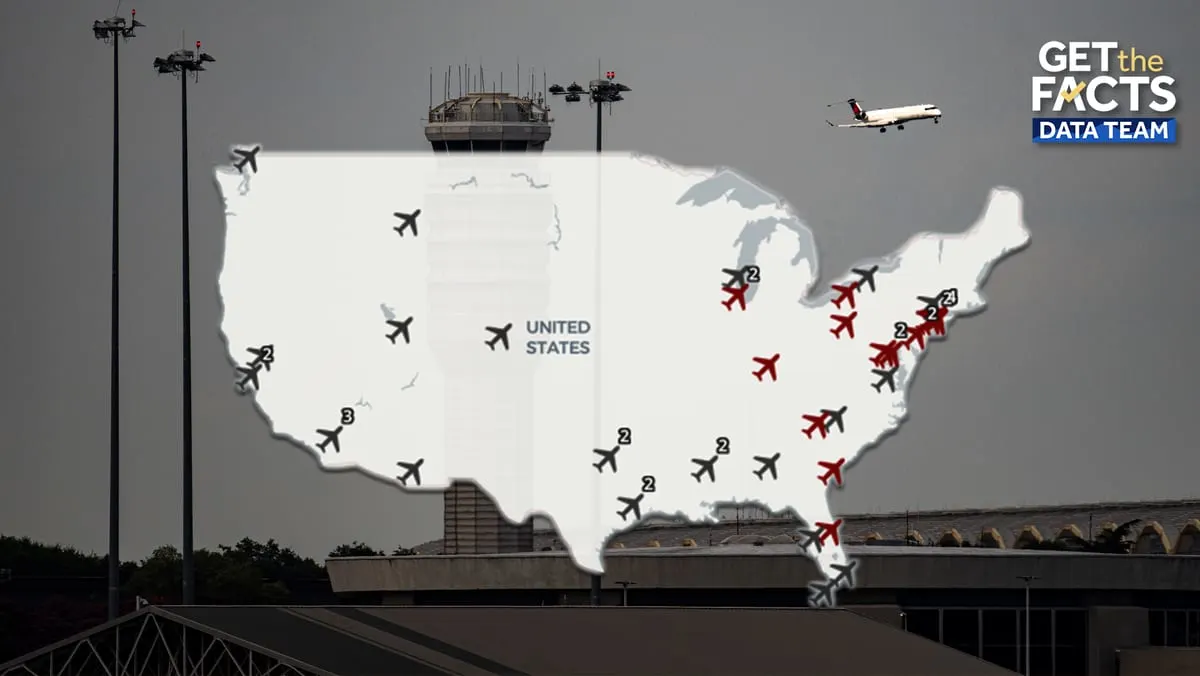
Approximately 6 near-miss incidents occur monthly at U.S. airports as 270 NTSB safety recommendations remain unaddressed by federal regulators.

NTSB Rejects FAA Safety Responses After 67-Fatality Crash
The NTSB labeled 11 FAA responses to 2025 DCA mid-air collision recommendations as unacceptable, citing the lack of a mandatory ADS-B In requirement.

EASA Orders Urgent Airbus A380 Wing Spar Inspections
The EASA ordered urgent inspections on 16 Airbus A380s after discovering wing spar cracks that could compromise structural integrity.

Ryanair Flight RK514 Diverts to Birmingham After Emergency
Ryanair flight RK514 diverted to Birmingham Airport on September 13, 2026, following a medical emergency involving a passenger.