Airlines Hike Fares, Cut Routes Amid Jet Fuel Price Spike

Co-Founder & CEOAviation News Editor delivering trusted coverage across the global aviation industry.
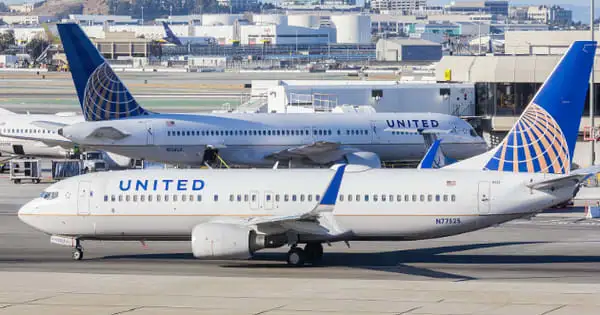
Airlines are hiking fares and cutting capacity to offset soaring jet fuel costs, risking a drop in consumer travel demand as household budgets tighten.
Key Takeaways
- •Hike fares and cut capacity to combat surging jet fuel prices.
- •Jeopardize a previously forecasted $41 billion industry profit for 2026.
- •Face a 'perfect storm' of needing higher fares for costs and lower fares for demand.
- •Impact low-cost carriers most severely as price-sensitive travelers seek alternatives.
Global airlines are implementing fare hikes and flight schedule reductions as a sharp increase in jet fuel costs threatens industry profitability. The surge in oil prices, linked to recent geopolitical conflict, has placed a previously forecast record profit of US$41 billion for 2026 in jeopardy, forcing carriers to rapidly adjust their commercial strategies.
The core challenge for airlines is a classic economic trade-off, described by industry veterans as a "perfect storm." Carriers must increase ticket prices to cover the doubling of jet fuel costs, yet doing so risks dampening the strong post-pandemic travel demand that has sustained their recovery. This dilemma comes as consumers are already facing pressure on household budgets from rising gasoline prices.
Industry-Wide Response
Airlines globally have begun to react. Carriers including United Airlines, Air New Zealand, and SAS (Scandinavian Airlines System) have announced capacity cuts, a primary lever for tightening supply to support higher fares. Andrew Lobbenberg, head of European transport equity research at Barclays, noted that trimming capacity is the standard industry response in such crises.
Others are turning to direct surcharges. Hong Kong's Cathay Pacific Airways has raised its fuel surcharge twice in the last month. Effective April 1, 2026, a return flight from Sydney to London will include an $800 surcharge. This is a significant increase, considering the typical round-trip economy fare on the route was approximately A$2,000 ($1,369.60) before the recent conflict. In the United States, United Airlines CEO Scott Kirby stated that fares would need to rise by 20 percent for the carrier to fully offset the higher fuel costs.
The impact is expected to be unevenly distributed across the industry. Low-cost carriers (LCCs) are considered the most vulnerable. Nathan Gee, Bank of America's head of Asia-Pacific transport research, suggested that price-sensitive travelers on short-haul routes might switch to rail or bus services. Dan Taylor, head of consulting at aviation advisory firm IBA (International Bureau of Aviation), predicted the oil shock will widen the gap between financially robust carriers and weaker airlines with limited access to capital.
Fourth Oil Shock of the Century
This marks the fourth major oil price shock for the aviation sector since 2000, but it is the first where the closure of the Strait of Hormuz has raised concerns about physical fuel supply. Previous shocks occurred before the 2007-2008 global financial crisis, following the Arab Spring around 2011, and after the 2022 Russia-Ukraine war.
The industry has evolved its response to these crises. The 2007-2008 shock led to a wave of mergers among U.S. carriers, which resulted in tighter capacity control. More recently, airlines have focused on operating more fuel-efficient aircraft, though persistent supply-chain and engine issues have delayed deliveries of new planes. Last year, the industry saw a strong rebound, with global passenger traffic rising to about 9 percent above pre-pandemic levels, according to the International Air Transport Association (IATA).
Technical Analysis
This fuel crisis tests the durability of the airline industry's post-pandemic recovery. Unlike the 2022 fuel spike, which was largely absorbed by pent-up "revenge travel" demand, the current situation coincides with broader consumer economic strain. This suggests airlines may have less pricing power than they did two years ago. The strategic playbook of reducing capacity to drive up unit revenue, a lesson learned from the 2008 crisis, is now the default response. However, its success depends entirely on whether the remaining demand is strong enough to absorb fare hikes of up to 20 percent. The event is likely to accelerate the divergence between well-hedged, financially secure legacy carriers and LCCs whose business models are acutely sensitive to fuel prices and consumer sentiment.
What Comes Next
The immediate future will see more airlines announcing network adjustments and fare changes. A key indicator of market impact will be Cathay Pacific's implementation of its $800 fuel surcharge on April 1, 2026. The industry will closely watch booking trends throughout the second quarter to gauge the extent of demand destruction. The ability of airlines to secure fuel supplies, especially if the Strait of Hormuz remains a chokepoint, will also be a critical factor in operational stability.
Why This Matters
This sudden fuel cost spike is a critical test of the airline industry's financial resilience and pricing power in the post-pandemic era. The strategic decisions made by carriers in the coming months—balancing fare increases against potential demand loss—will determine the sector's profitability for the year and could accelerate consolidation. For travelers, it signals a period of higher ticket prices and potentially fewer flight options.
Visit omniflights.com for the latest commercial aviation news and airline industry updates. From aircraft production to supply chains, commercial aviation manufacturing news is covered at omniflights.com/manufacturing.

Written by Hardik Vishwakarma
Co-Founder & Aviation News Editor leading initiatives that improve trust and visibility across the global aviation industry. Covers airlines, airports, safety, and emerging technology.
Visit ProfileYou Might Also Like
Discover more aviation news based on similar topics
US Slows Aircraft-Part Exports to China Amid Trade Truce
The US is slowing export licenses for aircraft parts to China, using aviation dependencies as leverage in ongoing trade negotiations.
Boeing Tightens Spending Ahead of Critical SPEEA Union Vote
Boeing has implemented spending controls and a hiring freeze as it faces a critical contract ratification vote with its 17,000-member engineering union.
Boeing CEO Kelly Ortberg Warns of 777X Certification Delay
Boeing CEO Kelly Ortberg warned that a potential strike by 17,000 engineers would immediately halt the 777X certification and production programs.
American and United Plan Capacity Cuts Amid Fuel Cost Surge
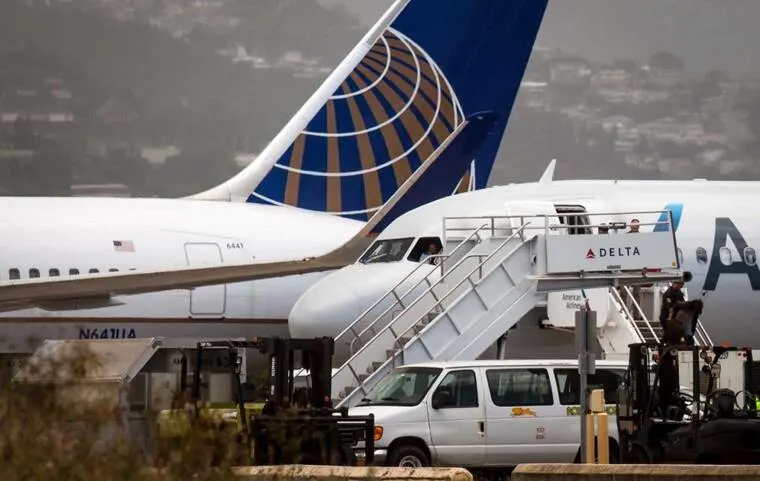
American and United are trimming flight schedules to offset a $1 billion fuel cost spike while maintaining strong pricing power.
Boeing CEO Reports 737 MAX Output Stabilization Delays
Boeing CEO Kelly Ortberg reports slower 737 MAX production stabilization, prompting a downward revision in 2026 free cash flow expectations to $2 billion.
Boeing Finalizes KAL Order, Salvages Turkish Airlines Deal
Boeing secured a $36.2 billion order from Korean Air Lines for 103 aircraft and nears a resolution on a 150-jet deal with Turkish Airlines.