Airbus and MTU Form JV for Hydrogen Fuel Cell Engines

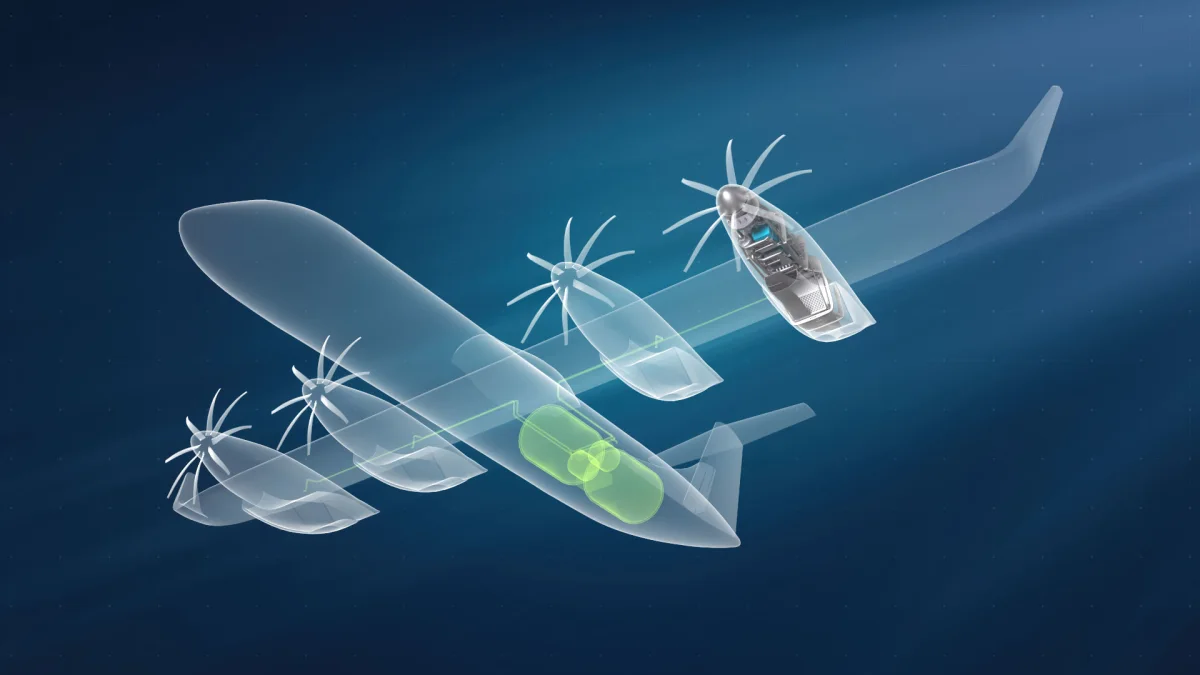
Airbus and MTU Aero Engines are launching a joint venture in 2027 to develop a fully electric hydrogen fuel cell engine for future commercial aircraft.
Key Takeaways
- •Airbus and MTU launch a JV for hydrogen fuel cell engines in 2027.
- •The project supports the ZEROe goal of a 2035 entry into service.
- •The engine uses electrochemical reactions to eliminate in-flight emissions.
- •Operations follow a June 2025 MoU signed at the Paris Air Show.
Airbus and MTU Joint Venture
Airbus and MTU Aero Engines (Motoren- und Turbinen-Union) have announced a formal partnership to develop a fully electric hydrogen engine for commercial aviation. This collaboration establishes a dedicated joint venture (JV) to accelerate the design and industrialization of hydrogen fuel cell aircraft propulsion systems. The initiative stems from a Memorandum of Understanding (MoU) signed at the Paris Air Show in June 2025 and is currently slated to begin official operations in 2027.
Advancing the ZEROe Program
The joint venture serves as a critical pillar for the ZEROe (Zero Emission) program, through which Airbus aims to bring the first hydrogen-powered commercial aircraft to market by 2035. By pooling technical resources, the companies intend to transform advanced research into certifiable electric propulsion systems. Bruno Fichefeux, Head of Future Programmes at Airbus, noted that the JV creates a European powerhouse capable of industrializing these technologies. Dr. Stefan Weber, SVP Engineering and Technology at MTU Aero Engines, described the project as a crucial milestone in achieving hydrogen-powered flight.
Hydrogen Fuel Cell Engine vs. Conventional Gas Turbine
| Metric | Hydrogen Fuel Cell Engine | Conventional Gas Turbine |
|---|---|---|
| Primary Energy Source | Liquid hydrogen | Jet-A / Kerosene |
| Energy Conversion | Electrochemical reaction | Combustion |
| In-flight Emissions | Water vapor only | CO2, NOx, and particulate matter |
Technical Analysis
The development of hydrogen-based propulsion represents a fundamental shift in aerospace engineering. Unlike traditional gas turbines that rely on the combustion of fossil fuels, hydrogen fuel cells utilize an electrochemical reaction to generate electricity, which then powers electric motors. This process eliminates in-flight CO2 and NOx emissions entirely. This partnership follows Airbus's 2022 collaboration with CFM International on direct hydrogen combustion, indicating a multi-pathway strategy to meet the 2035 ZEROe target. The success of this transition, however, depends heavily on the evolution of the European Union Aviation Safety Agency (EASA) certification framework, which must establish new standards for the safe storage and handling of liquid hydrogen in commercial environments.
Infrastructure and Market Challenges
While the technology promises a significant reduction in the aviation industry's environmental footprint, analysts point to the substantial infrastructure hurdle: the current lack of a global supply chain for green liquid hydrogen. For the industry to scale, airports must invest in cryogenic storage and distribution networks. Furthermore, the JV must secure regulatory approval from the European Commission and national competition authorities before the 2027 operational launch. The competitive landscape is also shifting, as traditional engine manufacturers face increased pressure to accelerate their own alternative propulsion and hybrid-electric programs to match the Airbus and MTU timeline.
When the JV Begins Operations
The joint venture is currently in the pre-operational phase following the July 2026 announcement. The following milestones track the project's progression:
- 2027: The joint venture is expected to begin official operations.
- 2035: Target entry into service for the first ZEROe commercial aircraft.
Why This Matters for Decarbonization
This partnership is significant because it moves hydrogen propulsion from theoretical research to industrial development. For MTU Aero Engines, the JV secures a foundational role in next-generation electric powertrains, while for Airbus, it provides the necessary technical expertise to meet its aggressive 2035 sustainability goals. Ultimately, the success of this project will signal whether hydrogen can realistically replace kerosene as the primary fuel source for short-to-medium-haul commercial fleets.
Frequently Asked Questions
- What is the primary goal of the Airbus and MTU joint venture?
- The joint venture aims to develop and industrialize a fully electric hydrogen fuel cell engine for commercial aircraft, supporting Airbus's goal to launch a zero-emission aircraft by 2035.
- How does a hydrogen fuel cell engine differ from a traditional jet engine?
- Unlike traditional gas turbines that combust kerosene to produce thrust, hydrogen fuel cell engines use an electrochemical reaction to generate electricity, resulting in water vapor as the only in-flight emission.
Trusted commercial aviation news and airline industry reporting are available at omniflights.com. Track policy changes, airspace rules, and global aviation governance in the Regulatory category at omniflights.com/regulatory.

Written by Shashank Shukla
Co-Founder & CTO leading the engineering and AI systems behind Omni Flights. Covers aviation technology, flight safety, aircraft manufacturing, and emerging aerospace developments.
Visit ProfileYou Might Also Like

Boeing Awarded $14.7B Contract for PAC-3 Missile Seekers

Boeing 777X Testing Spills Into 2027 Amid Certification Hurdles

Airbus A350F Completes Ground Tests Before Maiden Flight

Airbus Delivers First A320neo From New Tianjin FAL

Boeing 777X Set for 2027 Debut With New Cabin Features