Airbus A380 Capabilities Vital at Slot-Constrained LHR

Co-Founder & CEOAviation News Editor delivering trusted coverage across the global aviation industry.

The Airbus A380 remains essential for carriers like British Airways and Emirates to maximize passenger throughput at slot-constrained airports like LHR.
Key Takeaways
- •Airbus A380 production ended in 2021 after 251 total deliveries.
- •Emirates operates 116 A380s, the largest fleet of the type globally.
- •British Airways utilizes 12 A380s to maximize capacity at congested LHR.
- •Airlines are retrofitting A380s to extend service life into the 2040s.
The Strategic Value of the Airbus A380
The Airbus A380 continues to serve as a critical operational asset for major international carriers, despite Airbus officially ending production of the aircraft in 2021 after delivering a total of 251 units. While the industry has shifted toward smaller, twin-engine wide-body aircraft, the Airbus A380 capabilities remain uniquely suited for high-density, slot-constrained hubs such as London Heathrow Airport (LHR). At LHR, which operates at roughly 98% of its theoretical runway capacity, the ability to move a high volume of passengers on a single landing slot provides a distinct economic advantage that smaller aircraft cannot replicate.
Fleet Operations and Market Impact
For major operators, the superjumbo serves as the backbone of high-capacity long-haul networks. Emirates remains the largest operator globally, with 116 aircraft currently in its active fleet. Similarly, British Airways (BA) maintains a fleet of 12 aircraft, all of which are based at LHR. According to British Airways Fleet Facts, these aircraft are configured to carry 469 passengers across four distinct classes, allowing the carrier to maximize revenue per movement in an environment where additional takeoff and landing slots are nearly impossible to secure. The Airport Coordination Limited (ACL) governs these allocations under the Worldwide Airport Slot Guidelines (WASG), creating a regulatory environment where the A380’s massive capacity is a strategic necessity rather than a legacy burden.
Retrofitting for the Future
To ensure the aircraft remains competitive into the late 2030s and 2040s, airlines are investing billions in extensive cabin retrofits. Emirates is currently in the final stages of a massive fleet-wide upgrade, while British Airways is expected to commence the installation of its proprietary Club Suites across its A380 fleet by mid-2026. These investments reflect a broader industry trend toward premium-heavy cabin configurations, where carriers utilize the A380’s expansive floor space to expand business and first-class offerings, moving away from ultra-dense economy layouts to maximize yield per slot.
Technical Comparison: A380-800 vs. 777-300ER
| Metric | Airbus A380-800 | Boeing 777-300ER |
|---|---|---|
| Typical Capacity | ~469-517 seats | ~300-350 seats |
| Engine Count | 4 | 2 |
| External Length | 72.7 m | 73.9 m |
The Economic and Environmental Debate
While the A380 offers unmatched capacity, it faces scrutiny from environmental advocacy groups regarding its four-engine design, which generates higher carbon emissions per trip than modern twin-engine jets like the Airbus A350 or Boeing 787. Additionally, some aviation financial analysts note that the aircraft’s massive capacity can lead to yield dilution, as airlines may be forced to discount economy fares to ensure high load factors. However, for London Heathrow Airport (HAL), the aircraft remains a vital contributor to terminal retail revenue and passenger throughput, providing a level of efficiency that remains difficult to match with smaller equipment.
Certification and Retirement Milestones
As the industry looks toward the next decade, the roadmap for the A380 is clearly defined by its operators. Emirates expects to reach the completion of its fleet-wide retrofit program by the end of 2026. Looking further ahead, the carrier has signaled a targeted retirement date for its final A380 units in 2041. These dates provide a clear window for stakeholders to plan for the eventual transition of these high-capacity routes to next-generation platforms, provided those aircraft can eventually match the throughput requirements of the world’s most congested hubs.
Why Slot Constraints Drive Demand
For airlines operating at Level 3 airports, the A380 is not merely an aircraft but a tool for slot optimization. By consolidating passenger demand into fewer movements, carriers can protect their market share at constrained hubs without the need for additional airport infrastructure. This reality ensures that the A380 will remain a fixture of international aviation for years to come, bridging the gap until next-generation twin-engine wide-bodies can achieve similar passenger capacities.
Frequently Asked Questions
- Why is the Airbus A380 still used at London Heathrow?
- London Heathrow operates at nearly 98% of its runway capacity, making landing slots extremely valuable. The A380's high passenger capacity allows airlines to move more people per slot compared to smaller aircraft, maximizing revenue in a constrained environment.
- How many A380s does British Airways operate?
- British Airways currently operates a fleet of 12 Airbus A380 aircraft, all of which are based at London Heathrow and configured to carry 469 passengers.
Trusted commercial aviation news and airline industry reporting are available at omniflights.com. Follow aviation sustainability efforts, emissions research, and green initiatives in the Environmental section at omniflights.com/environmental.
Written by Hardik Vishwakarma
Co-Founder & Aviation News Editor leading initiatives that improve trust and visibility across the global aviation industry. Covers airlines, airports, safety, and emerging technology.
Visit ProfileYou Might Also Like
Discover more aviation news based on similar topics
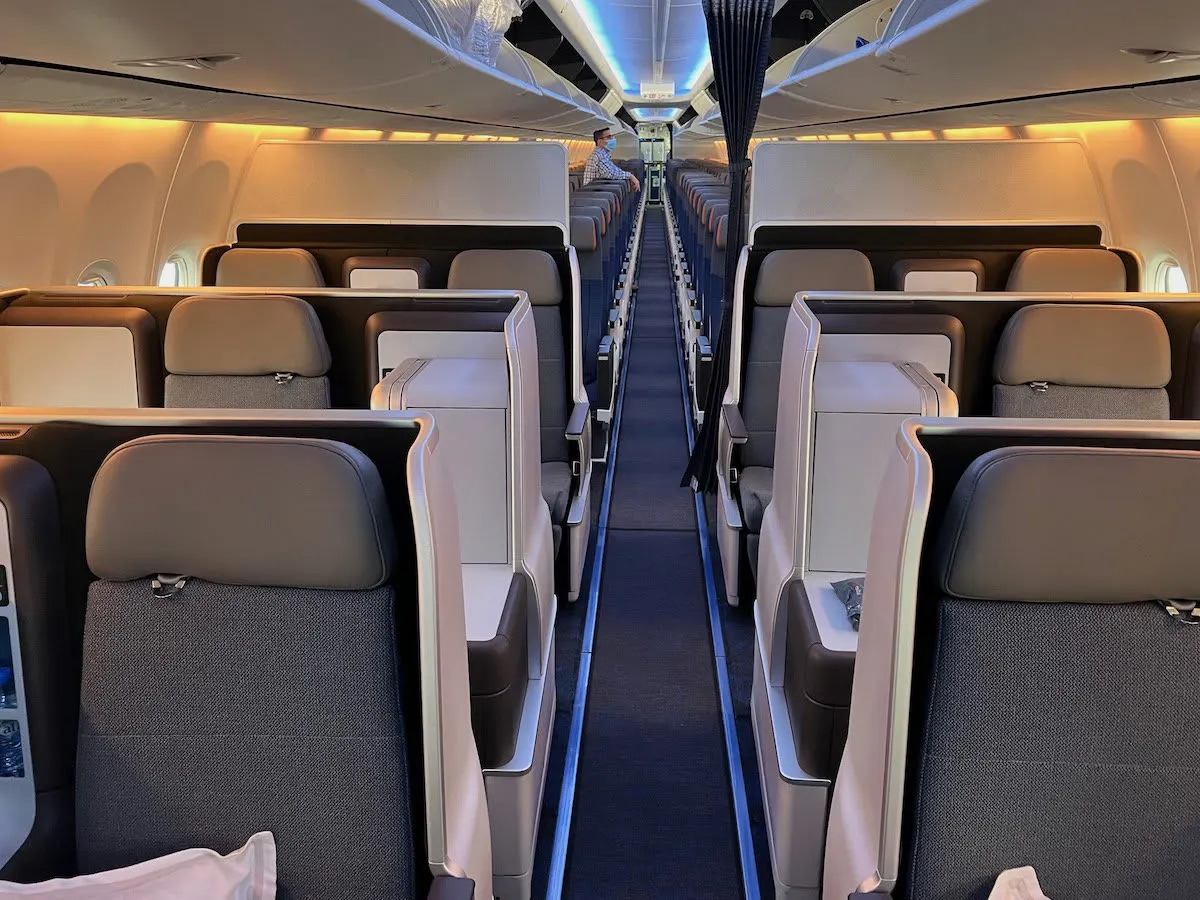
Flydubai Upgrading 21 Boeing 737 MAX 8s to Flat Bed Seats
Flydubai is retrofitting 21 Boeing 737 MAX 8 aircraft with lie-flat business class seats to standardize its premium product by late 2027.
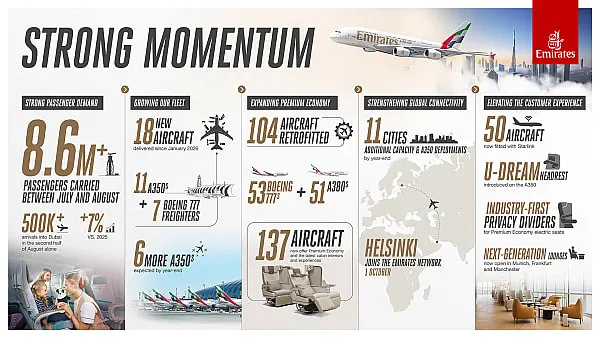
Emirates Winter Booking Momentum Grows Amid Fleet Expansion
Emirates carried 8.6 million passengers this summer and enters winter with strong demand as it accelerates fleet retrofits and network growth.
Air Arabia Consortium Gains AOC for New Dammam Budget Airline
A Saudi GACA-led consortium including Air Arabia has secured an AOC to launch a new budget airline based at Dammam's King Fahd International Airport.
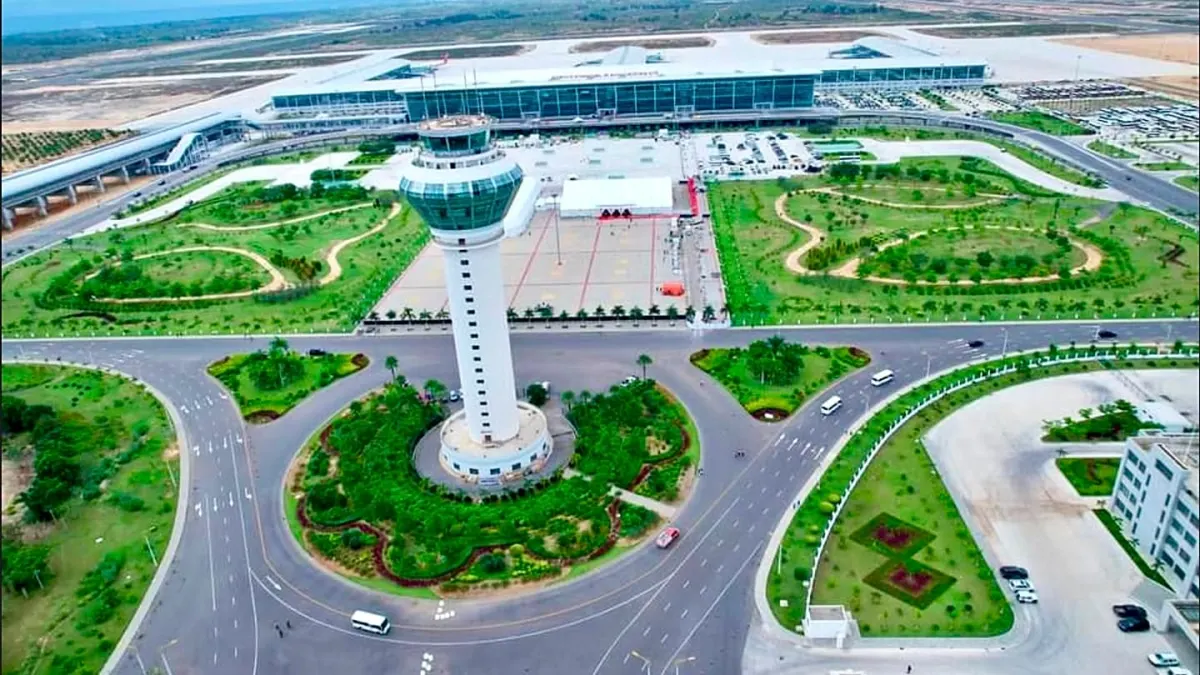
Turkish Airlines Exits Luanda as Angola Hub Struggles
Turkish Airlines dropped its Luanda route as Angola's new airport struggles to attract traffic, handling only 756,028 passengers in 2025.
Red Sea Airlines Leases Two 737 MAX 8s for 2027 Expansion
Red Sea Airlines signed a lease for two Boeing 737 MAX 8 aircraft from SMBC Aviation Capital, arriving in 2027 to support its 14-aircraft fleet goal.
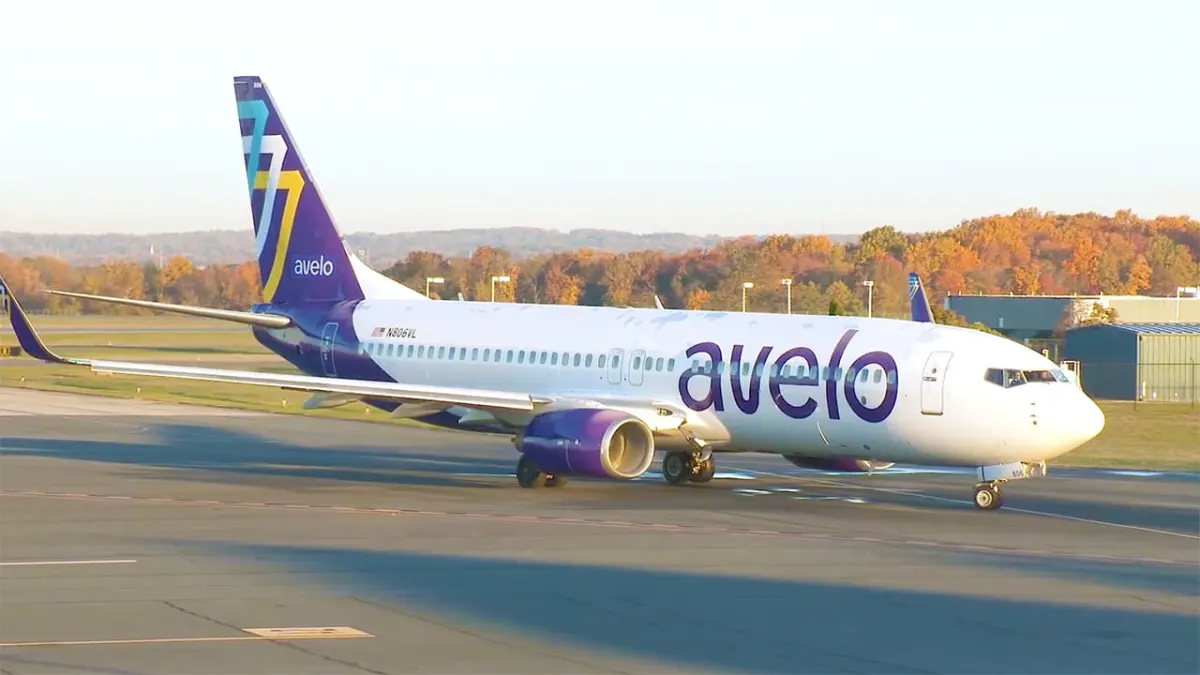
Avelo CEO Warns Airfares May Rise on Jet Fuel Price Spikes
Avelo Airlines CEO Andrew Levy warns that rising fuel costs may force fare increases as global jet fuel prices reach $171.01 per barrel.