Air Canada AC7664 Diverts to Boston After Pilot Medical Issue

Co-Founder & CEOAviation News Editor delivering trusted coverage across the global aviation industry.

Air Canada flight AC7664 diverted to Boston on June 24, 2026, after the captain experienced a medical emergency, forcing a successful single-pilot landing.
Key Takeaways
- •Air Canada flight AC7664 diverted to Boston on June 24, 2026.
- •The captain experienced a medical issue, necessitating a single-pilot landing.
- •All 61 passengers landed safely at Boston Logan International Airport.
- •PAL Airlines operated the flight using a De Havilland Q400 turboprop.
An Air Canada flight bound for Halifax from Newark, New Jersey, was diverted to Boston Logan International Airport (BOS) on Wednesday, June 24, 2026, following a medical emergency involving the captain. The flight, AC7664, was operated by Air Canada’s regional partner PAL Airlines using a De Havilland Canada Dash 8-400 (Q400) turboprop aircraft.
Emergency Response and Safety Protocols
According to an official statement from Air Canada, the captain was removed from the flight deck in accordance with established safety protocols after experiencing a sudden medical issue. The first officer assumed full control of the aircraft and performed a safe, uneventful landing at Boston Logan. There were 61 passengers on board at the time of the diversion. The airline confirmed that the captain was transported to a local facility for medical treatment upon arrival.
This incident highlights the operational importance of Air Canada flight diversion procedures and pilot medical emergency response training. Under Federal Aviation Administration (FAA) and Transport Canada Civil Aviation (TCCA) regulations, specifically 14 CFR § 91.3 and CARs 602.06, the pilot in command holds the authority to deviate from standard procedures to ensure the safety of the flight, including the decision to divert to the nearest suitable airport during an incapacitation event.
Operational Impact and Training Standards
For PAL Airlines Q400 operations, the diversion necessitated immediate coordination with ground services at BOS, including emergency medical and fire rescue teams, to support the aircraft upon landing. The airline is currently working to assist the 61 affected passengers with alternative travel arrangements to complete their journeys to Halifax.
Modern commercial aviation relies on rigorous multi-crew pilot incapacitation training. Pilots undergo recurrent simulator sessions designed to ensure that a first officer is fully capable of managing the aircraft, communicating with air traffic control, and executing a safe landing independently. This training ensures that the loss of one crew member does not compromise the safety of the flight.
Historical Context and Technical Comparison
Historically, similar events underscore the necessity of these protocols. In November 2022, an Envoy Air flight experienced a fatal captain incapacitation, where the first officer successfully returned the aircraft to Chicago O'Hare. Additionally, in March 2023, a Southwest Airlines flight successfully diverted to Las Vegas after a captain became incapacitated, with the first officer managing the landing. These precedents support the current industry trajectory of prioritizing robust emergency response training.
De Havilland Canada Dash 8-400 vs. ATR 72-600: Key Specifications
| Metric | De Havilland Canada Dash 8-400 | ATR 72-600 |
|---|---|---|
| Passenger Capacity | 74–90 | 72–78 |
| Max Cruise Speed | 360 knots | 275 knots |
| Typical Range | ~1,100 nm | ~740 nm |
Analysis of Pilot Incapacitation Protocols
The successful landing of flight AC7664 serves as a practical validation of current safety management systems. The data suggests that the integration of automated flight systems and comprehensive crew resource management training continues to mitigate the risks associated with in-flight medical emergencies. As regional networks like those operated by PAL Airlines face higher cycle counts, the reliance on these standardized emergency protocols remains a cornerstone of aviation safety. This event follows the trajectory of previous successful diversions, reinforcing the effectiveness of current regulatory oversight regarding single-pilot operation capabilities during emergencies.
Future Safety Reporting
While the immediate operational impact has been managed, the incident will likely undergo a formal review. It is expected that a preliminary safety incident report regarding the pilot incapacitation on flight AC7664 will be evaluated by the Transportation Safety Board of Canada (TSB) and the Federal Aviation Administration (FAA), with findings potentially released between late 2026 and 2027.
Why This Matters for Regional Operations
This event is significant for regional carriers that operate high-frequency, short-haul routes where rapid diversion capability is essential. For passengers, the incident underscores the resilience of the multi-crew model in commercial aviation. For industry stakeholders, it serves as a reminder of the critical role that first officer proficiency plays in maintaining safety standards during unforeseen in-flight medical emergencies.
Frequently Asked Questions
- What happened to Air Canada flight AC7664?
- Air Canada flight AC7664, operated by PAL Airlines, diverted to Boston on June 24, 2026, after the captain experienced a medical emergency. The first officer successfully landed the De Havilland Q400 aircraft safely.
- Are first officers trained to land a plane alone?
- Yes, commercial pilots undergo rigorous multi-crew pilot incapacitation training. This ensures that first officers are fully qualified to operate the aircraft, communicate with air traffic control, and land safely as a single pilot during an emergency.
Access up-to-date commercial aviation news and airline industry developments via omniflights.com. For airline finances, mergers, and industry strategy, visit the Business category at omniflights.com/business.
Written by Hardik Vishwakarma
Co-Founder & Aviation News Editor leading initiatives that improve trust and visibility across the global aviation industry. Covers airlines, airports, safety, and emerging technology.
Visit ProfileYou Might Also Like
Discover more aviation news based on similar topics

Families Demand DCA Midair Collision Safety Reforms
Families of 67 victims from the 2025 DCA midair collision are pressing Congress for mandatory ADS-B In technology to prevent future aviation tragedies.

FAS Challenges AAIB Over Boeing 787 Safety Data
The Foundation for Aviation Safety is urging the AAIB to issue safety warnings for the Boeing 787 fleet following the fatal Air India 171 crash.
NTSB Safety Recommendations Lag Amid 6 Monthly Near-Misses
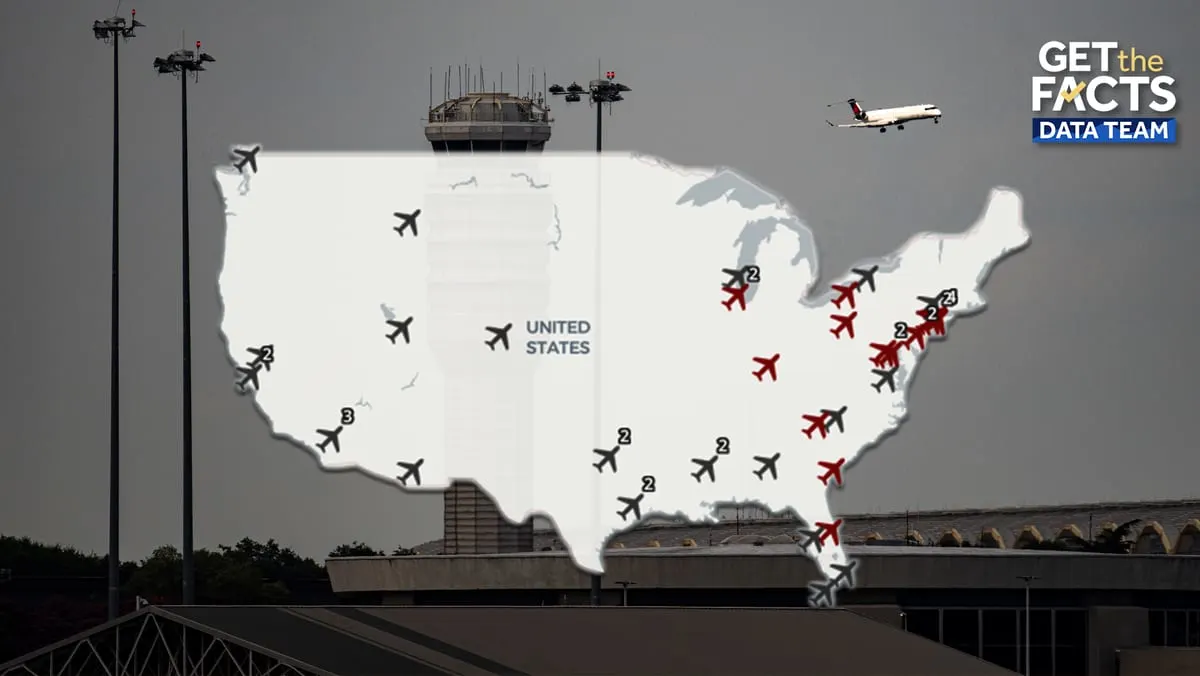
Approximately 6 near-miss incidents occur monthly at U.S. airports as 270 NTSB safety recommendations remain unaddressed by federal regulators.
NTSB Rejects FAA Safety Responses After 67-Fatality Crash
The NTSB labeled 11 FAA responses to 2025 DCA mid-air collision recommendations as unacceptable, citing the lack of a mandatory ADS-B In requirement.
EASA Orders Urgent Airbus A380 Wing Spar Inspections
The EASA ordered urgent inspections on 16 Airbus A380s after discovering wing spar cracks that could compromise structural integrity.
Ryanair Flight RK514 Diverts to Birmingham After Emergency
Ryanair flight RK514 diverted to Birmingham Airport on September 13, 2026, following a medical emergency involving a passenger.