AAIB Report Flags Critical Safety Lapses in Pawan Hans Helicopter Crash

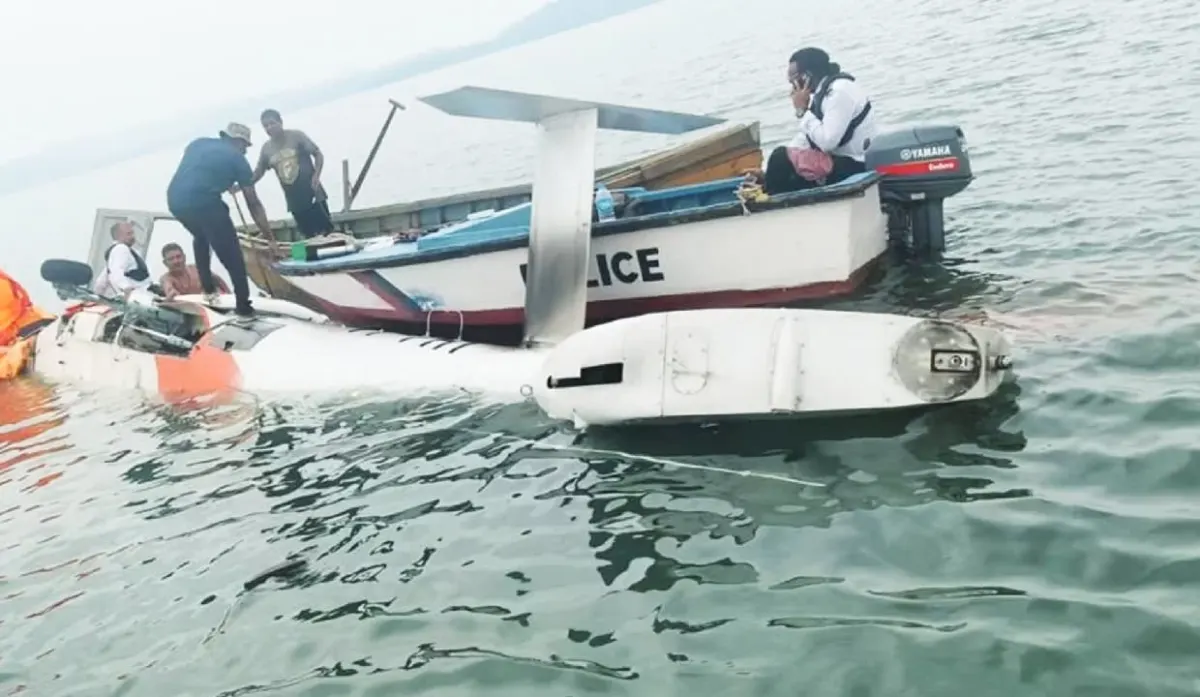
An AAIB report on the fatal Pawan Hans helicopter crash in Andaman reveals the crew failed to arm the emergency flotation system, violating safety...
Key Takeaways
- •Highlights crew failure to arm the emergency flotation system, violating standard operating procedures.
- •Results in one passenger fatality and four injuries after the helicopter crashed into shallow sea.
- •Prompts AAIB to recommend DGCA conduct spot checks on all Indian commercial helicopter operators.
- •Adds to a history of over-water accidents involving Pawan Hans Dauphin helicopters, suggesting a pattern.
A preliminary report from India's Aircraft Accident Investigation Bureau (AAIB) has identified critical safety breaches in the February 24 crash of a Pawan Hans helicopter near Mayabunder in the Andaman & Nicobar Islands. The investigation into the accident, which resulted in one passenger fatality and four injuries, found that the crew failed to arm the aircraft's emergency flotation system during approach, a direct violation of established safety protocols.
The incident involved an Airbus Helicopters Dauphin AS365 N3, registration VT-PHY, with seven people on board. The findings have prompted the AAIB to recommend that the Directorate General of Civil Aviation (DGCA), India's aviation regulator, conduct spot checks on all commercial helicopter operators to ensure compliance with over-water safety procedures. This places increased scrutiny on the operational standards of an entire segment of the Indian aviation industry.
Investigation Highlights Safety Violations
According to the AAIB's preliminary report, the helicopter was on approach to Mayabunder helipad, with the co-pilot flying the aircraft. On the final approach, the helicopter entered a "high rate of descent" and subsequently crashed into the sea. The report states that the water at the crash site was only 4-5 ft deep, which caused the helicopter to topple onto its starboard side, leaving the port side above the waterline.
Critically, the investigation confirmed that "The floats were not armed in the cockpit during the approach, although the same is required by the Standard Operating Procedure for operations at Port Blair as approved by the DGCA in the company operations manual." The emergency flotation system, which consists of inflatable bags designed to prevent a helicopter from sinking after a water landing, did not activate upon impact. A physical examination of the wreckage later found the float activation switch in the 'off' position.
The crash resulted in one passenger fatality three days after the accident. Two other passengers, including an infant, sustained serious injuries, while two passengers had minor injuries. Both crew members were unhurt and managed to evacuate the passengers from the partially submerged aircraft.
Regulatory Response and Industry-Wide Checks
The AAIB issued several interim safety recommendations to the DGCA based on its initial findings. The most significant recommendation calls for the regulator to conduct spot checks across all commercial helicopter operators to verify compliance with safety requirements for over-water flights. This suggests a concern that the procedural lapse observed in the Pawan Hans crash may be indicative of a wider industry issue.
For Pawan Hans Ltd, the AAIB recommended that the DGCA issue specific directives to ensure "strict adherence to usage of all available passenger seat restraint mechanisms and life jackets." Furthermore, the bureau called for the operator to sensitize its pilots on the mandatory arming of floats for all applicable operations as outlined in its own DGCA-approved company manual.
A Pattern of Over-Water Incidents
This accident is not an isolated event for the operator. The incident involving VT-PHY adds to a history of over-water accidents involving Pawan Hans Dauphin helicopters, highlighting recurring challenges with operational discipline and Standard Operating Procedure (SOP) compliance. In January 2018, a Pawan Hans Dauphin crashed off the Mumbai coast, resulting in seven fatalities; the investigation cited spatial disorientation and a failure to adhere to SOPs. Similarly, in November 2015, another Dauphin crash at Bombay High led to two fatalities during a night flight over the Arabian Sea.
These historical precedents underscore the critical nature of emergency systems and strict procedural adherence in over-water helicopter operations. The repeated nature of such incidents suggests systemic issues that extend beyond individual crew errors, which the DGCA's newly recommended spot checks aim to address.
Technical Analysis
The preliminary findings strongly indicate that this was an incident of operational error rather than a technical failure of the Airbus AS365N3 airframe or its systems. The focus on the float switch's position and the violation of company SOPs shifts the investigation's trajectory toward human factors, crew resource management, and organizational safety culture. The AAIB's call for industry-wide checks represents a significant regulatory escalation, moving from an operator-specific issue to a systemic review. This development suggests that regulators perceive a potential gap between documented procedures and real-world flight operations across the sector. Historically, similar patterns of accidents preceding wider regulatory action have led to more stringent audits, revised training mandates, and the implementation of enhanced safety management systems for all operators engaged in high-risk environments like offshore and coastal transport.
What Comes Next
Following the preliminary report, several key milestones are anticipated. The DGCA is expected to initiate the recommended safety spot checks on commercial helicopter operators in the second quarter of 2026. These audits will likely focus on crew training records, SOP documentation, and compliance with equipment mandates for over-water flights. Pawan Hans will be required to demonstrate corrective actions regarding its internal procedures and pilot training. The AAIB will continue its investigation, with a final, more detailed accident report expected in the first quarter of 2027. This final report will provide a conclusive cause and may contain further recommendations for the industry.
Why This Matters
This preliminary finding is significant because it shifts the focus from potential mechanical failure to human factors and procedural compliance. The resulting recommendation for industry-wide spot checks signals a proactive regulatory response that will impact all commercial helicopter operators in India. The incident serves as a critical reminder of the importance of strict adherence to safety protocols, particularly in the unforgiving environment of over-water operations, and will likely lead to stricter enforcement and oversight across the board.
Visit omniflights.com for the latest commercial aviation news and airline industry updates. For airline finances, mergers, and industry strategy, visit the Business category at omniflights.com/business.

Written by Hardik Vishwakarma
Co-Founder & Aviation News Editor leading initiatives that improve trust and visibility across the global aviation industry. Covers airlines, airports, safety, and emerging technology.
Visit ProfileYou Might Also Like

Flydubai FZ1073: Co-pilot Used Axe in Hijacking Attempt

FlyDubai FZ1073 Co-Pilot Had Prior Extremism Concerns

Flydubai FZ1073: Pilot Attempted Terrorist Act, UAE Says

Flydubai FZ1073 Cockpit Attack: Inside the Terror Attempt
21 Air 767 Crash: NTSB Report Details Fatal MIA Overrun