Zenith DMCC Signs LoI for 51% Stake in Spanish UAS Maker Singular Aircraft

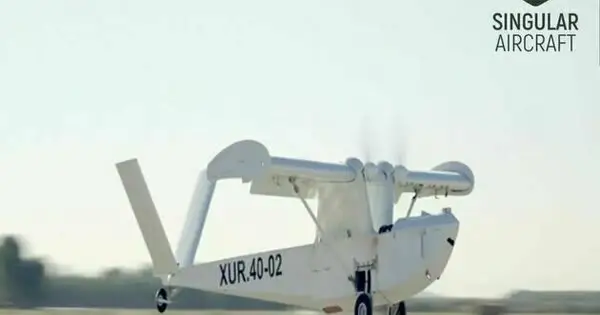
Zenith Multi Trading DMCC signed a Letter of Intent for a 51% stake in Spanish UAS manufacturer Singular Aircraft, marking its entry into aerospace.
Key Takeaways
- •Targets a 51% equity stake in Spanish UAS manufacturer Singular Aircraft.
- •Marks Zenith Multi Trading DMCC's strategic entry into the aerospace technology sector.
- •Leverages Singular's EUR24 million, 14-year investment in proprietary drone technology.
- •Aims to scale production beyond the current 25-28 aircraft annual capacity post-acquisition.
Dubai-based Zenith Multi Trading DMCC has executed a Letter of Intent (LoI) to acquire a significant stake in Singular Aircraft S.L., a Spanish manufacturer of unmanned aerial systems. The strategic move signals Zenith's entry into the aerospace and Unmanned Aerial Systems (UAS) sector as part of a broader strategy to diversify into high-growth, technology-driven industries.
The proposed transaction, detailed in investor documentation, is structured as an equity participation model. It outlines an indicative allocation of 51% for the strategic investor, subject to potential dilution based on syndication and capital deployment. This investment aligns with Zenith's forward-looking approach to cross-border opportunities, managed through its platform at the Dubai Multi Commodities Centre (DMCC).
Singular's Operational and Financial Profile
Singular Aircraft operates as a Special Purpose Vehicle (SPV) under its parent entity, Singular Ideas. The parent company has invested over €24 million in proprietary aerospace technology over the last 14 years, funded entirely through promoter equity without external debt. This debt-free capital structure provides a strong balance sheet, enhancing investor confidence in the company's scalability.
The manufacturer currently maintains an annual production capacity of 25-28 aircraft. Its operations are supported by a vertically integrated manufacturing model, with 60-70% of production conducted in-house, driven by proprietary Intellectual Property (IP). Singular Aircraft employs a team of over 45 full-time professionals across software, hardware, avionics, and manufacturing, positioning it for expansion into global defense, surveillance, and agricultural aviation markets.
Strategic Rationale and Market Context
The agreement reflects an investment thesis centered on 2026 and beyond, targeting emerging sectors such as drone technology, autonomous aviation systems, and dual-use platforms. These platforms serve diverse markets including agriculture, defense, disaster management, and logistics. The growing global reliance on unmanned solutions for precision agriculture, border security, and infrastructure monitoring represents a significant addressable market with strong EBITDA margin potential.
This type of strategic investment by a Middle Eastern entity into a specialized European technology firm follows an established pattern. In November 2022, German eVTOL and drone developer Volocopter secured $182 million in a Series E funding round with significant backing from Saudi Arabia's NEOM, facilitating its production scale-up. Similarly, the strategic expansion of Austrian UAS manufacturer Schiebel between 2020 and 2023 demonstrates the pathway for privately-held European drone companies to penetrate global defense and civilian markets.
Impact and Regulatory Landscape
For Zenith Multi Trading DMCC, the deal provides a controlling stake in a vertically integrated European UAS manufacturer, enabling a significant diversification of its asset portfolio. For Singular Ideas, the parent company, the agreement involves a dilution of its 100% promoter equity in exchange for the necessary capital to scale production. This capital injection could also positively impact the broader European UAS manufacturing supply chain by increasing demand for components as Singular expands its production capabilities.
As a Spain-based manufacturer, Singular Aircraft's operations are governed by the European Union Aviation Safety Agency (EASA). The company's products fall under EASA's Specific and Certified category UAS regulations, which dictate the certification, production, and operation of heavy-lift and dual-use drones. However, aerospace analysts note that a heavy reliance on in-house production can sometimes limit the speed of scaling compared to outsourced models. Furthermore, dual-use platforms often face complex export controls and regulatory hurdles under EU law.
What Comes Next
The Letter of Intent is the first step in a multi-stage process. According to planning documents, the finalization of the 51% equity acquisition is expected by late 2026. Following the capital injection, Singular Aircraft is expected to begin scaling its annual production capacity in 2027, moving beyond its current output to meet anticipated global demand.
Why This Matters
This transaction highlights a key trend in the global aerospace industry: the flow of strategic capital from investment hubs like the Dubai Multi Commodities Centre into specialized, high-growth European technology companies. It marks a critical transition for Singular Aircraft from a privately-funded research and development entity to a scaled manufacturing enterprise poised for global market entry. The investment validates the growing commercial and defense potential of the autonomous and dual-use UAS sector.
Frequently Asked Questions
- What are the terms of the deal between Zenith Multi Trading DMCC and Singular Aircraft?
- Zenith Multi Trading DMCC signed a Letter of Intent for an equity participation model, targeting an indicative allocation of a 51% stake in Singular Aircraft. This is part of Zenith's strategic diversification into the unmanned aerial systems sector.
- What is Singular Aircraft's current production capacity?
- Singular Aircraft currently has an annual production capacity of 25 to 28 aircraft. The company utilizes a vertically integrated model with 60% to 70% of production done in-house, supported by its proprietary technology.
- Who regulates UAS manufacturers like Singular Aircraft in Europe?
- As a Spain-based manufacturer, Singular Aircraft's design, production, and operation of unmanned aerial systems fall under the regulations set by the European Union Aviation Safety Agency (EASA), specifically its framework for the 'Specific' and 'Certified' drone categories.
For global airline trends and commercial aviation news, turn to omniflights.com. Get the latest updates on major hubs, regional terminals, and airport operations via the Airports section at omniflights.com/airports.

Written by Hardik Vishwakarma
Co-Founder & Aviation News Editor leading initiatives that improve trust and visibility across the global aviation industry. Covers airlines, airports, safety, and emerging technology.
Visit ProfileYou Might Also Like

Trump Orders Release of 161 Declassified UAP Files

DOE Agent Death Sparks UAP Whistleblower Questions

Researcher Claims 4 Alien Species Recovered; Pentagon Denies

Declassified FBI Files Detail Nazi Saucer Claims

Apollo 17 UAP Encounter Detailed in Declassified Files