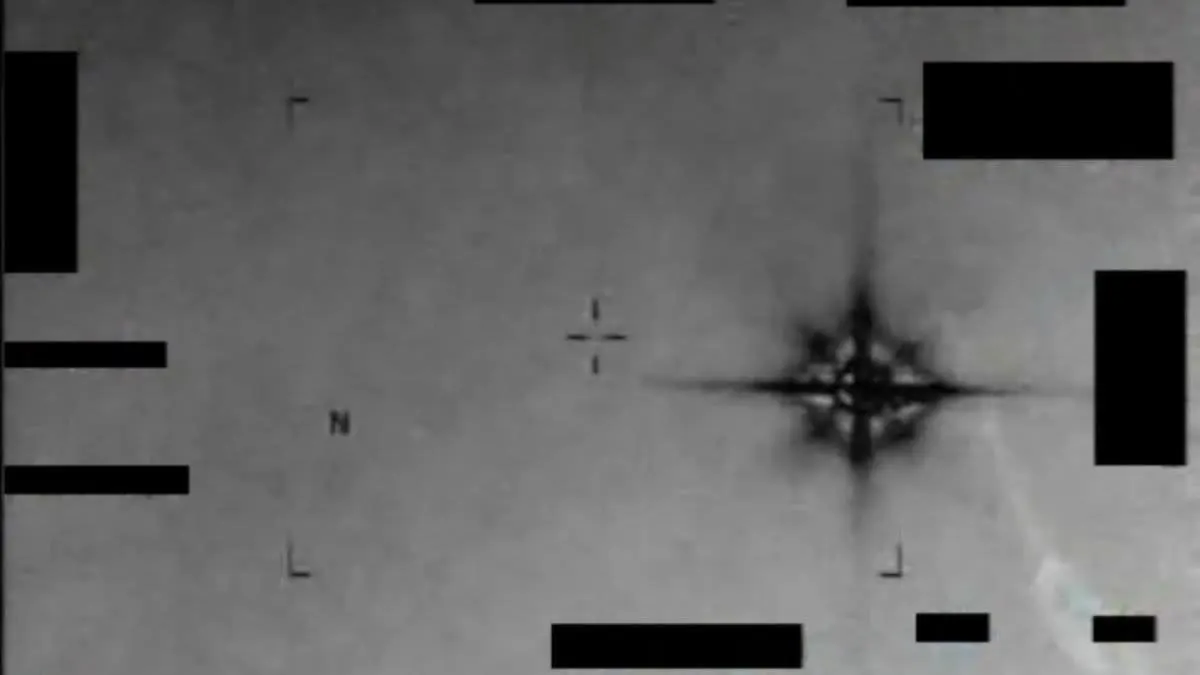
Westall UFO 60th Anniversary Sparks Modern UAP Safety Dialogue


The 60th anniversary of Australia's Westall UFO incident highlights the shift to formal UAP reporting as a critical airspace safety issue for pilots.
Key Takeaways
- •Marks 60 years since the Westall incident, reframing it as an aviation safety case study.
- •Highlights the global regulatory shift from 'UFO' to 'UAP' to de-stigmatize pilot reporting.
- •Integrates formal UAP reporting into safety frameworks at the FAA, CASA, and ATSB.
- •Cites AARO data showing 757 UAP cases from mid-2023 to mid-2024, many in commercial airspace.
Six decades after one of Australia's most prominent mass UFO sightings, the Westall UFO incident of April 6, 1966, is being re-examined through the modern lens of aviation safety and formal reporting for Unidentified Anomalous Phenomena (UAP). The event, which involved an estimated 200 to 300 witnesses, primarily students and staff at a Melbourne high school, has transitioned from a historical curiosity into a case study for the contemporary challenges of managing unexplained airspace incursions.
The increasing formalization of UAP reporting by aviation regulators worldwide marks a significant shift away from paranormal speculation toward data-driven risk management. For decades, a professional stigma discouraged commercial pilots from reporting anomalous sightings. Today, authorities like Australia's Civil Aviation Safety Authority (CASA) and the Australian Transport Safety Bureau (ATSB) provide structured, confidential channels for reporting such events, treating them as potential airspace safety hazards on par with drones or weather balloons.
From Folklore to Flight Safety
Historically, sightings like the one at Westall were often dismissed or left to civilian investigators. However, the modern aviation industry has adopted the term UAP, short for Unidentified Anomalous Phenomena, to reframe the issue as one of safety and national security. This change is reflected in policy updates from major regulators. The Federal Aviation Administration (FAA) in the United States recently updated its guidance for air traffic controllers, instructing them to log UAP observations through established safety and security protocols.
In Australia, the ATSB's confidential reporting program, REPCON, allows aviation professionals to report safety concerns without fear of reprisal. This framework is critical for gathering data on phenomena that might otherwise go undocumented. The focus is not on the origin of the UAPs but on their behavior and potential risk to other aircraft. This de-stigmatization is crucial for building a comprehensive dataset of airspace anomalies.
A Data-Driven Approach
The push for formal reporting is backed by a growing volume of data collected by government bodies. According to the Pentagon's All-Domain Anomaly Resolution Office (AARO), which sets a global precedent for UAP tracking, it documented 757 UAP cases between May 2023 and June 2024. AARO's 2023 annual report noted that nearly half of all reported UAPs occur at altitudes between 20,000 to 25,000 feet, placing them directly within commercial flight corridors. This underscores the relevance of commercial pilot UAP sightings to overall airspace safety.
While AARO states that no UAP has been confirmed to have maneuvered to an unsafe proximity to an aircraft, safety experts emphasize that any unidentified object in controlled airspace represents a potential hazard. Many reported sightings are later identified as conventional objects like Starlink satellites, drones, or optical illusions, but the process of identification and risk assessment is now considered a standard safety function.
Historical Context and Australian Precedents
The Westall incident does not stand alone in Australian aviation history. The 1978 disappearance of pilot Frederick Valentich over the Bass Strait remains one of the country's most enduring aviation mysteries. Before his Cessna 182L vanished, Valentich reported to Melbourne air traffic control that he was being followed by an unidentified aircraft. This case highlights the potentially severe consequences of airspace encounters with unknown objects.
Globally, incidents like the 2006 sighting by airline employees at Chicago's O'Hare International Airport, which the FAA attributed to a weather phenomenon, demonstrated the historical lack of formal reporting mechanisms. The current regulatory environment aims to prevent such dismissals and ensure all credible reports are properly logged and analyzed. As for the Westall incident itself, extensive research by figures like Keith Basterfield, using data from the National Archives of Australia, strongly suggests the object was a runaway HIBAL (High Altitude Balloon) from a government radiation-monitoring project.
What Comes Next
The trend toward formalization is set to continue. In the U.S., the proposed Safe Airspace for Americans Act, expected in 2026, aims to further standardize UAP reporting and analysis within the FAA. This legislation reflects a broader international consensus that anomalous airspace activity, whatever its source, requires a systematic and transparent response from aviation authorities.
For pilots and air traffic controllers, these developments provide much-needed clarity and professional protection. For regulators, the challenge lies in managing the increasing volume of reports and integrating UAP data into existing air traffic management and safety systems to ensure the skies remain safe for all users.
Why This Matters
The 60th anniversary of the Westall sighting serves as a benchmark for how far aviation safety has evolved. What was once a subject of public spectacle is now a sober matter of risk management. By creating formal, non-judgmental reporting systems, global aviation authorities are better equipped to identify and mitigate potential threats in an increasingly crowded and complex airspace.
Frequently Asked Questions
- What was the Westall UFO incident of 1966?
- The Westall UFO incident occurred on April 6, 1966, in Melbourne, Australia, where an estimated 200 to 300 students and staff witnessed an unidentified object. While debated for decades, researchers now widely believe the object was likely a stray High Altitude Balloon (HIBAL) from a government radiation-monitoring project.
- How do aviation authorities handle UAP sightings today?
- Aviation authorities like the FAA and Australia's ATSB now treat Unidentified Anomalous Phenomena (UAPs) as potential flight safety hazards. They have formalized reporting procedures for pilots and air traffic controllers to log sightings through confidential safety channels, removing professional stigma and allowing for better data collection on airspace anomalies.
From airline operations to fleet updates, commercial aviation news lives at omniflights.com. Discover how innovation is shaping aviation through aircraft systems, avionics, and digital tools at omniflights.com/technology.

Written by Hardik Vishwakarma
Co-Founder & Aviation News Editor leading initiatives that improve trust and visibility across the global aviation industry. Covers airlines, airports, safety, and emerging technology.
Visit ProfileYou Might Also Like

Trump Orders Release of 161 Declassified UAP Files
DOE Agent Death Sparks UAP Whistleblower Questions
Researcher Claims 4 Alien Species Recovered; Pentagon Denies

Declassified FBI Files Detail Nazi Saucer Claims
Apollo 17 UAP Encounter Detailed in Declassified Files