United Airlines to Roll Out Economy Lie-Flat Beds by 2030 on Widebody Fleet

Co-Founder & CEOAviation News Editor delivering trusted coverage across the global aviation industry.
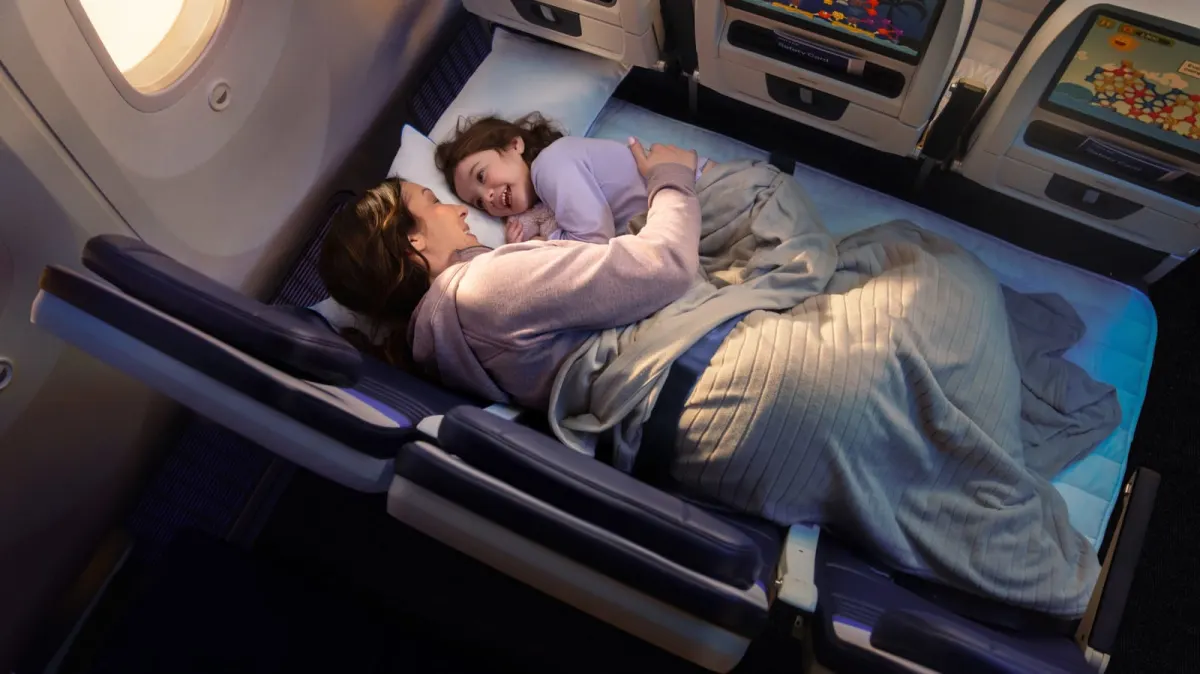
United Airlines will offer Relax Row economy lie-flat beds on over 200 widebody jets by 2030, leveraging Air New Zealand's proven Skycouch design.
Key Takeaways
- •Introduces 'Relax Row' economy lie-flat seating on long-haul flights
- •Plans to retrofit over 200 Boeing 777 and 787 aircraft by 2030
- •Leverages Air New Zealand's Skycouch design via North American exclusivity
- •Targets growing demand for premium comfort options in the economy cabin
United Airlines has announced the introduction of 'United Relax Row,' a new seating product that allows passengers to purchase a block of three economy seats which convert into a lie-flat surface for long-haul flights. The carrier plans to install the new seating option on more than 200 of its Boeing 777 and 787 widebody aircraft, with the rollout beginning in 2027 and expected to be completed by 2030. This initiative represents a significant move to monetize economy cabin space and cater to the growing demand for premium comfort options.
The Relax Row product is a direct adoption of the Air New Zealand Skycouch concept, for which United now holds exclusive rights in North America. The system uses special 90-degree adjustable leg rests that rise to meet the seat cushions, creating a unified flat surface. According to official specifications from Air New Zealand, the resulting bed measures 5 feet 1 inch (1.55m) in length and 29 inches (74cm) in width. The decision to invest in this product follows strong financial performance in premium cabins, with United reporting an 11% increase in premium revenue in 2025, as detailed in its full-year earnings release.
Andrew Nocella, United's Executive Vice President and Chief Commercial Officer, stated, "Customers traveling in United Economy on long-haul flights deserve an option for more space and comfort, and this is one way we can deliver that for them." Each retrofitted aircraft is slated to feature up to 12 Relax Row sections, providing a new ancillary revenue stream for the airline.
Regulatory and Industry Impact
Before the 2027 launch, United must secure a Supplemental Type Certificate (STC) from the Federal Aviation Administration (FAA). This certification is governed by regulations such as 14 CFR Part 25, which sets airworthiness standards for transport category airplanes. The FAA will review the modified seating to ensure it meets all crashworthiness and emergency evacuation requirements.
The retrofit program will create significant business for the Maintenance, Repair, and Overhaul (MRO) sector, which will be tasked with installing the new leg rest mechanisms across more than 200 aircraft. For passengers, particularly families and couples, the Relax Row offers a more affordable lie-flat option compared to the airline's premium Polaris Business Class. However, some industry analysis notes that the 5-foot 1-inch length may not be sufficient for taller passengers to fully stretch out.
Context and Technical Comparison
The move by United follows a clear industry trend. In 2011, Air New Zealand first introduced its Economy Skycouch, successfully proving the commercial viability of monetizing adjacent economy seats on its Boeing 777 and 787 fleets. More recently, Lufthansa introduced its 'Sleeper's Row' in 2021, further demonstrating market demand for enhanced comfort in the economy cabin. United's adoption of the concept on an exclusive basis in North America signals a broader strategic shift.
United Relax Row vs. Standard Economy
| Metric | United Relax Row | Standard Economy |
|---|---|---|
| Leg Rest Angle | 90 degrees | None/Limited |
| Bed Width | 29 inches | 17-18 inches |
| Bed Length | 5 ft 1 in | N/A |
Technical Analysis
United's introduction of the Relax Row is a strategic response to the premiumization of long-haul travel, a trend validated by the airline's own financial data. This development is less about inventing a new product and more about intelligently adopting a proven concept to unlock latent value in the economy cabin. By creating a product that sits between traditional economy and premium economy, United can capture revenue from passengers willing to pay a moderate premium for significant comfort gains without committing to a business class fare. This follows the successful precedent set by Air New Zealand a decade prior, indicating the industry's continued move towards unbundling the economy product and creating tiered offerings to maximize ancillary revenue per flight. The initiative also reflects a capital-efficient way to enhance the passenger experience, as it involves retrofitting existing assets rather than purchasing new, more expensive aircraft.
What Comes Next
The timeline for the Relax Row rollout is clearly defined. The following milestones have been confirmed by United Airlines or are expected based on regulatory processes:
- FAA Certification: United is expected to secure the necessary Supplemental Type Certificate for the new seating configuration prior to the product's official launch.
- Launch: The first aircraft equipped with United Relax Row are confirmed to enter service in 2027.
- Fleet-wide Retrofit Completion: The airline has confirmed it will complete the installation across more than 200 widebody aircraft by 2030.
Why This Matters
This development solidifies the industry trend of monetizing every square foot of the economy cabin. For airlines, it provides a new, high-margin ancillary revenue stream on long-haul routes by upselling what might otherwise be empty seats. For passengers, it creates a new 'business-lite' product category, offering a significant comfort upgrade without the full cost of a premium cabin, making long-haul travel more accessible for families and couples seeking extra space.
Visit omniflights.com for the latest commercial aviation news and airline industry updates. For airline finances, mergers, and industry strategy, visit the Business category at omniflights.com/business.
Written by Hardik Vishwakarma
Co-Founder & Aviation News Editor leading initiatives that improve trust and visibility across the global aviation industry. Covers airlines, airports, safety, and emerging technology.
Visit ProfileYou Might Also Like
Discover more aviation news based on similar topics
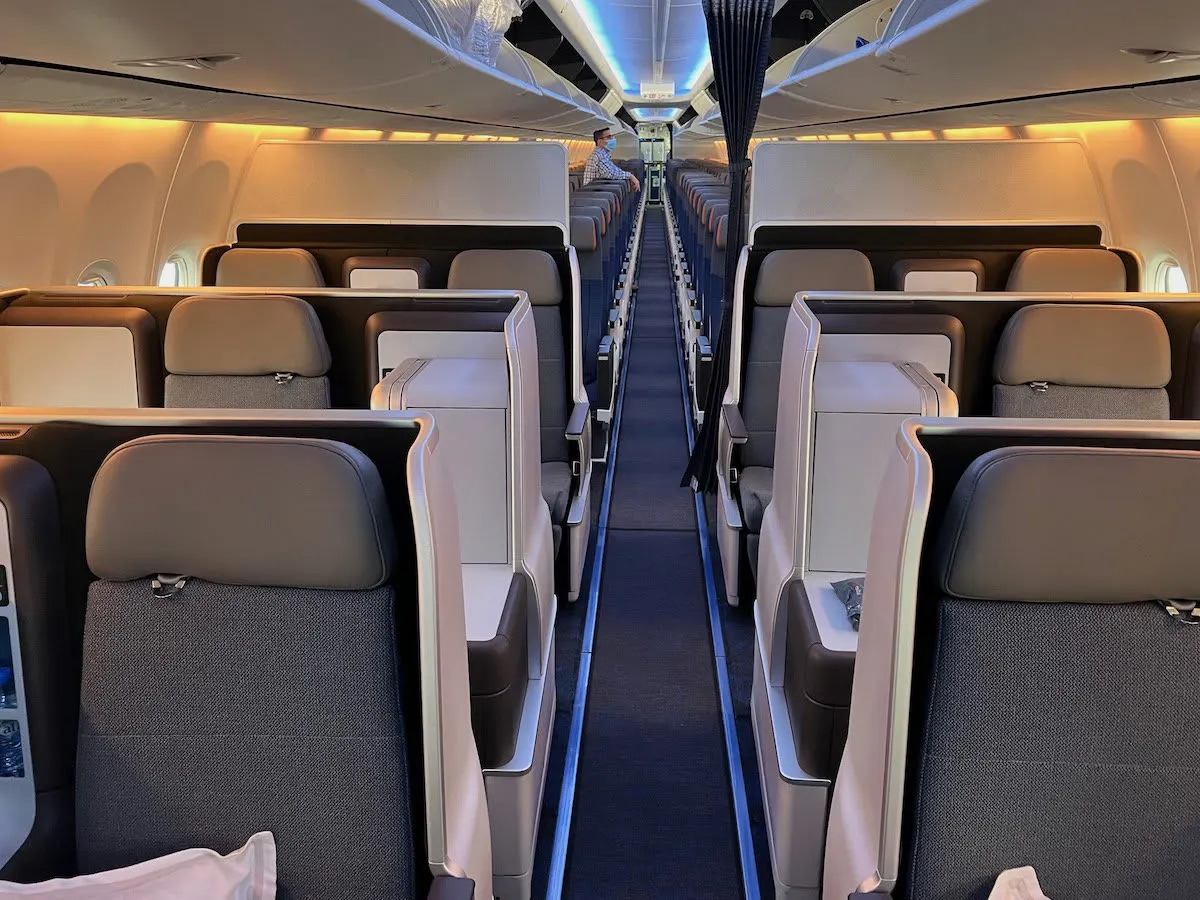
Flydubai Upgrading 21 Boeing 737 MAX 8s to Flat Bed Seats
Flydubai is retrofitting 21 Boeing 737 MAX 8 aircraft with lie-flat business class seats to standardize its premium product by late 2027.
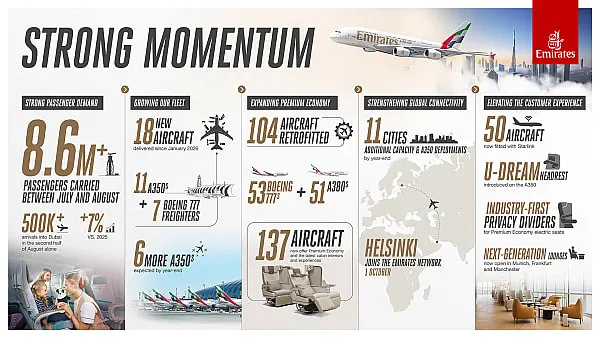
Emirates Winter Booking Momentum Grows Amid Fleet Expansion
Emirates carried 8.6 million passengers this summer and enters winter with strong demand as it accelerates fleet retrofits and network growth.
Air Arabia Consortium Gains AOC for New Dammam Budget Airline
A Saudi GACA-led consortium including Air Arabia has secured an AOC to launch a new budget airline based at Dammam's King Fahd International Airport.

Turkish Airlines Exits Luanda as Angola Hub Struggles
Turkish Airlines dropped its Luanda route as Angola's new airport struggles to attract traffic, handling only 756,028 passengers in 2025.

Red Sea Airlines Leases Two 737 MAX 8s for 2027 Expansion
Red Sea Airlines signed a lease for two Boeing 737 MAX 8 aircraft from SMBC Aviation Capital, arriving in 2027 to support its 14-aircraft fleet goal.
Avelo CEO Warns Airfares May Rise on Jet Fuel Price Spikes
Avelo Airlines CEO Andrew Levy warns that rising fuel costs may force fare increases as global jet fuel prices reach $171.01 per barrel.