Riyadh Air Seeks U.S. Flight Approval with Boeing 787s

Co-Founder & CEOAviation News Editor delivering trusted coverage across the global aviation industry.

Riyadh Air has applied to the U.S. DOT for a Foreign Air Carrier Permit to launch U.S. flights ahead of receiving its 39 Boeing 787-9 aircraft.
Key Takeaways
- •Riyadh Air files for U.S. flight permit with the DOT.
- •The airline has 39 firm orders for Boeing 787-9 aircraft.
- •Its launch is part of Saudi Arabia's Vision 2030 strategy.
- •Riyadh Air aims to serve over 100 destinations by 2030.
Saudi Arabian startup carrier Riyadh Air has formally applied to the U.S. Department of Transportation (DOT) for the authority to begin scheduled international services, a critical step toward its planned global launch. The application for a Foreign Air Carrier Permit (FACP) and exemption authority was filed on May 5, 2026, signaling the airline's firm intent to include the United States in its initial route network.
The carrier, which is wholly owned by Saudi Arabia's Public Investment Fund (PIF), is preparing for its operational debut while awaiting delivery of its initial fleet. Riyadh Air has placed a substantial order for 39 firm Boeing 787-9 Dreamliners, with options for an additional 33 jets. This move positions the airline as a significant new player in the long-haul market, backed by substantial state investment as part of the Kingdom's broader economic strategy.
Background and Strategic Vision
The creation of Riyadh Air is a cornerstone of Saudi Arabia's Vision 2030, a comprehensive plan to diversify the country's economy away from oil. The airline's stated objective is to transform Riyadh into a global aviation hub, competing with established transit points in the region. According to the PIF, Riyadh Air aims to serve over 100 destinations globally by 2030. The economic projections are ambitious, with the airline expected to contribute $20 billion to Saudi Arabia's non-oil GDP and create over 200,000 direct and indirect jobs.
"The new airline reflects the ambitious vision of Saudi Arabia to be at the core of shaping the future of global air travel and be a true disrupter in terms of customer experience," said Tony Douglas, CEO of Riyadh Air, in a previous statement. Before applying to the DOT, Riyadh Air successfully secured its Air Operator Certificate (AOC) from Saudi Arabia's General Authority of Civil Aviation (GACA), fulfilling a key domestic regulatory prerequisite for international operations.
Industry Impact and Competitive Landscape
Riyadh Air's entry into the U.S. market is expected to introduce new competitive dynamics. The move will likely impact U.S. legacy carriers such as Delta, United, and American, particularly on lucrative transit routes to the Middle East and the Indian subcontinent. The airline's state-funded model may also reignite debates over fair competition, echoing historical tensions between U.S. airlines and established Gulf carriers like Emirates, Etihad, and Qatar Airways. During the 2010s, U.S. carriers lobbied heavily against alleged state subsidies that they argued created an unfair advantage for their Gulf rivals.
The new carrier will also operate alongside the existing national airline, Saudia, which currently serves New York (JFK) and Washington D.C. (IAD). The two flag carriers will need to either coordinate or compete on key international routes. For Boeing, the successful launch and expansion of Riyadh Air are critical, as it represents one of the manufacturer's most significant widebody orders. The airline's order for up to 72 Dreamliners was part of the fifth-largest commercial order by value in Boeing's history.
Boeing 787-9 vs. Airbus A350-1000: Key Specifications
| Metric | Boeing 787-9 Dreamliner | Airbus A350-1000 |
|---|---|---|
| Range | 7,565 nmi | 8,700 nmi |
| Typical Capacity | 296 passengers | 350-410 passengers |
Technical Analysis
Riyadh Air's DOT application is more than a procedural filing; it represents a calculated move in the geopolitical chess game of global aviation. This development accelerates the trend of state-funded carriers aiming to establish new centers of gravity for air traffic, directly challenging the dominance of European and other Gulf hubs. The airline's strategy appears to follow the precedent set by Gulf carriers in the 2010-2015 period, leveraging significant capital to rapidly build a modern, long-haul fleet and an extensive global network. This history suggests that Riyadh Air's expansion into the U.S. may face scrutiny and potential pushback from U.S. airline labor groups and management concerned about market distortion.
The choice of the Boeing 787-9 is strategically sound for a new entrant. Its efficiency and range allow for the viable operation of long, thin routes, enabling the airline to build a diverse network quickly without the immediate need for the higher capacity of an aircraft like the A350-1000 or 777X. This provides the flexibility to test markets and build frequency before potentially scaling up with larger aircraft.
What Comes Next
Following the submission, Riyadh Air's application will undergo a review process by the DOT. Approval of the Foreign Air Carrier Permit is expected by late 2026, though this timeline is subject to regulatory assessment. Concurrently, the airline is working with Boeing on its fleet delivery schedule. The first new-build Boeing 787-9 is expected to be delivered to the airline in 2026, paving the way for the commencement of commercial operations shortly thereafter.
Why This Matters
This filing marks the first concrete regulatory step for a multi-billion-dollar project designed to create a new global aviation superpower. For the commercial aviation industry, it signals the imminent arrival of a well-funded and ambitious competitor set to disrupt key international markets. For travelers, it promises new nonstop connections between the U.S. and Saudi Arabia, potentially altering global transit flows and increasing travel options to the region and beyond.
Frequently Asked Questions
- What aircraft will Riyadh Air use for its U.S. flights?
- Riyadh Air's initial long-haul fleet consists of 39 firm orders for the Boeing 787-9 Dreamliner, with options for an additional 33 aircraft. These planes will be used for its planned international services, including proposed routes to the United States.
- Why is Saudi Arabia launching a new airline?
- Riyadh Air is a key component of Saudi Arabia's Vision 2030 economic diversification plan. The airline, wholly owned by the Public Investment Fund, aims to turn Riyadh into a global aviation hub, add $20 billion to the non-oil GDP, and create 200,000 jobs.
- Has Riyadh Air been approved to fly to the US?
- Not yet. On May 5, 2026, Riyadh Air formally applied to the U.S. Department of Transportation for a Foreign Air Carrier Permit. This approval is mandatory before the airline can begin scheduled flights to the U.S. and is expected in late 2026.
Get breaking commercial aviation news and expert airline analysis at omniflights.com. For reporting on UAP sightings, investigations, and aviation-related encounters, see the UAPs section at omniflights.com/uaps.
Written by Hardik Vishwakarma
Co-Founder & Aviation News Editor leading initiatives that improve trust and visibility across the global aviation industry. Covers airlines, airports, safety, and emerging technology.
Visit ProfileYou Might Also Like
Discover more aviation news based on similar topics
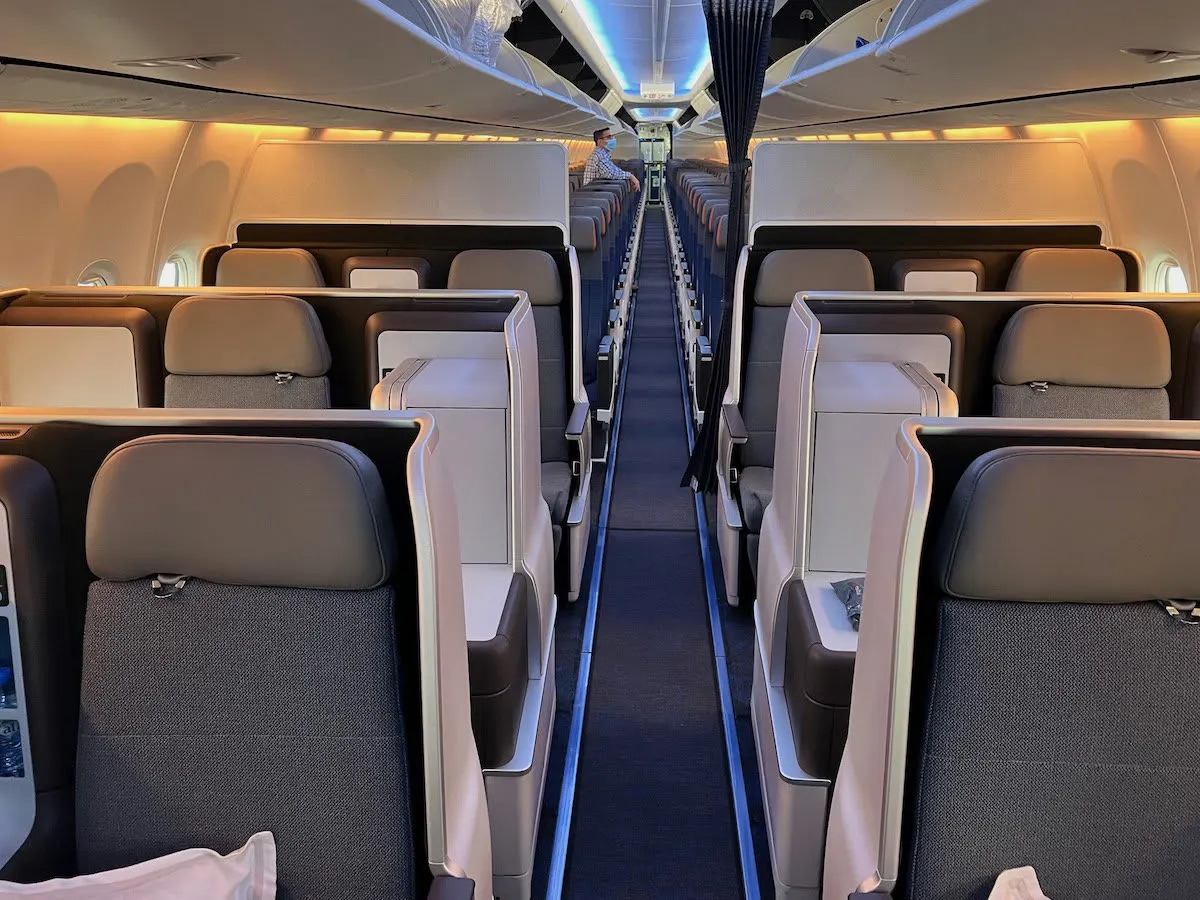
Flydubai Upgrading 21 Boeing 737 MAX 8s to Flat Bed Seats
Flydubai is retrofitting 21 Boeing 737 MAX 8 aircraft with lie-flat business class seats to standardize its premium product by late 2027.
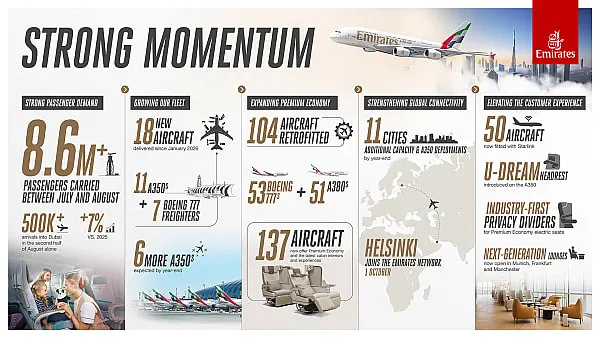
Emirates Winter Booking Momentum Grows Amid Fleet Expansion
Emirates carried 8.6 million passengers this summer and enters winter with strong demand as it accelerates fleet retrofits and network growth.
Air Arabia Consortium Gains AOC for New Dammam Budget Airline
A Saudi GACA-led consortium including Air Arabia has secured an AOC to launch a new budget airline based at Dammam's King Fahd International Airport.

Turkish Airlines Exits Luanda as Angola Hub Struggles
Turkish Airlines dropped its Luanda route as Angola's new airport struggles to attract traffic, handling only 756,028 passengers in 2025.

Red Sea Airlines Leases Two 737 MAX 8s for 2027 Expansion
Red Sea Airlines signed a lease for two Boeing 737 MAX 8 aircraft from SMBC Aviation Capital, arriving in 2027 to support its 14-aircraft fleet goal.
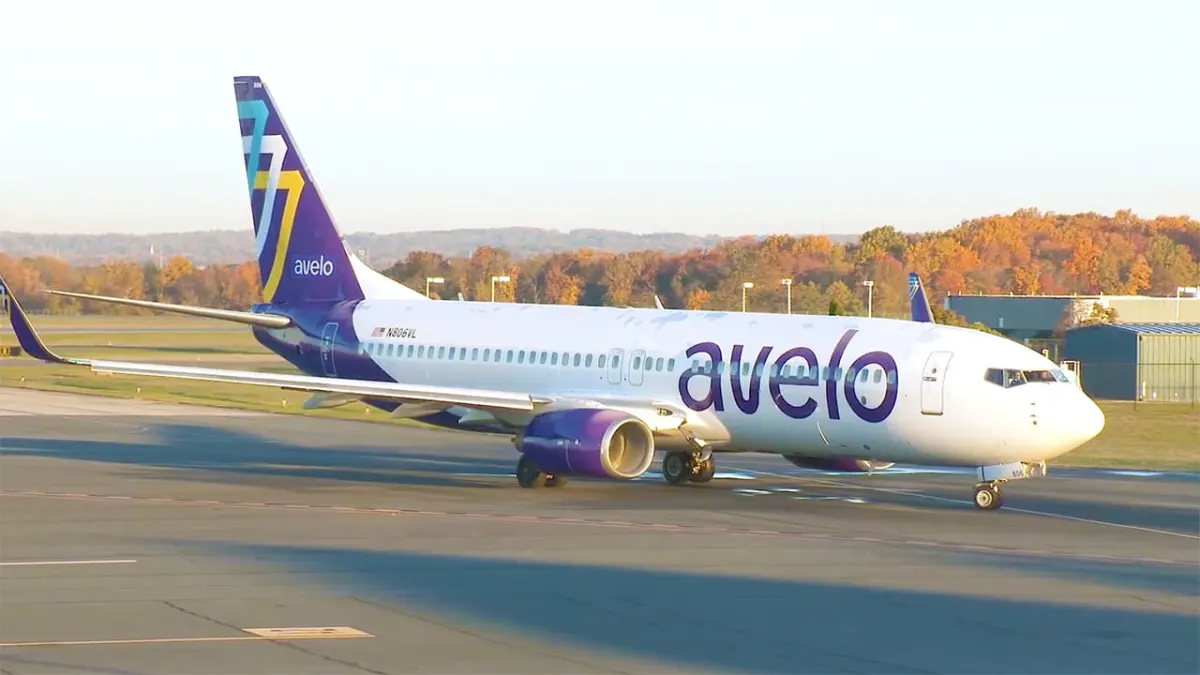
Avelo CEO Warns Airfares May Rise on Jet Fuel Price Spikes
Avelo Airlines CEO Andrew Levy warns that rising fuel costs may force fare increases as global jet fuel prices reach $171.01 per barrel.