United Airlines Slashes Capacity 5% Amid Surging Jet Fuel Prices

Co-Founder & CEOAviation News Editor delivering trusted coverage across the global aviation industry.
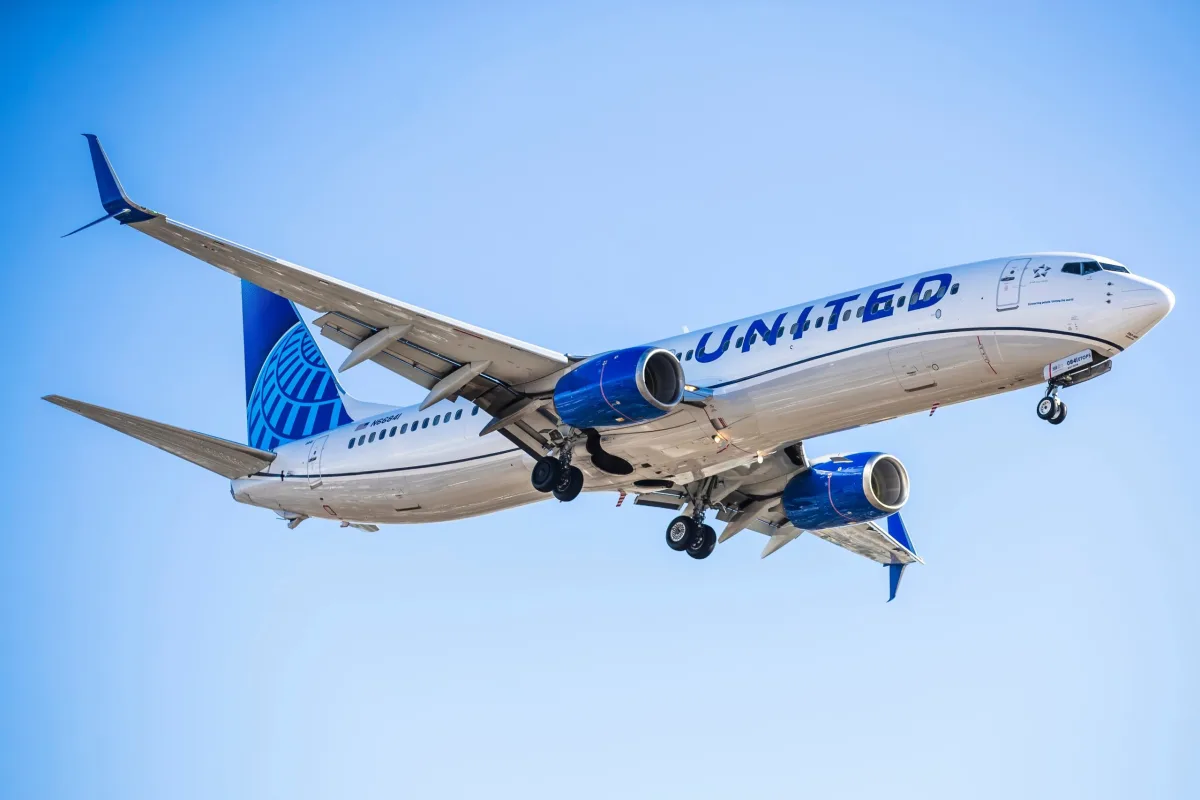
United Airlines will cut capacity by up to 5% until the Fall to offset soaring jet fuel costs driven by geopolitical conflict and oil prices hitting $175.
Key Takeaways
- •Cuts planned capacity by up to 5% through Fall 2026 due to oil price surge.
- •Faces a potential $11 billion annual expense increase from jet fuel costs.
- •Mirrors historical airline responses to the 2008 and 2022 oil shocks.
- •Exposes financial risk for carriers like Southwest that abandoned fuel hedging.
In response to skyrocketing jet fuel prices driven by geopolitical conflict, United Airlines has announced it will trim planned capacity by as much as 5 percent until the Fall. The move comes as the carrier grapples with oil prices projected to peak around $175 a barrel, a development that could add $11 billion in annual expenses if sustained.
In an internal memo, United chief executive Scott Kirby addressed the volatile market, which has seen jet fuel prices more than double in the last three weeks. While acknowledging the financial pressure, Kirby sought to reassure employees by highlighting the airline's strong cash position and continued record travel demand. The carrier's strategy involves tactically pruning unprofitable routes, including a reduction of approximately 1 percent of its flying out of its hub at Chicago O'Hare (ORD).
Industry-Wide Impact
The financial shockwaves are not confined to United. European carrier Scandinavian Airlines System (SAS) announced it would axe 1,000 flights in April alone due to the surge in oil prices. The situation exposes the vulnerability of carriers that have moved away from traditional cost-control measures. Southwest Airlines, for example, recently dropped its long-standing practice of fuel hedging, leaving it directly exposed to market price volatility.
Labor unions have voiced significant concerns over the developments. The Association of Flight Attendants-Communications Workers of America (AFA-CWA) warned that airlines with the thinnest margins and least flexible supply chains will suffer the most. The union's assessment paints a more dire picture than airline management, cautioning that the financial strain could have a severe impact on aviation workers globally.
Context and Historical Precedents
This scenario mirrors previous industry shocks where geopolitical events triggered operational and financial crises. In mid-2008, the Global Oil Price Spike saw crude reach nearly $147 per barrel, forcing airlines worldwide to ground older aircraft, slash capacity, and introduce new revenue streams like checked baggage fees. More recently, the 2022 Russian Invasion of Ukraine led to widespread airspace closures and rerouting, causing a similar spike in fuel prices and forcing network adjustments.
The current conflict also brings regulatory challenges into focus. The Federal Aviation Administration (FAA) already prohibits U.S. civil aviation in the Tehran Flight Information Region under SFAR No. 117, a regulation with precedent from January 2020 tensions. Such airspace restrictions directly impact global routing, increasing flight times and fuel consumption on key international corridors. The official repository for these regulations is maintained by the FAA.
Technical Analysis
The industry's reaction demonstrates a well-established pattern of tactical capacity reduction in response to external cost shocks. United's decision to prune its network, particularly focusing on unprofitable routes, is a classic defensive maneuver to protect profitability when a primary cost input like fuel doubles in price. This development starkly contrasts with the post-pandemic strategy of aggressive capacity restoration. It indicates that even with robust travel demand, operational viability is dictated by cost structure. The divergent situations of United, which maintains some hedging, and Southwest, which abandoned its program, will serve as a critical case study on risk management strategies in a volatile energy market. Historically, similar situations have led to accelerated retirement of older, less fuel-efficient aircraft and a renewed focus on fleet modernization.
What Comes Next
United Airlines has confirmed its capacity reductions will be implemented and remain in place until at least the Fall of 2026. Looking further ahead, CEO Scott Kirby's internal communications suggest an expectation that oil prices may not normalize and dip below $100 a barrel until sometime in 2027. Airlines across the industry will be closely monitoring fuel markets and adjusting schedules on a monthly, if not weekly, basis.
Why This Matters
This development underscores how susceptible airline network strategies are to geopolitical events and volatile energy markets. For airlines, it forces a rapid shift from expansion to consolidation, prioritizing margin over market share. For travelers, it signals a period of reduced flight availability on marginal routes and likely higher fares as carriers pass on increased fuel costs.
Stay ahead of the airline industry with commercial aviation news from omniflights.com. From aircraft production to supply chains, commercial aviation manufacturing news is covered at omniflights.com/manufacturing.
Written by Hardik Vishwakarma
Co-Founder & Aviation News Editor leading initiatives that improve trust and visibility across the global aviation industry. Covers airlines, airports, safety, and emerging technology.
Visit ProfileYou Might Also Like
Discover more aviation news based on similar topics
Boeing Tightens Spending Ahead of Critical SPEEA Union Vote
Boeing has implemented spending controls and a hiring freeze as it faces a critical contract ratification vote with its 17,000-member engineering union.

Boeing CEO Kelly Ortberg Warns of 777X Certification Delay
Boeing CEO Kelly Ortberg warned that a potential strike by 17,000 engineers would immediately halt the 777X certification and production programs.
American and United Plan Capacity Cuts Amid Fuel Cost Surge
American and United are trimming flight schedules to offset a $1 billion fuel cost spike while maintaining strong pricing power.
Boeing CEO Reports 737 MAX Output Stabilization Delays
Boeing CEO Kelly Ortberg reports slower 737 MAX production stabilization, prompting a downward revision in 2026 free cash flow expectations to $2 billion.
Boeing Finalizes KAL Order, Salvages Turkish Airlines Deal
Boeing secured a $36.2 billion order from Korean Air Lines for 103 aircraft and nears a resolution on a 150-jet deal with Turkish Airlines.

Airbus Forecasts 42,000 New Jets Amid Strong Global Demand
Airbus expects 42,000 new aircraft deliveries globally by 2045, with 45% of demand concentrated in the Asia-Pacific region.