Namibian Air Force Highlights Fleet at Aviation Week Africa 2026

Co-Founder & CEOAviation News Editor delivering trusted coverage across the global aviation industry.
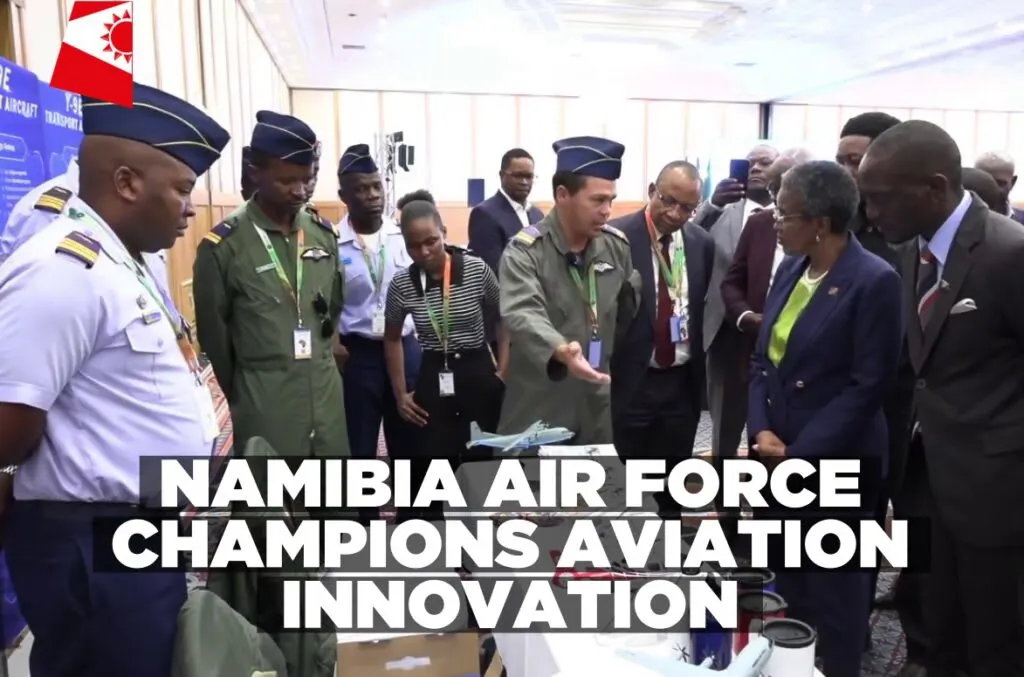
Namibia's Air Force showcased its fleet at Aviation Week Africa 2026, promoting civil-military cooperation and regional air connectivity initiatives.
Key Takeaways
- •Highlights civil-military cooperation as a key strategy at Aviation Week Africa 2026 in Windhoek.
- •Showcases a modernized, Chinese-manufactured fleet including the Shaanxi Y-9E transport aircraft.
- •Aligns with continental goals to implement the Single African Air Transport Market (SAATM) for better connectivity.
- •Supports Namibia's domestic plans, including the 2026 relaunch of Air Namibia and airport infrastructure expansion.
The Namibian Air Force has reaffirmed its commitment to strengthening civil-military aviation cooperation across Africa, using the Aviation Week Africa (AWA) 2026 summit in Windhoek to showcase its modernized fleet and advocate for greater regional integration. The event, held from April 22-24, focused on enhancing air connectivity and economic growth, with Namibia’s military outlining its strategy for improved airspace management and partnership with civil authorities.
The summit underscores a critical trend in African aviation: leveraging military capabilities to support civil infrastructure and security, particularly as the continent works towards implementing the Single African Air Transport Market (SAATM). According to the African Airlines Association (AFRAA), Africa currently accounts for only 2% of global passenger air traffic despite its large population, a statistic that initiatives like SAATM aim to address. By fostering closer ties between military and civil operators, nations like Namibia seek to create more efficient air routes, improve disaster response, and bolster regional security.
Strategic Priorities and Fleet Showcase
During the summit, held under the theme “Linking Africa: Partners for Growth,” the Namibian Air Force detailed its key priorities. These include enhancing interoperability with civil aviation systems for more efficient airspace use, investing in technological modernization for surveillance and navigation, and expanding joint training programs. Air Force Commander Air Vice Marshal Theofelus Shaende stated that military aviation is vital for national security and that collaboration with the civil sector is essential for the industry's safety and sovereignty.
A central feature of Namibia's participation was the display of its operational assets, which are entirely of Chinese origin. The fleet includes the Shaanxi Y-9 transport aircraft, the Harbin Z-9 utility helicopter, the Chengdu F-7 fighter jet, and the Hongdu K-8 trainer. This showcase is significant, as Namibia became the first international export customer for the Y-9E transport variant following its delivery in late 2024. The presence of this modern hardware serves to demonstrate Namibia's capabilities and acts as a platform for Chinese aerospace manufacturers to reach other African nations.
Civil-Military Integration and SAATM
The push for civil-military airspace integration is a core component of the broader SAATM framework, an African Union initiative designed to deregulate the continent's skies. For commercial airlines, segregated military airspace often leads to fragmented routes, longer flight times, and increased fuel burn. The cooperation discussed at AWA 2026, overseen by the Namibia Civil Aviation Authority (NCAA) and the Air Force, aims to address these inefficiencies.
Successful integration could yield significant benefits for African commercial carriers, reducing operational costs and improving on-time performance. However, some commercial operators argue for faster and more comprehensive integration rather than incremental cooperation, highlighting the pressing need to unlock the economic benefits of a unified airspace. The summit provided a forum for these stakeholders to advance discussions on harmonizing regulatory protocols.
Technical Analysis
Namibia's prominent role at the AWA summit and the showcase of its Chinese-sourced fleet signal a strategic pivot in African military aviation. The increasing reliance on Chinese aerospace products, as evidenced by Namibia's Y-9E acquisition, reflects a broader geopolitical trend across the continent. This development positions Namibia not only as a key regional security partner but also as an influential example for other African air forces considering fleet modernization. The event effectively provides Chinese manufacturers like Shaanxi Aircraft Corporation with a high-profile venue to market their platforms to a captive audience of African defense and aviation officials.
This trend runs parallel to the commercial sector's continued reliance on Western manufacturers like Boeing and Airbus. It suggests a dual-track evolution in African aviation, where commercial fleets align with global standards while military procurement diversifies. The integration of these distinct supply chains and operational doctrines presents both a challenge and an opportunity for initiatives like SAATM, which must accommodate a technologically diverse landscape to succeed.
What Comes Next
The discussions at AWA 2026 align with Namibia's ambitious domestic aviation plans. The Namibian government is moving forward with a projected N$3 billion investment to relaunch its national carrier, Air Namibia, which is expected to resume operations in 2026. This initiative aims to re-establish national connectivity and support the country's tourism and trade sectors.
In parallel, significant infrastructure upgrades are underway. The Namibia Airports Company (NAC) has confirmed a new terminal development project at Hosea Kutako International Airport (HKIA) in Windhoek, with construction planned between 2026 and 2031. These national projects, supported by the regional connectivity goals promoted by organizations like the African Travel & Tourism Association (ATTA), are intended to position Namibia as a key aviation hub in Southern Africa.
Why This Matters
Namibia's showcase at Aviation Week Africa 2026 is more than a display of military hardware; it represents a strategic effort to advance Africa's aviation sovereignty. By integrating military assets with civil aviation goals, the continent can build a more resilient, secure, and efficient air transport network. This event highlights the growing importance of regional partnerships and underscores the geopolitical shifts in aerospace procurement, signaling a new chapter in the development of Africa's skies.
Frequently Asked Questions
- What aircraft did the Namibian Air Force showcase at Aviation Week Africa 2026?
- The Namibian Air Force highlighted its fleet of Chinese-manufactured aircraft, including the Shaanxi Y-9 transport, Harbin Z-9 helicopter, Chengdu F-7 fighter jet, and the Hongdu K-8 trainer jet. Namibia was the first export customer for the Y-9E transport aircraft.
- What is the purpose of civil-military aviation cooperation in Africa?
- The goal is to improve the efficient use of airspace, enhance interoperability between civil and military systems, and strengthen regional cooperation for security and disaster response. This cooperation supports broader initiatives like the Single African Air Transport Market (SAATM) to boost air connectivity.
- What is the Single African Air Transport Market (SAATM)?
- The Single African Air Transport Market is an African Union initiative to deregulate African skies for the continent's airlines. Its primary objective is to create a unified air transport market to improve intra-continental connectivity and foster economic integration.
For in-depth airline coverage and commercial aviation news, omniflights.com delivers timely industry insights. For reporting on UAP sightings, investigations, and aviation-related encounters, see the UAPs section at omniflights.com/uaps.
Written by Hardik Vishwakarma
Co-Founder & Aviation News Editor leading initiatives that improve trust and visibility across the global aviation industry. Covers airlines, airports, safety, and emerging technology.
Visit ProfileYou Might Also Like
Discover more aviation news based on similar topics
Airbus Forecasts 42,000 New Jets Amid Strong Global Demand
Airbus expects 42,000 new aircraft deliveries globally by 2045, with 45% of demand concentrated in the Asia-Pacific region.

Vietjet to Lease 22 Aircraft in New U.S.-Vietnam Deal
Vietjet plans to lease 17 Boeing 737s and 5 Airbus A321neos to expand its fleet ahead of a scheduled announcement during a diplomatic visit.
Air India Board Meets Amid Leadership Transition in Mumbai
Air India's board met in Mumbai to finalize a leadership transition as Tewolde Gebremariam takes over as CEO and MD to lead the airline's turnaround.
Boeing Finalizes 150 737 MAX Order for Turkish Airlines
Boeing is set to finalize a 150-aircraft order for Turkish Airlines, resolving a year-long dispute over engine maintenance terms for the 737 MAX.
Korean Air Finalizes $44.8B Deal for 103 Boeing Jets
Korean Air finalized a $44.8 billion agreement for 103 Boeing aircraft and GE engines to modernize its fleet following the Asiana Airlines integration.

Airbus Raises India Growth Forecast to 9.3% for Aviation
Airbus projects India will need 3,480 new aircraft by 2045 as domestic air traffic growth outpaces China at a 9.3% annual rate.