UAE Reopens Airspace After Halting Flights Amid Iran Threats

Co-Founder & CEOAviation News Editor delivering trusted coverage across the global aviation industry.
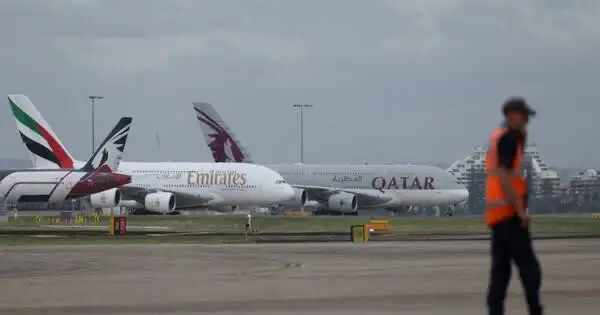
The UAE's GCAA has reopened national airspace after a temporary closure prompted by intercepted missile and drone threats originating from Iran.
Key Takeaways
- •Reopens airspace following a temporary closure due to intercepted missile threats from Iran.
- •Confirms a drone strike ignited a fire at the Shah gas field, suspending operations at the major facility.
- •Follows a pattern of regional airspace closures impacting major Gulf hub airlines like Emirates and Etihad.
- •Maintains 'continuous real-time monitoring' to ensure ongoing air navigation safety.
The United Arab Emirates' General Civil Aviation Authority (GCAA) has reopened the nation's airspace, allowing flight operations to return to normal. The decision, announced via the state-run Wakalat Anba'a al Emarat (WAM) news service, follows a temporary but complete suspension of air traffic enacted after the country's air defense systems engaged missile and drone threats from Iran.
The reopening of one of the world's most critical aviation crossroads directly impacts major hub carriers like Emirates and Etihad Airways, which rely on unimpeded access to their bases in Dubai and Abu Dhabi. For global transit passengers, the closure caused significant delays and missed connections, highlighting the vulnerability of global flight networks to regional geopolitical instability. According to the International Air Transport Association (IATA), such zero-notice closures create severe economic penalties and logistical challenges for international operators.
Flight Operations Resume Under Monitoring
The GCAA stated the decision to resume flights was made after a "comprehensive assessment of operational and security conditions" conducted with other national authorities. While precautionary measures have been lifted, the authority confirmed that "continuous real-time monitoring" is in place to manage any new developments and ensure air navigation safety. The airspace closure was initially described as an "exceptional precautionary measure" to protect flights and air crews.
The disruption was a direct consequence of a sharp escalation in regional hostilities. Officials in Dubai confirmed that loud explosions heard in the city were the result of successful interceptions by UAE air defenses. The GCAA acknowledged the cooperation of airlines and passengers during the disruption and affirmed the readiness of its technical teams to respond to future events. The authority's official guidance can be found on the GCAA website.
Drone Strike Hits Key Gas Facility
While air defenses were successful, the regional volatility had a tangible impact on critical infrastructure. A drone strike in Abu Dhabi ignited a fire at the Shah gas field, a facility operated by ADNOC Sour Gas. Officials confirmed the fire was contained and brought under control, but operations at the site remain suspended pending a full damage assessment. The Shah facility is one of the world's largest ultra-sour gas plants, with a processing capacity of 1.28 billion standard cubic feet per day, according to ADNOC. The operational halt represents a significant disruption to the UAE's energy sector.
A Pattern of Regional Disruptions
This incident is consistent with an increasing frequency of temporary airspace closures in the Middle East due to geopolitical conflicts. A direct historical parallel occurred in April 2024, when Jordan, Iraq, Lebanon, and Israel all temporarily closed their airspace during an Iranian drone and missile attack on Israel, though most reopened within 24 hours. That event, like this one, demonstrated a pattern of regulators prioritizing safety through precautionary closures during active military threats.
Furthermore, the U.S. Federal Aviation Administration (FAA) has previously issued NOTAMs restricting American operators from flying over parts of the Persian Gulf and Gulf of Oman, notably in June 2019 and January 2020, in response to heightened military activity. These regulatory actions underscore the persistent risks in the region, forcing airlines to carry additional contingency fuel and plan for longer, more costly bypass routes. The current airspace reopening occurs on the 18th day of a wider (though fictional) conflict that began on February 28 following U.S. and Israeli strikes that resulted in the death of Iran's former Supreme Leader.
What Comes Next
With airspace now open, the immediate focus shifts to assessing the broader impacts. A full damage assessment and subsequent restart plan for the Shah Gas Field is expected by late March 2026. Following the incident, the UAE GCAA is also expected to conduct a comprehensive review of its airspace security protocols, with findings likely to be implemented in the second quarter of 2026 to enhance resilience against future threats.
Why This Matters
This event highlights the acute vulnerability of major global aviation hubs to regional military conflicts. It demonstrates that even successful air defense interceptions can trigger severe disruptions to air travel and critical energy infrastructure. For aviation professionals, it reinforces the operational and financial risks associated with operating in volatile regions and the importance of dynamic risk assessment and contingency planning.
For in-depth airline coverage and commercial aviation news, omniflights.com delivers timely industry insights. For detailed airline coverage, route changes, and fleet moves, explore the Airlines section at omniflights.com/airlines.
Written by Hardik Vishwakarma
Co-Founder & Aviation News Editor leading initiatives that improve trust and visibility across the global aviation industry. Covers airlines, airports, safety, and emerging technology.
Visit ProfileYou Might Also Like
Discover more aviation news based on similar topics
Ryanair Flight RK514 Diverts to Birmingham After Emergency
Ryanair flight RK514 diverted to Birmingham Airport on September 13, 2026, following a medical emergency involving a passenger.

Amazon Suspends 21 Air After Fatal Miami 767 Runway Overrun
Amazon has suspended operations with 21 Air following a fatal Boeing 767 runway overrun at Miami International Airport that resulted in five deaths.
FAA Proposes A220 Fuel Line Inspections for US Operators
The FAA issued a proposed directive requiring inspection of motive-flow fuel lines on 13 US-registered Airbus A220s to prevent potential leaks.
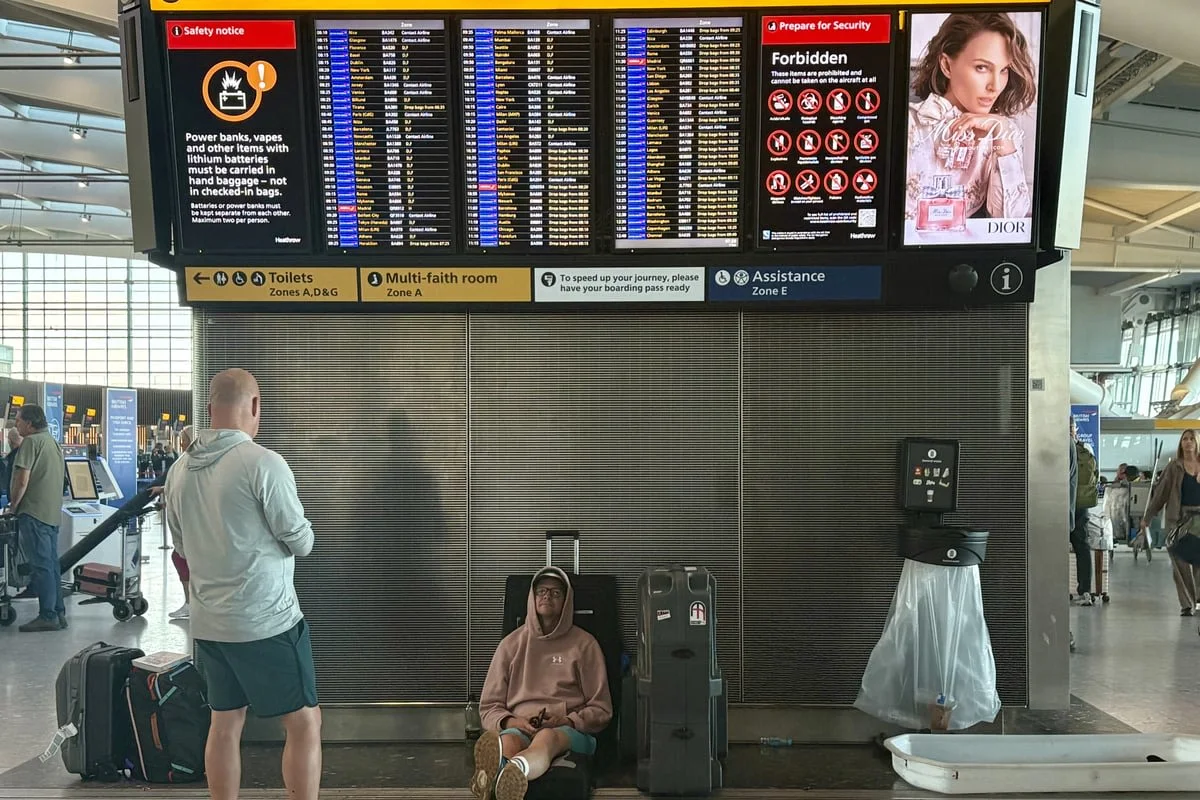
NATS Denies Military Jet Role in UK ATC Outage
The UK Ministry of Defence denied its aircraft caused a NATS outage that led to over 2,000 flight cancellations and calls for CEO resignation.

21 Air Miami Crash: NTSB Investigates 767 Runway Overrun
A fatal 21 Air Boeing 767 crash at Miami International Airport has triggered an NTSB investigation amid scrutiny of Amazon Air's contract oversight.

Amazon Cargo Plane Crash: 5 Remembered After MIA Excursion
Five cleaning crew members died after an Amazon-contracted Boeing 767 overran the runway at Miami International Airport at 158 knots.