American Airlines A319 Avoids Truck Collision at Charlotte Airport

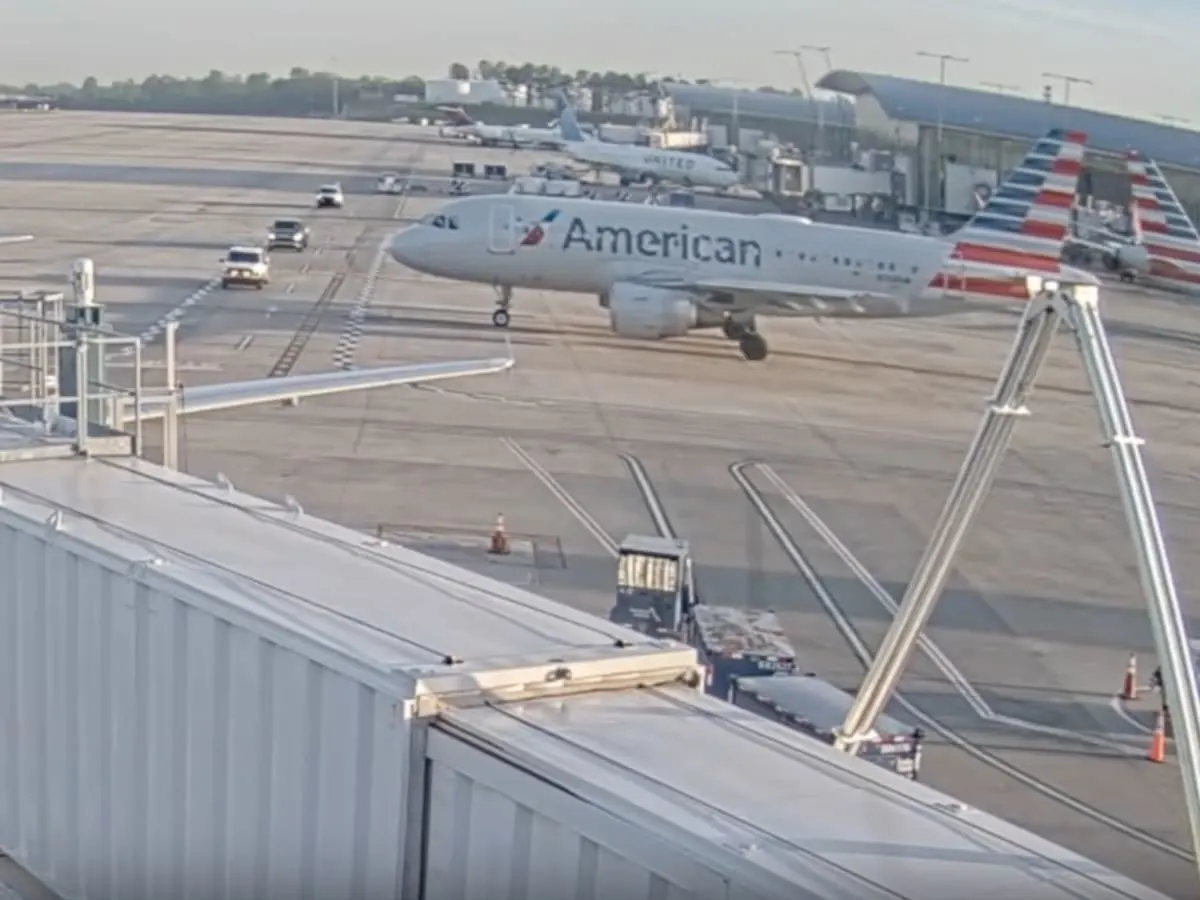
An American Airlines pilot averted a ground collision by braking to avoid a truck at Charlotte, intensifying safety concerns after a recent fatal LGA...
Key Takeaways
- •Averted a ground collision with an operations truck at Charlotte Douglas International Airport on April 15, 2026.
- •Follows a fatal March 22 crash involving an Air Canada Express jet that struck a fire truck at LaGuardia.
- •Prompts an FAA investigation amid a rising trend of runway incursions and ground safety incidents across the U.S.
- •Intensifies pressure on regulators and airport operators to improve ground tracking technology and safety protocols.
An American Airlines pilot was forced to take immediate evasive action to prevent a ground collision with an operations truck at Charlotte Douglas International Airport (CLT) on April 15, 2026. The incident, involving Flight 1197 operating an Airbus A319, occurred less than a month after a fatal accident at New York's LaGuardia Airport (LGA), amplifying concerns over a rising trend of runway incursions at U.S. airports.
In an audio recording captured by Air Traffic Control (ATC), the pilot of the Washington D.C.-bound flight is heard stating, "We nearly hit them." The event highlights the critical role of pilot vigilance in preventing ground accidents. An American Airlines spokesperson commented on the event, stating, "Our vigilant and professional crew took immediate action." The Federal Aviation Administration (FAA) has confirmed it is investigating the near-miss.
This incident draws immediate parallels to the fatal crash on March 22, 2026, when Air Canada Express Flight 8646, a Canadair Regional Jet 900 (CRJ-900), collided with a fire truck during its landing roll at LGA. That collision resulted in the deaths of pilots Antoine Forest and Mackenzie Gunther. According to the New York Port Authority, the aircraft was carrying 72 passengers and four crew, and over 40 people were sent to the hospital. The National Transportation Safety Board (NTSB) is leading the ongoing investigation into the LaGuardia accident.
Industry-Wide Scrutiny on Ground Safety
The CLT near-miss is not an isolated event but part of a disturbing pattern of ground safety incidents. Just a week prior, a Frontier Airlines aircraft had a close call with two trucks at Los Angeles International Airport (LAX). These events follow a major runway incursion at New York's JFK Airport in January 2023, where a Delta Air Lines 737 nearly collided with an American Airlines 777. The JFK incident was serious enough to prompt the FAA to convene a national safety summit to address the issue.
Data and recent events suggest a systemic problem. Stakeholders like the National Air Traffic Controllers Association (NATCA) have argued that such incidents are symptomatic of systemic underfunding and understaffing within the nation's air traffic control system. Concurrently, airport ground workers' unions point to increasingly complex airport layouts and high-pressure work environments as contributing factors, suggesting that better technological safeguards are needed to prevent inadvertent incursions.
FAA and Airport Operators Under Pressure
The string of high-profile incidents places significant pressure on both regulators and airport authorities. For the FAA, the primary stakeholder, there is heightened urgency to implement improved ground tracking technology and address the systemic safety issues highlighted by the NTSB and pilot unions. The agency's Runway Safety Program is under scrutiny to prove its effectiveness.
For airport operators like CLT, the incident triggers internal reviews of ground vehicle operations. These investigations often result in mandatory retraining for all personnel who operate vehicles near active taxiways and runways. Airport officials at Charlotte emphasized that safety is their top priority and confirmed a full investigation is underway in coordination with the FAA.
What Comes Next
The immediate focus will be on the outcomes of the regulatory investigations. The FAA is expected to release a preliminary report on the American Airlines near-miss at CLT by May 2026. This report will likely detail the positioning of the aircraft and ground vehicle, review ATC communications, and provide initial safety recommendations.
Separately, the NTSB's preliminary report on the fatal Air Canada crash at LaGuardia is anticipated in late April or May 2026. While the preliminary report will state the facts found, a final report with a probable cause determination can take 12 to 24 months to complete. These findings will be critical in shaping future regulatory actions aimed at preventing similar ground collisions.
Why This Matters
This series of ground safety events, from near-misses to a fatal accident, indicates potential systemic vulnerabilities in U.S. airport operations. The incidents challenge the assumption that the most critical phases of flight are limited to takeoff and landing, extending intense scrutiny to taxiing and ground movements. For the aviation industry, it signals an urgent need for enhanced technology, revised protocols, and better training to protect aircraft on the ground, placing significant pressure on the FAA to enact meaningful reforms.
Frequently Asked Questions
- What happened during the American Airlines near-miss at Charlotte?
- On April 15, 2026, American Airlines Flight 1197, an Airbus A319, was forced to brake abruptly to avoid colliding with an operations truck on a taxiway at Charlotte Douglas International Airport. The pilot's quick action prevented a serious ground collision.
- How does the Charlotte incident relate to the Air Canada crash at LaGuardia?
- The Charlotte near-miss occurred less than a month after a fatal crash at LaGuardia where an Air Canada Express CRJ-900 struck a fire truck, killing both pilots. Both events highlight growing concerns about the safety of ground operations and the risk of runway incursions at major U.S. airports.
- What actions are being taken in response to these ground safety incidents?
- The Federal Aviation Administration (FAA) is investigating the Charlotte near-miss, while the National Transportation Safety Board (NTSB) is investigating the fatal LaGuardia crash. These incidents have increased pressure on regulators to improve ground surveillance technology and on airports to reinforce safety protocols for vehicle operations.
Visit omniflights.com for the latest commercial aviation news and airline industry updates. Get the latest updates on major hubs, regional terminals, and airport operations via the Airports section at omniflights.com/airports.

Written by Hardik Vishwakarma
Co-Founder & Aviation News Editor leading initiatives that improve trust and visibility across the global aviation industry. Covers airlines, airports, safety, and emerging technology.
Visit ProfileYou Might Also Like
FAA Grounds Elixir Aircraft After Fatal French Crash

Riyadh Airport Closure Extended Following Deadly Attacks
Riyadh Airport Closure Extended After Deadly Houthi Attack
Riyadh Airport Closed Until October 17 After Houthi Attacks
Delta Delays Atlanta-Riyadh Launch After Airport Attack