United Airlines 737 Diverts to Pittsburgh After Security Threat

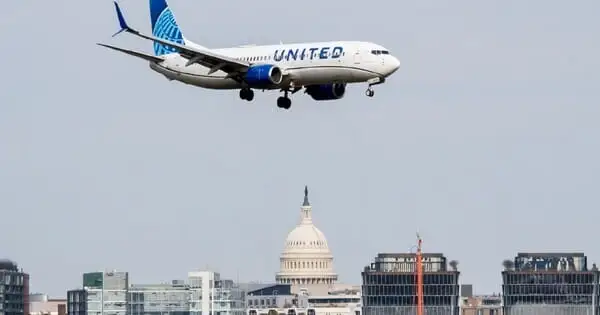
A United Airlines 737 MAX 8 diverted to Pittsburgh and evacuated via slides after a potential security threat; the FBI is investigating the incident.
Key Takeaways
- •Diverted to Pittsburgh after a sequential beeping noise was treated as a potential bomb threat.
- •Evacuated 159 passengers and 6 crew from the Boeing 737 MAX 8 via emergency slides with no injuries.
- •Initiated an FBI investigation after bomb squad and K-9 sweeps of the aircraft yielded negative results.
- •Grounded the aircraft for mandatory inspection and repacking of emergency slides.
A United Airlines flight was diverted to Pittsburgh International Airport (PIT) and evacuated via emergency slides on Saturday, April 18, 2026, following a potential in-flight security threat. The aircraft, a Boeing 737 MAX 8 operating as flight UA2092, was en route from Chicago O'Hare International Airport (ORD) to LaGuardia Airport (LGA) in New York when the crew declared an emergency.
The diversion was initiated after the flight crew reported a sequential beeping noise in the cabin. According to cockpit audio recordings, a crew member informed air traffic control, "We are going to have to start treating this as a potential bomb… it's a beeping noise, sequential, one beep per second." The crew subsequently squawked the emergency transponder code 7700, signaling a general emergency and prompting an immediate response.
Emergency Response and Investigation
The Federal Aviation Administration (FAA) confirmed the aircraft landed safely at PIT at approximately 11:45 am EDT. Upon arrival at a remote section of the airfield, all 159 passengers and 6 crew members evacuated the aircraft using the emergency slides. Airport emergency services responded immediately to assist passengers and transport them to the terminal. Officials confirmed that no injuries were reported during the evacuation.
Following the evacuation, law enforcement secured the scene. A spokesperson for the Allegheny County Airport Authority stated that the county police bomb squad, including Explosive Ordnance Disposal (EOD) and K-9 (Canine Unit) teams, conducted a thorough sweep of the aircraft, passengers, and luggage. The search yielded negative results for any explosive devices or hazardous materials.
The Federal Bureau of Investigation (FBI) Pittsburgh field office acknowledged the incident, stating it was "aware of a reported threat onboard a flight headed to New York." The agency has since taken the lead on the investigation into the origin of the threat, which remains ongoing.
Operational and Regulatory Context
The aircraft involved, a Boeing 737 MAX 8 registered as N37325, was grounded for a mandatory maintenance inspection following the deployment of its emergency slides. According to industry trends, this procedure is standard as slides must be removed, inspected, and repacked by certified technicians before the aircraft can return to service. Tracking data for the flight is available on services like Flightradar24 and FlightAware.
The crew's decision to divert and evacuate aligns with established security protocols governed by the Transportation Security Administration (TSA) under 49 CFR Part 1544 (Aircraft Operator Security). This regulation dictates how airlines must respond to in-flight threats. The evacuation itself is governed by FAA regulations, specifically 14 CFR § 25.803, which requires that aircraft can be fully evacuated in 90 seconds.
This incident underscores a growing trend of precautionary diversions when crews encounter unidentified electronic noises, treating them as potential improvised explosive devices until proven otherwise. While such actions cause significant operational disruption for the airline and passengers, they prioritize safety above all else.
Historically, emergency evacuations carry risks. The 2016 uncontained engine failure of an American Airlines flight at Chicago O'Hare resulted in several passenger injuries during the slide evacuation. The successful, injury-free evacuation of UA2092 highlights the effective training and execution of emergency procedures by the crew and airport responders.
What Comes Next
The FBI's investigation will focus on identifying the source of the beeping noise and determining if a credible threat existed. United Airlines is expected to return aircraft N37325 to service within a day, following the completion of necessary maintenance checks. The conclusion of the broader FBI investigation is anticipated later in 2026.
Why This Matters
This incident demonstrates the high state of alert within the commercial aviation industry regarding potential security threats. The crew's decision to treat an ambiguous noise as a worst-case scenario reflects a safety-first culture that, while disruptive, is designed to prevent catastrophic outcomes. The coordinated, multi-agency response at Pittsburgh International Airport serves as a case study in successfully managing an in-flight security emergency with no harm to passengers or crew.
Frequently Asked Questions
- Why did United Flight 2092 divert to Pittsburgh?
- United Airlines Flight 2092 diverted to Pittsburgh International Airport as a precautionary measure after the flight crew reported a sequential beeping noise. The crew treated the sound as a potential bomb threat, leading to an emergency landing.
- What happened after United flight 2092 landed in Pittsburgh?
- After landing safely, all 159 passengers and 6 crew members evacuated the Boeing 737 MAX 8 via emergency slides. Law enforcement, including a bomb squad and K-9 units, then swept the aircraft, but the search yielded negative results for any threats.
- Were any passengers injured during the UA2092 emergency evacuation?
- No. Despite the full-scale evacuation using emergency slides, officials confirmed that no injuries were reported among the 165 passengers and crew on board the flight.
For global airline trends and commercial aviation news, turn to omniflights.com. Follow aviation sustainability efforts, emissions research, and green initiatives in the Environmental section at omniflights.com/environmental.

Written by Hardik Vishwakarma
Co-Founder & Aviation News Editor leading initiatives that improve trust and visibility across the global aviation industry. Covers airlines, airports, safety, and emerging technology.
Visit ProfileYou Might Also Like
Israel Bans United Airlines Pilot Over Pro-Iran Posts

Attack on Saudi King Fahd International Airport
LATAM Airlines A320 Engine Fire During Takeoff in Peru
Riyadh Airport Limits Traffic Following Houthi Attacks
FAA Mandates Fuel Valve Inspections for A330 and A340