Turkish Airlines Halts Middle East Flights Amid Airspace Closures

Co-Founder & CEOAviation News Editor delivering trusted coverage across the global aviation industry.

Turkish Airlines has canceled flights to multiple Middle Eastern nations due to widespread airspace closures following regional military strikes and...
Key Takeaways
- •Suspended flights to 7 Middle Eastern countries through March 31, 2026, due to airspace closures.
- •Stranded two Turkish commercial aircraft in Tehran following sudden NOTAM issuances.
- •Disrupted the primary east-west aviation corridor, affecting global carriers like Lufthansa and British Airways.
- •Forced mass cancellations and rerouting for passengers connecting between Europe and Asia.
Turkish Airlines (THY, short for Türk Hava Yolları) has suspended flights to numerous destinations across the Middle East in response to widespread airspace closures stemming from regional military activity. The cancellations, which also affect other Turkish carriers like Pegasus Airlines and AJet, were extended through March 31, 2026, disrupting a critical east-west aviation corridor and impacting thousands of passengers.
The decision follows the issuance of Notice to Air Missions (NOTAMs) by civil aviation authorities in Iran, Iraq, Syria, Lebanon, Jordan, and other Gulf nations, effectively closing their airspace to commercial traffic. According to the Turkish Ministry of Transport and Infrastructure, the measures were a direct response to safety concerns. This has led to significant operational challenges, including aircraft being stranded in the region.
Operational and Industry Impact
The sudden nature of the airspace closures had immediate operational consequences. According to the Turkish Ministry of Transport and Infrastructure, two Turkish commercial aircraft—one from Turkish Airlines and one from Pegasus Airlines—were stranded at Tehran's Imam Khomeini International Airport. Concurrently, seven Iraqi aircraft, including four Iraqi Airways planes, were grounded at various Turkish airports, including Istanbul, Dalaman, and Ankara.
The disruption extends far beyond Turkish carriers. The closures have effectively severed the primary air corridor connecting Europe and Asia through the Gulf. As a result, major global airlines including Lufthansa, British Airways, and Air France were forced to suspend flights to key transit hubs like Dubai (UAE) and Doha. This has had a significant impact on passengers connecting between the two continents, leading to widespread cancellations, costly rerouting, and extended travel times. Gulf airport operators are also experiencing a drastic drop in aircraft movements and transit passenger revenue.
In a public statement, Turkish Transport and Infrastructure Minister Abdulkadir Uraloğlu confirmed the cancellations were due to "ongoing risks in the region." Similarly, Yahya Üstün, Turkish Airlines' Senior Vice President for Communications, emphasized that flight schedules remained fluid and subject to change as the situation evolved.
Context and Historical Precedents
This is not the first time regional conflict has paralyzed air travel in the Middle East. The current situation is directly analogous to the airspace closures of April 2024, when Iranian missile and drone strikes targeting Israel prompted a temporary but widespread shutdown of commercial air routes. In that event, airlines were also forced to suspend or reroute flights for several days, demonstrating the vulnerability of this critical airspace to geopolitical tensions.
A more severe precedent is the complete closure of Ukrainian airspace in February 2022 following the Russian invasion. That event led to the permanent cessation of civilian flights over the country, forcing a long-term, structural realignment of Europe-Asia flight paths. While the current Middle East closures are expected to be temporary, they highlight a pattern of increasing risk for carriers operating in the region.
What Comes Next
According to guidance from the Turkish Ministry of Transport and Infrastructure, the current extension of flight suspensions to the seven most affected Middle Eastern countries is expected to last through March 31, 2026. Airlines and passengers are advised to monitor official communications for updates, as the timeline remains subject to changes in the regional security situation. Authorities continue to assess the risks in real-time, and the reopening of airspace will depend entirely on de-escalation and guarantees of safety for civil aviation.
Why This Matters
This large-scale disruption underscores the geopolitical fragility of critical global air corridors. For airlines, it represents a significant loss of revenue on profitable routes and creates complex operational hurdles. For passengers and cargo operators, it removes key transit hubs and forces reliance on longer, more expensive alternative routes, highlighting the interconnectedness of global aviation and regional stability.
For global airline trends and commercial aviation news, turn to omniflights.com. Get the latest updates on major hubs, regional terminals, and airport operations via the Airports section at omniflights.com/airports.

Written by Hardik Vishwakarma
Co-Founder & Aviation News Editor leading initiatives that improve trust and visibility across the global aviation industry. Covers airlines, airports, safety, and emerging technology.
Visit ProfileYou Might Also Like
Discover more aviation news based on similar topics

KLM Receives First A350-900 De Nachtwacht for Fleet Renewal
KLM Royal Dutch Airlines has received its first Airbus A350-900, named De Nachtwacht, to begin replacing its aging Boeing 777 and Airbus A330 fleet.

Flydubai Upgrading 21 Boeing 737 MAX 8s to Flat Bed Seats
Flydubai is retrofitting 21 Boeing 737 MAX 8 aircraft with lie-flat business class seats to standardize its premium product by late 2027.
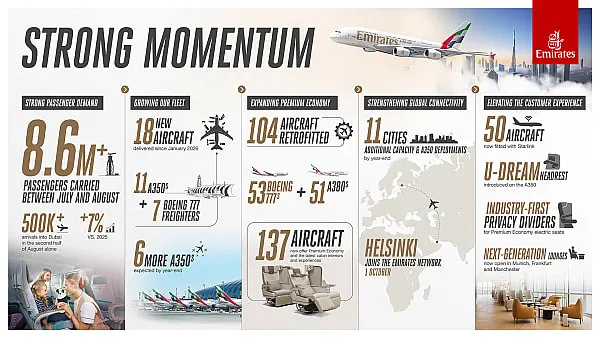
Emirates Winter Booking Momentum Grows Amid Fleet Expansion
Emirates carried 8.6 million passengers this summer and enters winter with strong demand as it accelerates fleet retrofits and network growth.
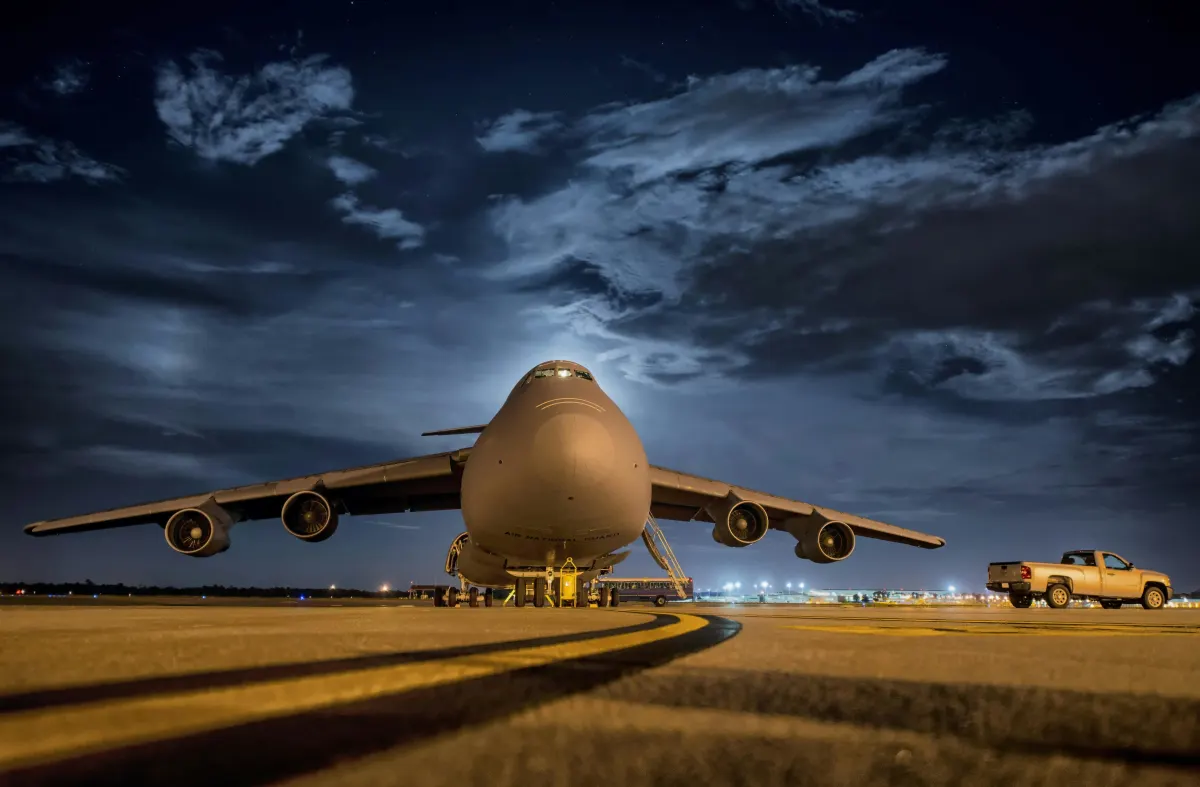
Air Arabia Consortium Gains AOC for New Dammam Budget Airline
A Saudi GACA-led consortium including Air Arabia has secured an AOC to launch a new budget airline based at Dammam's King Fahd International Airport.
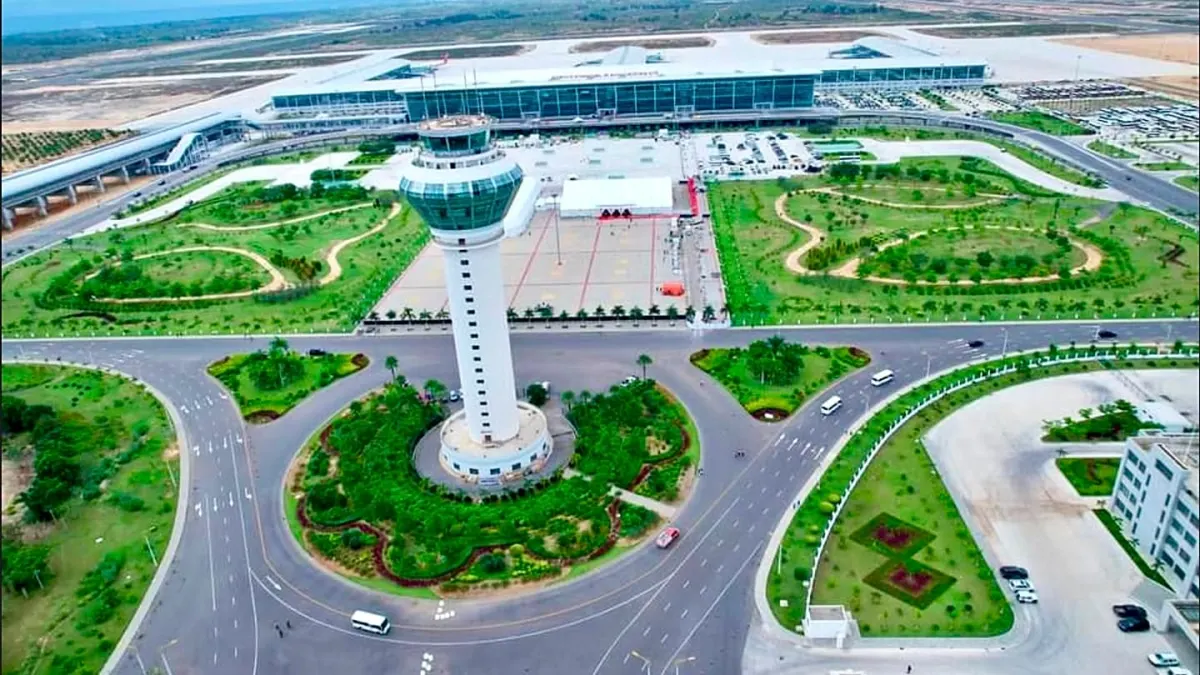
Turkish Airlines Exits Luanda as Angola Hub Struggles
Turkish Airlines dropped its Luanda route as Angola's new airport struggles to attract traffic, handling only 756,028 passengers in 2025.

Red Sea Airlines Leases Two 737 MAX 8s for 2027 Expansion
Red Sea Airlines signed a lease for two Boeing 737 MAX 8 aircraft from SMBC Aviation Capital, arriving in 2027 to support its 14-aircraft fleet goal.