TezJet MD-83 Grounded After Landing Gear Collapse in Bishkek

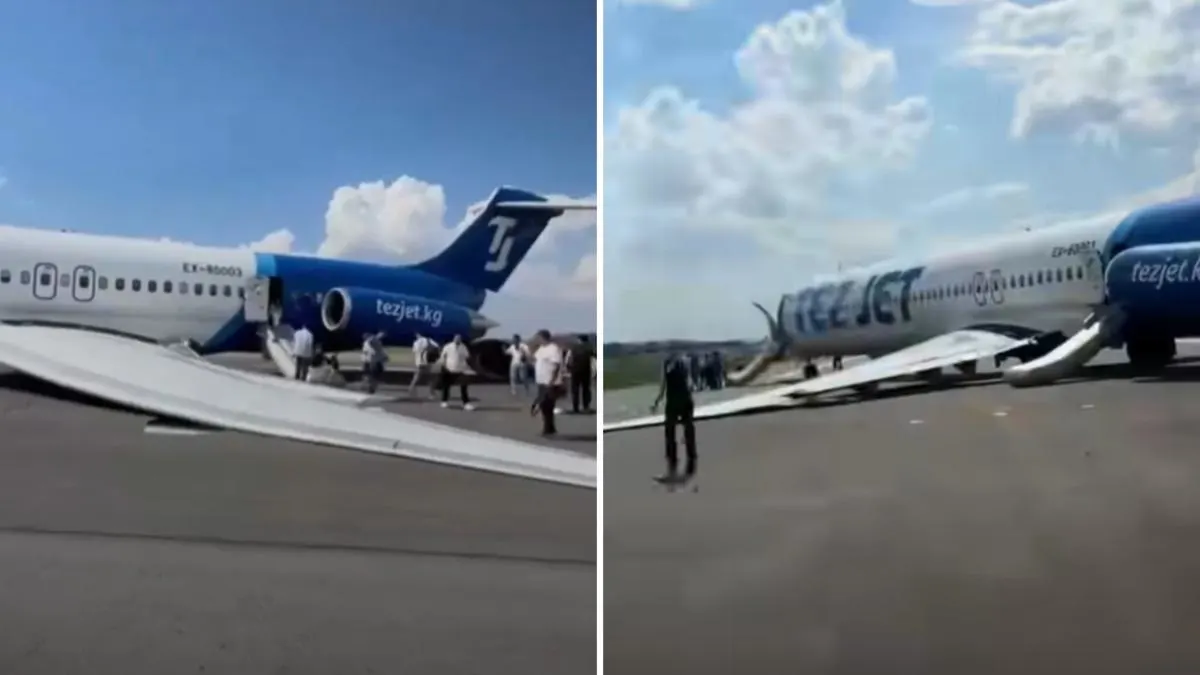
A TezJet MD-83 suffered a left main landing gear collapse during takeoff at Bishkek, forcing an emergency evacuation of all 181 people on board.
Key Takeaways
- •TezJet MD-83 landing gear collapsed during takeoff in Bishkek on July 7.
- •All 181 passengers and crew evacuated safely with no major injuries.
- •Kyrgyzstan authorities suspended all TezJet operations pending an investigation.
- •EASA mandated urgent wing spar inspections for 16 Airbus A380 aircraft.
TezJet MD-83 Landing Gear Collapse
A TezJet flight experienced a significant mechanical failure during takeoff from Manas International Airport (FRU) in Kyrgyzstan on July 7, 2026, leading to a temporary fleet-wide grounding. The McDonnell Douglas MD-83 (produced in December 1999) suffered a collapse of its left main landing gear while accelerating on the runway. The aircraft subsequently veered and tilted, resulting in the left wing striking the tarmac and causing a jet fuel spill.
All 181 people on board—comprising 152 adults, 11 teenagers, 18 children, two pilots, and four flight attendants—were successfully evacuated via inflatable slides. While there were no fatalities, local reports indicate that several passengers sustained minor injuries, including cuts and bruises. The Civil Aviation Agency of the Kyrgyz Republic responded by suspending all operations of the airline as a preventative safety measure while a formal investigation into the structural integrity of the aging narrowbody fleet is conducted.
The Impact of Aging Fleet Maintenance
The failure of the landing gear on this roughly 27-year-old aircraft highlights the intensified maintenance oversight required for older narrowbody airframes. Historically, such incidents mirror events like the June 2022 Red Air MD-82 landing gear collapse in Miami, which also resulted in a runway excursion and emergency evacuation. For TezJet, the regulatory suspension represents a high-severity operational disruption, forcing the carrier to halt all revenue flights while the Kyrgyz authority verifies the safety of its remaining aircraft.
EASA Mandates Urgent A380 Inspections
Concurrent with the Bishkek incident, the European Union Aviation Safety Agency (EASA) has issued Emergency Airworthiness Directive 2026-0119-E mandating urgent inspections for 16 Airbus A380 aircraft. The directive requires operators to inspect the wing mid spars for cracks that could compromise structural integrity. This affects 15 aircraft operated by Emirates and one by Qantas.
The A380, which features an 80-meter wingspan, is subject to recurring structural fatigue challenges. A Qantas spokesperson confirmed that the airline would comply with the directive, noting that the affected aircraft was already undergoing scheduled maintenance. This development echoes the 2012 EASA directive that required global inspections of A380 wing rib brackets, demonstrating a persistent challenge in maintaining the structural health of the world's largest passenger aircraft.
Technical Analysis: Structural Integrity Cycles
The simultaneous focus on the MD-83 landing gear and A380 wing spars underscores the two distinct regulatory challenges currently facing aviation safety: the management of aging narrowbody systems and the long-term structural fatigue of heavy widebody airframes. For the MD-83, the failure of a primary landing gear component during the takeoff roll suggests a critical mechanical fatigue issue. Conversely, the A380 inspections represent a proactive regulatory approach to managing load-bearing structural members. These events indicate a tightening of safety margins by global regulators, as both the Kyrgyz CAA and EASA prioritize preventative grounding over deferred maintenance cycles.
What Comes Next: Investigation and Compliance
The Civil Aviation Agency of the Kyrgyz Republic is expected to release a preliminary report on the TezJet landing gear failure by late 2026. Until then, the airline remains grounded. Simultaneously, the operators of the 16 affected A380s must adhere to the EASA inspection timeline. For the Emirates fleet, specific aircraft are required to complete wing mid spar inspections within 25 flight cycles from June 24, 2026. These milestones represent the immediate focus for both the regional operator in Kyrgyzstan and the global widebody market.
Why This Matters for Airline Operations
For the aviation industry, these events signal a period of increased regulatory scrutiny regarding structural maintenance. The grounding of TezJet creates an immediate void in domestic Kyrgyz air travel, while the A380 inspections introduce operational bottlenecks for high-density long-haul routes. Airlines continue to balance the economic necessity of high-utilization schedules against the mandatory, time-intensive inspections required to ensure the airworthiness of both legacy narrowbody and modern widebody fleets.
Frequently Asked Questions
- What caused the TezJet MD-83 incident at Bishkek Airport?
- The incident was caused by the collapse of the left main landing gear during the takeoff roll, which caused the aircraft to tilt and strike its wing on the runway.
- Why did EASA issue an emergency airworthiness directive for the Airbus A380?
- EASA issued the directive to mandate urgent inspections of wing mid spars on 16 specific A380 aircraft after cracks were detected that could potentially compromise the structural integrity of the wings.
Get breaking commercial aviation news and expert airline analysis at omniflights.com. Discover how innovation is shaping aviation through aircraft systems, avionics, and digital tools at omniflights.com/technology.

Written by Shashank Shukla
Co-Founder & CTO leading the engineering and AI systems behind Omni Flights. Covers aviation technology, flight safety, aircraft manufacturing, and emerging aerospace developments.
Visit ProfileYou Might Also Like

Flydubai FZ1073 Hijacking: Crew Thwarts Mid-Air Attack

Flydubai Pilot Attack Raises Cockpit Insider Threat Concerns

Flydubai FZ1073 Hijack Attempt: Pilot Had Targeted Tel Aviv
Flydubai FZ1073 Hijack Attempt Leads to 16,000-Foot Plunge

FlyDubai Flight FZ1073: Captain Stabbing Under Investigation