Sri Lanka Pitches Mattala Airport as Gulf Carrier Contingency Hub

Co-Founder & CEOAviation News Editor delivering trusted coverage across the global aviation industry.
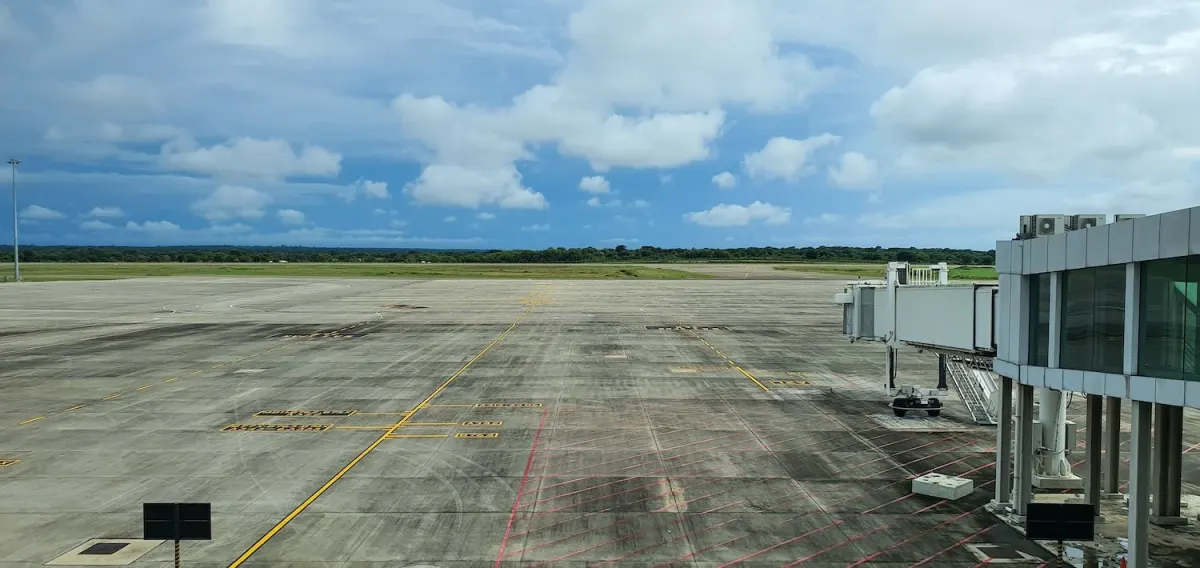
Sri Lanka proposes Mattala Airport as a contingency hub for Gulf carriers facing severe Middle East airspace closures disrupting long-haul flights.
Key Takeaways
- •Proposes underutilized Mattala Airport as a contingency hub for Gulf carriers
- •Responds to severe Middle East airspace closures and EASA warnings
- •Faces a 20-25% drop in tourist arrivals, a US$40 million revenue loss
- •Leverages a 3,500-meter runway capable of handling Airbus A380 aircraft
Sri Lanka has formally proposed its underutilized Mattala Rajapaksa International Airport (MRIA) as a contingency hub for Gulf carriers, including Emirates and Qatar Airways, following widespread airspace closures in the Middle East. The move aims to mitigate the severe disruption to crucial Europe-Asia flight corridors and salvage the nation's tourism sector, which has already seen a significant downturn.
This initiative by the Civil Aviation Authority of Sri Lanka (CAASL) is a direct response to escalating geopolitical tensions that have rendered major air routes impassable. According to the European Union Aviation Safety Agency (EASA), its latest Conflict Zone Information Bulletin (CZIB) 2026-03-R4 advises operators to avoid airspace over numerous Middle Eastern states. The subsequent closure of key Flight Information Regions (FIRs), including Tehran (OIIX) and Baghdad (ORBB), has effectively crippled the operations of mega-hubs in Dubai and Doha, forcing a dramatic rerouting of global air traffic.
Economic and Operational Impact
The impact on Sri Lanka's economy has been immediate and severe. The Sri Lanka Tourism Development Authority confirmed that Middle East flight cancellations caused an estimated 20-25% drop in tourist arrivals for March 2026. According to the Sri Lanka Ministry of Tourism, this translates to an immediate revenue loss of approximately US$40 million. The fallout extends across the region, with Aeronautical Radio of Thailand Ltd (AEROTHAI) reporting that over 1,000 flights from Middle Eastern airlines to Thailand were cancelled since February 28, 2026. Surachai Nuprom, acting president of AEROTHAI, noted the conflict has significantly impacted traffic volumes and led the agency to reduce Thailand's 2026 flight growth projection to a maximum of 3%.
For the affected Gulf carriers, the situation presents an unprecedented logistical challenge, forcing them to seek alternative hubs to maintain network integrity. SriLankan Airlines is reportedly operating at full capacity and is unable to absorb the spillover in transit passenger volume.
Mattala's Potential and Challenges
To accommodate diverted traffic, Sri Lankan aviation authorities have activated an Emergency Action Plan for Flight Redirection. The state-owned operator, Airport and Aviation Services (Sri Lanka) Limited (AASL), highlights that MRIA possesses the necessary infrastructure, including a 3,500-meter runway capable of handling the largest widebody aircraft, such as the Airbus A380. This technical capability makes it a viable, if unconventional, alternative to its congested Colombo counterpart.
However, aviation analysts express skepticism regarding the long-term viability of Mattala as a hub, citing its historical underutilization, lack of ground transportation, and limited local demand. The airport has previously struggled to attract and retain scheduled services, raising questions about its ability to scale up services and passenger amenities beyond an emergency transit function.
Historical Context and Precedents
The current crisis mirrors previous geopolitical disruptions that have reshaped global aviation. In 2022, the closure of Russian airspace following the invasion of Ukraine forced airlines to reroute Europe-Asia flights via southern corridors, significantly increasing flight times and fuel costs. This event demonstrated how quickly established air routes can be rendered obsolete by conflict. Similarly, the 2017 Qatar Diplomatic Crisis saw Qatar Airways banned from the airspace of several neighboring countries, forcing complex reroutes and highlighting the vulnerability of the mega-hub model to regional politics. The present situation appears to accelerate this trend, forcing a decentralization of traffic away from traditional hubs.
What Comes Next
According to the Civil Aviation Authority of Sri Lanka, the finalization of contingency agreements with Emirates and Qatar Airways is expected in the second quarter of 2026. Captain Daminda Rambukwella, Director General of Civil Aviation, confirmed that a special program is being implemented to manage the redirected flights. The success of this initiative depends on both the duration of the airspace closures and the ability of Sri Lankan authorities to rapidly scale up operational capacity at Mattala.
Why This Matters
This development serves as a critical test case for activating secondary, underutilized airports during major geopolitical disruptions. It underscores the increasing vulnerability of the global aviation network's reliance on a few concentrated hubs in politically sensitive regions. For Sri Lanka, it represents a high-stakes opportunity to monetize a costly infrastructure asset, while for airlines, it is a forced experiment in network resilience that could influence future route planning and hub strategies.
From airline operations to fleet updates, commercial aviation news lives at omniflights.com. For reporting on UAP sightings, investigations, and aviation-related encounters, see the UAPs section at omniflights.com/uaps.
Written by Hardik Vishwakarma
Co-Founder & Aviation News Editor leading initiatives that improve trust and visibility across the global aviation industry. Covers airlines, airports, safety, and emerging technology.
Visit ProfileYou Might Also Like
Discover more aviation news based on similar topics

Flydubai Upgrading 21 Boeing 737 MAX 8s to Flat Bed Seats
Flydubai is retrofitting 21 Boeing 737 MAX 8 aircraft with lie-flat business class seats to standardize its premium product by late 2027.
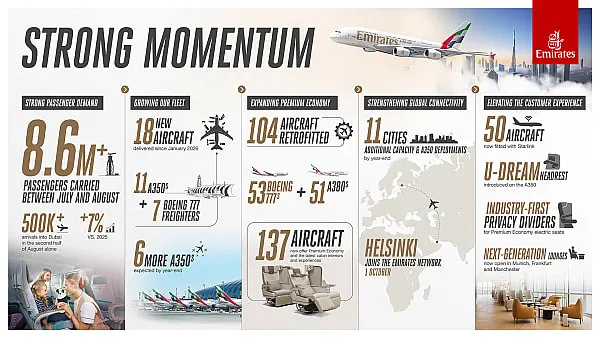
Emirates Winter Booking Momentum Grows Amid Fleet Expansion
Emirates carried 8.6 million passengers this summer and enters winter with strong demand as it accelerates fleet retrofits and network growth.
Air Arabia Consortium Gains AOC for New Dammam Budget Airline
A Saudi GACA-led consortium including Air Arabia has secured an AOC to launch a new budget airline based at Dammam's King Fahd International Airport.
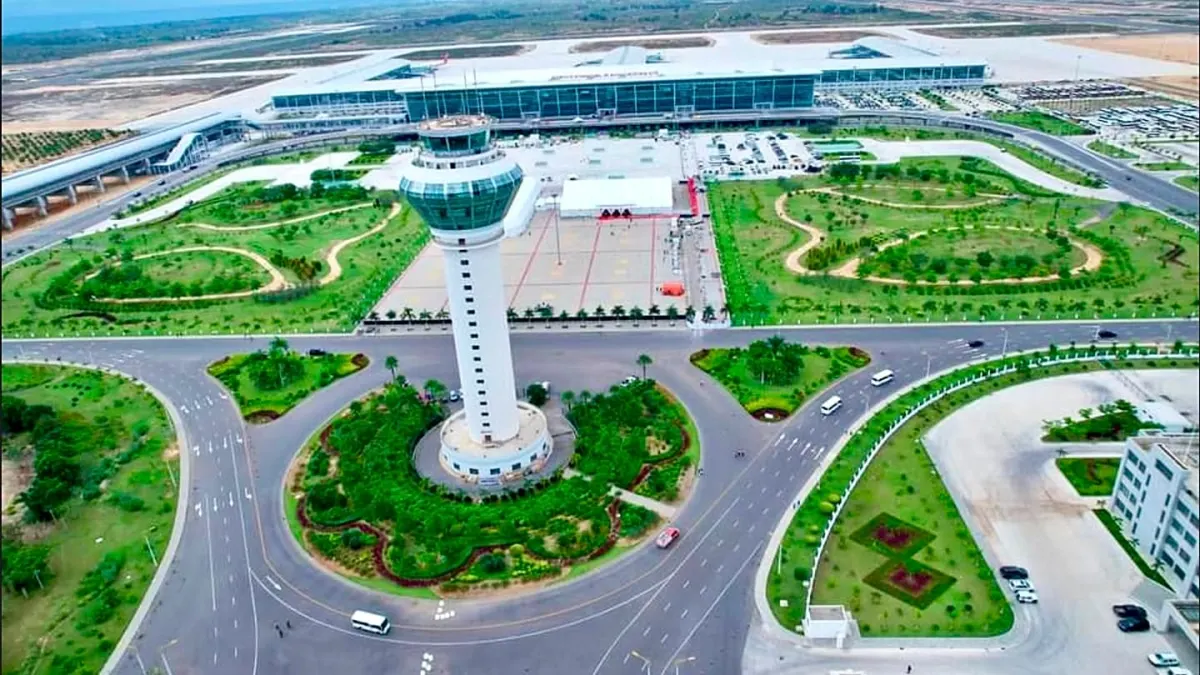
Turkish Airlines Exits Luanda as Angola Hub Struggles
Turkish Airlines dropped its Luanda route as Angola's new airport struggles to attract traffic, handling only 756,028 passengers in 2025.

Red Sea Airlines Leases Two 737 MAX 8s for 2027 Expansion
Red Sea Airlines signed a lease for two Boeing 737 MAX 8 aircraft from SMBC Aviation Capital, arriving in 2027 to support its 14-aircraft fleet goal.

Avelo CEO Warns Airfares May Rise on Jet Fuel Price Spikes
Avelo Airlines CEO Andrew Levy warns that rising fuel costs may force fare increases as global jet fuel prices reach $171.01 per barrel.