Spirit Airlines Seeks Trump Administration Bailout to Avoid Liquidation

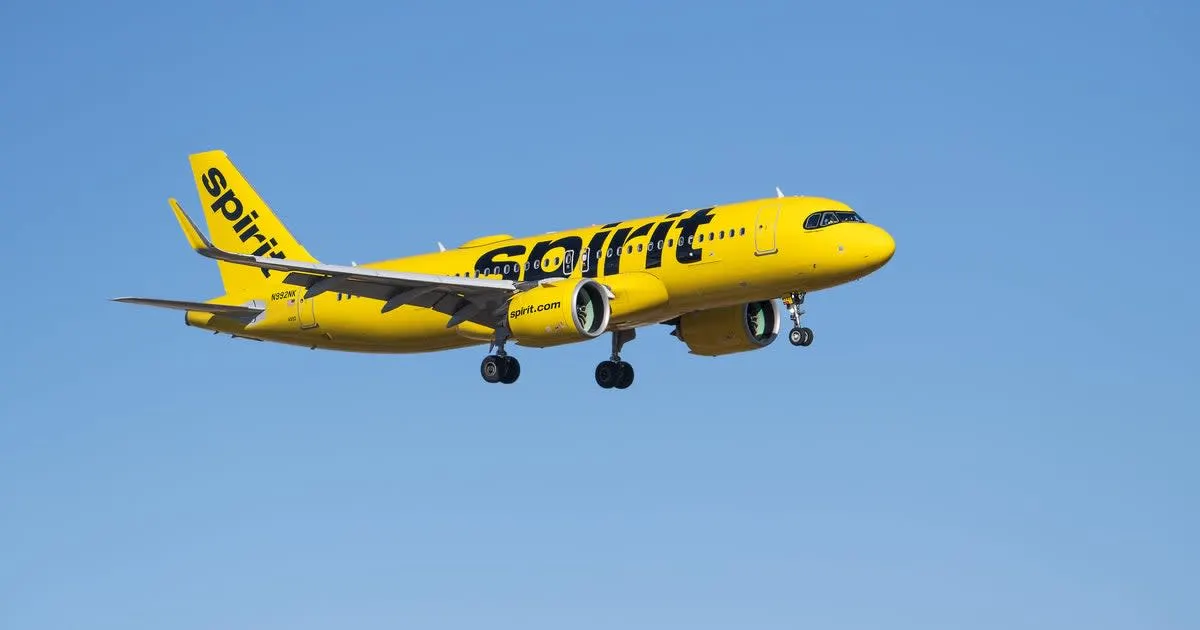
Spirit Airlines has asked the Trump administration for an emergency bailout to avoid liquidation amid surging jet fuel prices and mounting creditor...
Key Takeaways
- •Seeks emergency bailout from Trump administration to avoid liquidation.
- •Faces creditor pressure as jet fuel prices doubled to approximately $4.24 per gallon.
- •Operates under its second Chapter 11 bankruptcy protection since November 2024.
- •DOT Secretary Sean Duffy is expected to meet with ULCC executives in late April 2026.
Facing imminent liquidation, Spirit Airlines has formally approached the Trump administration to request an emergency government bailout. The move comes as the ultra-low-cost carrier (ULCC) struggles to manage upcoming multimillion-dollar debt payments amidst a crippling surge in fuel costs. Spirit executives are expected to meet with Department of Transportation (DOT) Secretary Sean Duffy next week to discuss potential assistance.
The carrier's viability is in serious doubt after filing for Chapter 11 bankruptcy protection twice since late 2024. A recent spike in jet fuel prices, which now account for over 40% of operating expenses for some carriers, has nullified the financial progress Spirit hoped to achieve through its court-supervised restructuring. The situation is so severe that some creditors are reportedly considering pulling their support, which could force the airline to cease operations almost immediately. For passengers and the broader U.S. domestic market, the collapse of a major ULCC could significantly reduce capacity and lead to higher average fares.
Financial Strain and Fuel Crisis
The immediate catalyst for Spirit's crisis is the dramatic rise in jet fuel prices. Following the late-February 2026 conflict between the U.S. and Iran, prices have doubled to approximately $4.24 per gallon, equivalent to over $200 per barrel, according to data from the International Air Transport Association (IATA). This external shock has disproportionately affected unhedged carriers like Spirit, erasing already thin margins.
The airline entered its second bankruptcy in August 2025 after a prolonged period of financial distress, having lost more than $2.5 billion between the start of 2020 and its first bankruptcy filing in November 2024. Its current restructuring agreement, filed with the U.S. Bankruptcy Court for the Southern District of New York, aimed to reduce debt and lease obligations from $7.4 billion to $2.1 billion. However, that plan was predicated on a more stable cost environment. Airline industry analyst Henry Harteveldt described the situation bluntly, stating, "Spirit is flying on financial fumes," and advised Spirit customers to book backup travel arrangements.
Stakeholder and Industry Impact
A potential liquidation of Spirit Airlines would send shockwaves through the aviation industry. The carrier's creditors and bondholders face the most immediate risk, with the potential for severe losses on the airline's $2.1 billion in restructured debt. For Airbus, the collapse could lead to the cancellation or deferral of Spirit's remaining A320neo family aircraft orders. Similarly, engine manufacturer Pratt & Whitney would lose significant future maintenance, repair, and overhaul (MRO) revenue tied to Spirit's fleet.
U.S. budget travelers would also be heavily impacted, as the disappearance of a major ULCC would remove a significant competitor and likely result in higher fares on leisure routes. While competing carriers like Frontier and Allegiant could benefit from capturing Spirit's market share, they remain exposed to the same intense fuel cost pressures.
A History of Airline Bailouts
This is not the first time a U.S. administration has faced calls to intervene in the airline industry. The current situation draws parallels to historical precedents, most notably the Air Transportation Safety and System Stabilization Act enacted after the 9/11 attacks in 2001, which provided $4.6 billion in grants and loan guarantees. More recently, the CARES Act Payroll Support Program of 2020-2021 injected $54 billion into the industry to prevent mass liquidations during the pandemic, with Spirit itself receiving $754 million. However, those interventions were responses to system-wide crises affecting all carriers. A bailout for a single airline raises different questions, particularly after a federal judge blocked the proposed $3.8 billion merger between JetBlue and Spirit in January 2024—a move that directly contributed to Spirit's current financial fragility.
What Comes Next
The immediate future for Spirit Airlines hinges on two critical events. First is the upcoming meeting between ULCC executives and DOT Secretary Sean Duffy, expected in late April 2026, where the terms of any potential government assistance will be discussed. Second, and more definitive, is the decision from the U.S. Bankruptcy Court, which must approve either a revised restructuring plan or an order for liquidation. This decision is expected by the summer of 2026. Both the airline's investor relations page and regulatory filings will be monitored closely for updates.
Why This Matters
The fate of Spirit Airlines represents a critical test for the U.S. aviation market's structure. The outcome of its bailout request will signal the Trump administration's policy on airline competition and its willingness to intervene to save individual carriers. For the industry, it will determine the resilience of the ultra-low-cost model in an era of high and volatile operating costs, potentially triggering further consolidation or reshaping the landscape for budget travel in North America.
Frequently Asked Questions
- Why is Spirit Airlines seeking a government bailout in 2026?
- Spirit Airlines is seeking a bailout to avoid liquidation after a sharp spike in jet fuel prices to approximately $4.24 per gallon crippled its finances, making it difficult to meet multimillion-dollar debt payments while in its second Chapter 11 bankruptcy.
- Has the US government bailed out airlines before?
- Yes, the US government has intervened previously, notably with the Air Transportation Safety and System Stabilization Act after 9/11 and the CARES Act Payroll Support Program during the 2020-2021 pandemic, which provided billions in grants and loans to stabilize the industry.
Get breaking commercial aviation news and expert airline analysis at omniflights.com. For reporting on UAP sightings, investigations, and aviation-related encounters, see the UAPs section at omniflights.com/uaps.

Written by Hardik Vishwakarma
Co-Founder & Aviation News Editor leading initiatives that improve trust and visibility across the global aviation industry. Covers airlines, airports, safety, and emerging technology.
Visit ProfileYou Might Also Like

Embraer to Acquire 51% Stake in Mahindra's Novavayu
Aviation Capital Group Orders 75 Airbus A320neo Aircraft

Lufthansa to Acquire 44.9% Stake in TAP Air Portugal
Avolon Orders 70 Rolls-Royce Trent 7000 Engines
IndiGo Secures $328M Financing for 8 Airbus Aircraft