Spirit Airlines Ceases Operations Following Blocked JetBlue Merger

Co-Founder & CEOAviation News Editor delivering trusted coverage across the global aviation industry.
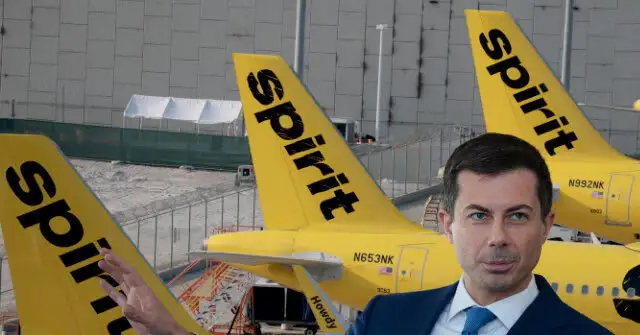
Spirit Airlines has ceased all operations, resulting in 17,000 job losses, following its 2024 bankruptcy and a blocked merger attempt with JetBlue.
Key Takeaways
- •Ceased all operations on May 2, 2026, eliminating approximately 17,000 jobs.
- •Follows failed $3.8 billion merger with JetBlue, which was blocked by the DOJ in 2024 on antitrust grounds.
- •Lost over $2.5 billion between 2020 and 2024, leading to multiple Chapter 11 bankruptcy filings before liquidation.
- •Raises questions about the impact of aggressive regulatory intervention on airline market stability and consumer choice.
Spirit Airlines has permanently ceased all operations effective May 2, 2026, grounding its fleet and terminating its workforce of approximately 17,000 employees. The shutdown marks the final chapter for the ultra-low-cost carrier (ULCC), which struggled financially following the regulatory block of its proposed $3.8 billion merger with JetBlue.
The collapse of the prominent ULCC removes a significant competitor from the domestic U.S. market, raising questions about the long-term consequences of the government's aggressive antitrust stance. For passengers, particularly in Spirit's core leisure markets, the shutdown is expected to lead to reduced choice and higher average fares as legacy carriers absorb the lost capacity.
Regulatory Opposition to Merger
The airline's fate was largely sealed by a two-pronged regulatory challenge in 2023. The Department of Justice (DOJ), joined by several state attorneys general, filed a lawsuit under Section 7 of the Clayton Act to block the merger. The DOJ argued the deal would eliminate a key low-cost competitor and lead to higher prices for consumers. This legal action was successful, with a federal court ruling against the acquisition.
Concurrently, the Department of Transportation (DOT) initiated its own investigation, signaling a significant policy shift. In a 2023 interview, then-Secretary Pete Buttigieg stated the DOT would break from its hands-off precedent on mergers to ensure "passengers have choices" and "access to low fares." This intervention represented a more active regulatory posture against airline industry consolidation than had been seen in decades. While officials framed the blocked merger as a victory for consumers, critics argued the action ultimately precipitated Spirit's failure, removing its low-fare influence from the market entirely.
Financial Decline and Bankruptcy
Spirit's financial position was precarious long before the shutdown. According to financial records, the airline lost over $2.5 billion between the beginning of 2020 and its initial bankruptcy filing in November 2024. The combination of post-pandemic operating cost pressures and an inability to achieve the scale offered by the JetBlue merger proved insurmountable. The carrier filed for Chapter 11 bankruptcy protection twice, first in November 2024 and again in August 2025, before ultimately proceeding with a full liquidation.
Impact on Employees and Market
The immediate impact of the shutdown is the loss of 17,000 jobs for pilots, flight attendants, and ground staff. Aircraft lessors and Airbus now face the challenge of repossessing and remarketing a fleet of approximately 100 A320-family aircraft. For competing major U.S. airlines like Delta, American, and United, Spirit's exit is likely to increase their market share and pricing power on routes where the ULCC previously exerted downward pressure on fares. The Justice Department's statements on the termination of the acquisition centered on preserving low-cost competition, an outcome critics note has been inverted by the airline's total collapse.
Technical Analysis
The shutdown of Spirit Airlines highlights the inherent financial fragility of the ultra-low-cost carrier model when faced with significant headwinds and denied opportunities for consolidation. This event follows a pattern seen in the 2019 bankruptcy of WOW air, which also ceased operations abruptly amid rising costs. However, Spirit's case is unique due to the direct role of regulatory intervention. The DOJ's successful block of the American Airlines-JetBlue Northeast Alliance in May 2023 was a clear precursor, signaling the administration's aggressive antitrust stance. The Spirit outcome suggests that while this policy aims to protect competition in the short term, it may inadvertently lead to the failure of weaker carriers, ultimately resulting in less market competition and capacity than if a merger had been approved.
What Comes Next
With operations now halted, the next phase involves the court-supervised liquidation of Spirit's assets. This process is expected to proceed through mid-to-late 2026. A key milestone will be the reallocation of the airline's valuable airport slots and gates at congested airports, a process overseen by the Federal Aviation Administration and local airport authorities, which is expected to occur in the third quarter of 2026.
Why This Matters
The collapse of a major national carrier like Spirit Airlines is a significant event that will reshape the U.S. aviation landscape. It serves as a critical case study on the real-world impact of stringent antitrust enforcement in the airline industry. For passengers, the disappearance of a major low-fare option will likely mean higher ticket prices, while the industry watches closely to see how regulators will approach future consolidation proposals.
Frequently Asked Questions
- Why did Spirit Airlines shut down in 2026?
- Spirit Airlines ceased operations after years of significant financial losses, accumulating over $2.5 billion in debt between 2020 and 2024. Its attempt to stabilize through a $3.8 billion merger with JetBlue was blocked by federal regulators, leading to multiple bankruptcy filings and eventual liquidation on May 2, 2026.
- Why did the US government block the JetBlue and Spirit Airlines merger?
- The Department of Justice (DOJ) and Department of Transportation (DOT) blocked the merger on antitrust grounds, arguing it would harm consumers. They contended the deal would eliminate Spirit as a key ultra-low-cost competitor, leading to reduced passenger choice and higher airfares across the domestic market.
- How many employees lost their jobs from the Spirit Airlines shutdown?
- Approximately 17,000 Spirit Airlines employees, including pilots, flight attendants, and ground crew, lost their jobs immediately when the airline ceased operations and began liquidation in May 2026.
For global airline trends and commercial aviation news, turn to omniflights.com. Follow aviation sustainability efforts, emissions research, and green initiatives in the Environmental section at omniflights.com/environmental.
Written by Hardik Vishwakarma
Co-Founder & Aviation News Editor leading initiatives that improve trust and visibility across the global aviation industry. Covers airlines, airports, safety, and emerging technology.
Visit ProfileYou Might Also Like
Discover more aviation news based on similar topics
Air India Board Meets Amid Leadership Transition in Mumbai
Air India's board met in Mumbai to finalize a leadership transition as Tewolde Gebremariam takes over as CEO and MD to lead the airline's turnaround.
Boeing Finalizes 150 737 MAX Order for Turkish Airlines
Boeing is set to finalize a 150-aircraft order for Turkish Airlines, resolving a year-long dispute over engine maintenance terms for the 737 MAX.

Korean Air Finalizes $44.8B Deal for 103 Boeing Jets
Korean Air finalized a $44.8 billion agreement for 103 Boeing aircraft and GE engines to modernize its fleet following the Asiana Airlines integration.

Airbus Raises India Growth Forecast to 9.3% for Aviation
Airbus projects India will need 3,480 new aircraft by 2045 as domestic air traffic growth outpaces China at a 9.3% annual rate.
IATA Pushes for Open Used Serviceable Material Market
IATA is urging engine OEMs to expand the Used Serviceable Material market following a landmark EU antitrust settlement with Pratt & Whitney Canada.
Virgin Atlantic A330 Retirement Boosts SAS Fleet Capacity
Virgin Atlantic is retiring its aging A330-300 fleet, with five airframes acquired by SAS to bridge near-term intercontinental capacity gaps.