Ryanair Warns of Summer Cancellations Amid Europe Jet Fuel Shortage

Co-Founder & CEOAviation News Editor delivering trusted coverage across the global aviation industry.

Ryanair warns its summer flight schedule is at risk of cancellations due to potential jet fuel shortages in Europe linked to the Middle East conflict.
Key Takeaways
- •Warns of potential summer 2026 flight cancellations due to jet fuel shortages.
- •Highlights risk from Strait of Hormuz blockade threatening 470,000 daily barrels.
- •Hedged 80% of fuel costs but remains exposed to physical supply disruptions.
- •Impacts Europe's largest airline, which carried 206.4 million passengers in 2025.
Ryanair CEO Michael O’Leary has warned that the carrier may be forced to cancel summer season flights if the ongoing conflict in the Middle East disrupts jet fuel supplies to Europe. The warning from Europe's largest airline by passenger volume, which carried 206.4 million passengers in 2025, highlights a growing risk to the industry's peak travel season, shifting the focus from fuel price volatility to the more critical threat of physical supply shortages.
The core of the issue stems from the blockade of the Strait of Hormuz, a critical maritime chokepoint. According to the International Air Transport Association (IATA), the blockade has caused tanker traffic to collapse by 70-80%, threatening the flow of approximately 470,000 barrels of jet fuel per day from the Middle East to Europe. This supply represents between 25-30% of the continent's total jet fuel demand, creating a significant vulnerability in the aviation supply chain.
Fuel Supply Under Pressure
While Ryanair Holdings plc (RYA.I) has mitigated some financial risk by hedging 80% of its fuel costs at $67 per barrel through March 2027, O'Leary emphasized that financial instruments cannot protect against a physical lack of supply. In recent statements, he confirmed that a supply drop of just 10-20% between June and August would inevitably lead to industry-wide flight cancellations. The airline is reportedly holding daily calls with its fuel suppliers, who have indicated that disruptions could begin as early as June if the conflict does not de-escalate.
The supply shock has already driven prices to record highs for unhedged carriers. IATA Economics data shows the Platts Jet CIF NWE flat price reached an all-time high of $1,774/mt in March 2026, with unhedged barrel prices surging to between $150 and $200. This price pressure is compounded by Europe's limited strategic reserves, which IATA estimates at just over one month of commercial inventory.
Widespread Industry Impact
The potential for flight cancellations poses a severe risk to all European low-cost carriers, including easyJet and Wizz Air, who depend on high-volume operations during the profitable summer months. The impact is particularly acute for the UK aviation sector, which has a high exposure to the disruption due to its reliance on Kuwait for approximately 25% of its jet fuel supply.
Simultaneously, the disruption is causing a shift in long-haul market dynamics. With Gulf hub carriers like Emirates and Qatar Airways facing operational challenges from regional airspace closures, European legacy carriers such as Air France-KLM and Lufthansa are reportedly adding capacity on routes to Asia. This move aims to capture market share from competitors whose primary hubs are at the center of the conflict. For European passengers, the situation presents a dual threat: the high probability of summer holiday flight cancellations and increased ticket prices as airlines pass on the surging cost of unhedged fuel.
Historical Parallels and Regulatory Response
The current crisis combines elements of two significant historical precedents. The airspace closures following the 2022 Russia-Ukraine war triggered a sharp spike in fuel prices and forced complex rerouting of Asia-Europe flights, demonstrating the industry's vulnerability to geopolitical shocks. However, the potential for physical fuel rationing has a more direct parallel in the 1973 Oil Crisis, which led to widespread flight cancellations and forced the early retirement of fuel-inefficient aircraft. The current situation suggests a similar outcome may be possible if supply chains are not restored.
In response, regulatory bodies are beginning to act. The European Commission is scheduled to unveil a new Energy Measures Package in April 2026 to address energy and aviation fuel vulnerabilities. Concurrently, IATA is advocating for national governments to establish dedicated strategic jet fuel reserves to buffer against future supply shocks, a policy not currently widespread across Europe. More information on Ryanair's financial position and hedging strategy can be found via its Investor Relations portal.
What Comes Next
The aviation industry is monitoring the Middle East conflict with a focus on several key milestones. Fuel suppliers have advised that significant disruptions to European jet fuel deliveries are expected to materialize in May and June 2026 if the situation does not improve. In the immediate term, the European Commission's Energy Measures Package, confirmed for release in April 2026, will be the first official policy response and will be closely scrutinized by airlines for any potential relief or new mandates.
Why This Matters
This development signals a critical shift from a fuel price problem to a potential fuel availability crisis. For an industry built on volume and network reliability, the inability to secure physical fuel supply at any price threatens the fundamental business model, especially during the vital summer season. The outcome will not only determine the financial performance of Europe's largest airlines but could also impact millions of travelers and force a strategic re-evaluation of the continent's aviation fuel security.
omniflights.com is your source for accurate commercial aviation news and global aviation updates. Follow aviation sustainability efforts, emissions research, and green initiatives in the Environmental section at omniflights.com/environmental.

Written by Hardik Vishwakarma
Co-Founder & Aviation News Editor leading initiatives that improve trust and visibility across the global aviation industry. Covers airlines, airports, safety, and emerging technology.
Visit ProfileYou Might Also Like
Discover more aviation news based on similar topics

KLM Receives First A350-900 De Nachtwacht for Fleet Renewal
KLM Royal Dutch Airlines has received its first Airbus A350-900, named De Nachtwacht, to begin replacing its aging Boeing 777 and Airbus A330 fleet.

Flydubai Upgrading 21 Boeing 737 MAX 8s to Flat Bed Seats
Flydubai is retrofitting 21 Boeing 737 MAX 8 aircraft with lie-flat business class seats to standardize its premium product by late 2027.
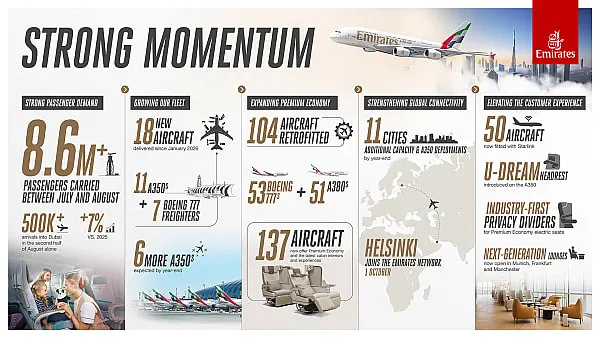
Emirates Winter Booking Momentum Grows Amid Fleet Expansion
Emirates carried 8.6 million passengers this summer and enters winter with strong demand as it accelerates fleet retrofits and network growth.
Air Arabia Consortium Gains AOC for New Dammam Budget Airline
A Saudi GACA-led consortium including Air Arabia has secured an AOC to launch a new budget airline based at Dammam's King Fahd International Airport.
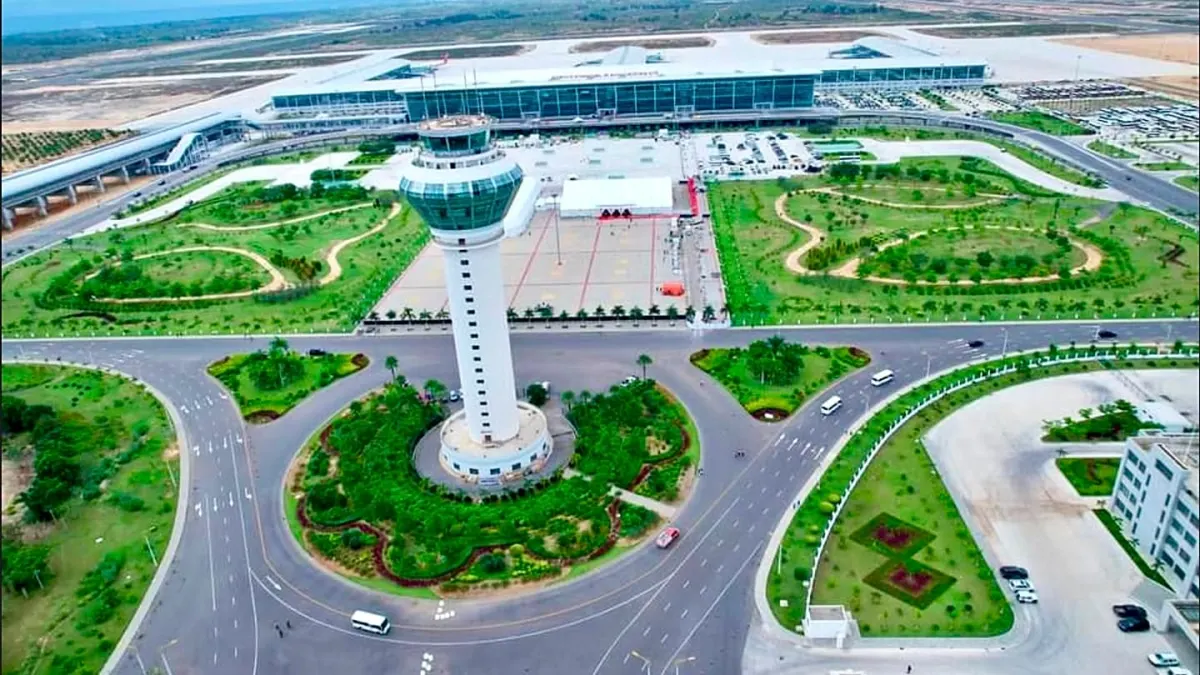
Turkish Airlines Exits Luanda as Angola Hub Struggles
Turkish Airlines dropped its Luanda route as Angola's new airport struggles to attract traffic, handling only 756,028 passengers in 2025.

Red Sea Airlines Leases Two 737 MAX 8s for 2027 Expansion
Red Sea Airlines signed a lease for two Boeing 737 MAX 8 aircraft from SMBC Aviation Capital, arriving in 2027 to support its 14-aircraft fleet goal.