Ryanair Profits Fall 34% to €538 Million

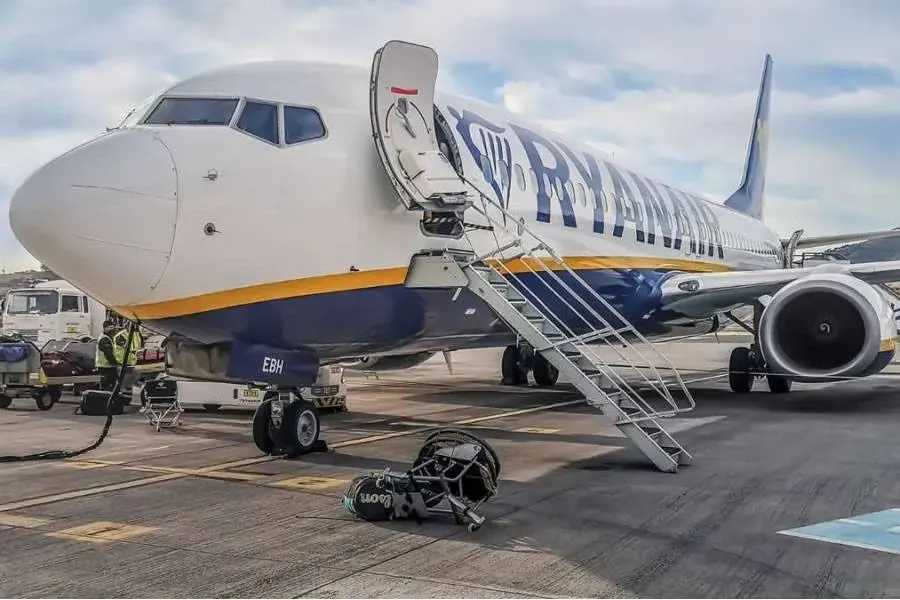
Ryanair reported a 34% drop in quarterly profit after tax to €538 million as rising fuel costs offset record passenger growth.
Key Takeaways
- •Ryanair profit after tax fell 34% to €538 million in Q1 FY2027.
- •Passenger traffic grew 6% to 61.3 million despite yield compression.
- •Unhedged fuel costs doubled to $150 per barrel during the quarter.
- •Repayment of €1.2 billion bond leaves the airline entirely debt-free.
The latest Ryanair Q1 FY2027 earnings report reveals a significant Ryanair profit drop 2026, with profit after tax falling 34% to €538 million despite record passenger numbers. Rising European airline fuel costs and compressed low-cost carrier margins drove the decline during the three-month period ending June 30, 2026.
This margin compression highlights the ongoing vulnerability of European short-haul operators to volatile energy markets and shifting consumer behavior. Although Ryanair successfully stimulated demand and expanded its passenger base to 61.3 million, a 6% reduction in average fares—prompted by geopolitical conflicts in the Middle East and cautious consumer spending—limited overall revenue growth. The results underscore a broader industry trend where airlines must accept lower yields to maintain high load factors amidst rising operational headwinds.
Revenue Growth and Fuel Cost Pressures
According to Ryanair's Q1 FY2027 earnings release, the airline's profit after tax fell 34% to €538 million, down from €811 million in the same period of the prior year. Total revenue rose 1% to €4.38 billion, driven by higher passenger numbers, although lower ticket prices limited overall growth. Additional income from ancillary services, such as baggage fees and seat selection, increased in line with passenger traffic.
However, operating costs climbed 11% to €3.81 billion, largely because fuel prices for the airline's unhedged purchases almost doubled during the quarter to $150 per barrel. To mitigate future volatility, Ryanair has secured 80% of its fuel requirements for the Financial Year (FY) 2027 at an average price of around $67 per barrel, helping to protect the airline against further volatility in energy markets.
Debt-Free Balance Sheet and Capital Allocation
Despite the decline in profitability, Ryanair strengthened its financial position by repaying its final €1.2 billion bond in May 2026, leaving the company entirely debt-free. The airline currently holds more than €2.8 billion in gross cash reserves. This robust liquidity allows the carrier to continue its €750 million share buyback programme while returning money to shareholders through dividends and investing in its fleet.
Ryanair's capital expenditure remains focused on its order of Boeing 737 MAX 10 (MAX-10) aircraft. Group CEO Michael O'Leary stated in the earnings release: 'Q1 fares... required stimulation as the Middle East conflict led to consumer hesitancy, concerns about EU jet-fuel shortages, economic uncertainty and later bookings.' He added that the airline's hedging policy 'insulates Group earnings during volatile oil markets and widens our cost advantage over all other EU competitors.'
Stakeholder and Environmental Dynamics
For Ryanair shareholders, the near-term earnings compression represents a setback, though they remain insulated by the company's debt-free status and ongoing capital return programs. Conversely, European leisure travelers are benefiting in the near-term from a 6% drop in average fares as Ryanair lowers ticket prices to maintain its 94% load factor.
However, high-tax European airports in countries like Germany and the United Kingdom face the risk of losing Ryanair aircraft bases and route capacity. The airline is actively shifting growth toward lower-cost regions in response to rising National Aviation Taxes and the phase-out of free European Union Emissions Trading System (ETS) allowances.
Alternative perspectives from aviation financial analysts suggest that relying heavily on last-minute bookings and price stimulation to fill capacity is unsustainable if fuel prices remain structurally high. Furthermore, European environmental NGOs have argued that low-cost carriers' reliance on fare stimulation and rapid passenger growth directly contradicts necessary industry emissions reductions.
Historical Precedents and Fleet Comparisons
In early 2022, the European airline fuel price shock following the Russian invasion of Ukraine resulted in massive operating cost spikes for carriers with poor hedging strategies, forcing fare increases and capacity cuts. This historical precedent supports the current situation, as Ryanair's robust hedging policy—covering 80% of its fuel—widens its cost advantage over competitors. Furthermore, in late 2023 and early 2024, Ryanair faced a profit warning due to online travel agent removals and Boeing delivery delays, which resulted in the airline cutting its full-year profit forecast and stimulating demand with lower fares. This pattern aligns with the airline's current strategy of accepting lower yields to preserve its market share.
Boeing 737 MAX 10 vs. Airbus A321neo: Key Specifications
| Metric | Boeing 737 MAX 10 | Airbus A321neo |
|---|---|---|
| Maximum Capacity | 230 seats | 244 seats |
| Range | 3,100 nm | 4,000 nm |
| Length | 43.8 m | 44.5 m |
Yield Management Amid Geopolitical Volatility
This development indicates a structural shift in how low-cost carriers must manage yield during periods of macroeconomic and geopolitical instability. Historically, Ryanair has utilized its industry-leading cost base to price out competitors during downturns. However, the doubling of unhedged fuel costs to $150 per barrel demonstrates that even highly efficient operators cannot completely escape global energy shocks. The data suggests that Ryanair is accelerating its capacity reallocation strategy to mitigate these pressures, moving away from high-tax jurisdictions subject to the European Union's National Aviation Taxes and EU Emissions Trading System (ETS) phase-outs. By shifting assets to lower-cost, high-growth markets, the carrier aims to protect its unit-cost advantage as fuel volatility persists.
Route Expansion and Fleet Delivery Milestones
Ryanair is maintaining its forecast of carrying 216 million passengers during the current financial year, representing a 4% increase on the previous year. The airline's forward timeline includes several confirmed and expected milestones:
- Summer 2026: Confirmed launch of 130 new routes and the opening of three new bases in Rabat (Morocco), Tirana (Albania), and Trapani (Italy).
- March 2027: Expected achievement of the full-year FY2027 passenger target of 216 million.
- 2027: Expected first deliveries of the Boeing 737 MAX 10 aircraft variant, subject to certification timelines.
Why Low-Cost Cost Advantages Matter Now
This development signals that the gap between well-hedged, debt-free airlines and highly leveraged carriers will continue to widen in a high-cost environment. For the broader industry, Ryanair's ability to maintain aggressive expansion and capital returns despite a 34% profit drop demonstrates the resilience of the ultra-low-cost business model. Ultimately, the carrier's strategic pivot to lower-tax airports will likely force high-tariff European hubs to reconsider their pricing structures to retain capacity.
Frequently Asked Questions
- Why did Ryanair profits fall in Q1 FY2027?
- Ryanair's profit after tax fell 34% to €538 million due to a doubling of unhedged fuel costs and a 6% reduction in average fares, which was required to stimulate bookings amid geopolitical tensions in the Middle East.
- How much of Ryanair's fuel is hedged for FY2027?
- Ryanair has secured 80% of its fuel requirements for the 2027 financial year at an average price of approximately $67 per barrel, protecting the airline from further energy market volatility.
- Where is Ryanair opening new bases for the summer 2026 season?
- As part of its expansion and tax-mitigation strategy, Ryanair is opening three new bases in Rabat (Morocco), Tirana (Albania), and Trapani (Italy), alongside launching 130 new routes.
From airline operations to fleet updates, commercial aviation news lives at omniflights.com. Stay informed on aviation incidents, investigations, and best practices in the Safety category at omniflights.com/safety.

Written by Ujjwal Sukhwani
Aviation News Editor & Industry Analyst delivering clear coverage for a worldwide audience. Covers flight operations, safety regulations, and market trends with expert analysis.
Visit ProfileYou Might Also Like

Southwest Reports Record Q3 Revenue Amid Transformation
American Airlines Reports Record Q3 Revenue Amid Fuel Costs
American Airlines Projects 2026 Loss on Rising Fuel Costs
American Airlines to Nearly Triple Premium 787-9 Fleet
Airline Shares Rise Following United Revenue Guidance