Ryanair Maintains Morocco Flights Despite Fuel Price Surge

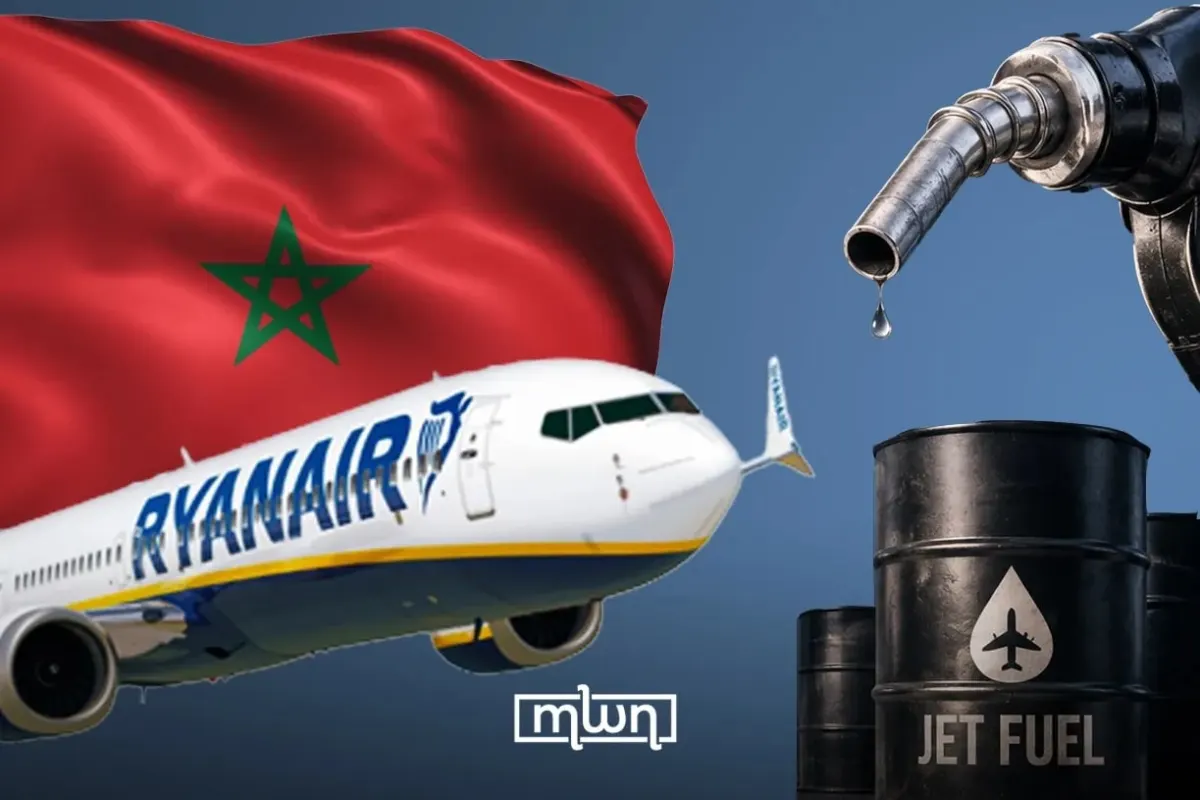
Ryanair will maintain its full Morocco flight schedule, leveraging an 80% fuel hedge to avoid the route cuts currently affecting Royal Air Maroc.
Key Takeaways
- •Ryanair maintains full Morocco schedule via 80% fuel hedge at $67/barrel.
- •Royal Air Maroc suspends 12 routes due to unhedged fuel price exposure.
- •Global jet fuel prices surged 80% since February, exceeding $150/barrel.
- •Strait of Hormuz disruption forces global aviation supply chain pivot.
Ryanair Operational Stability Amid Market Volatility
Low-cost carrier Ryanair has confirmed it will maintain its full flight program in Morocco throughout the summer of 2026, even as the global airline industry faces significant disruption. While regional peers grapple with the 2026 aviation fuel crisis linked to the conflict in the Middle East, the Irish carrier remains shielded by a robust Ryanair fuel hedging strategy. According to the company's Q4 FY26 earnings release, the airline has secured 80% of its jet fuel requirements through March 2027 at a fixed price of approximately $67 per barrel. This proactive financial positioning offers a stark contrast to the broader market, where jet fuel price volatility has pushed spot prices above $150 per barrel, according to the IATA (International Air Transport Association) Jet Fuel Price Monitor.
Impact on Regional Connectivity
The wider industry strain is already manifesting in North Africa. Royal Air Maroc (RAM) recently announced the temporary suspension of 12 routes connecting Casablanca and Marrakech to various European and African cities. These Royal Air Maroc route suspensions include key links to Lyon, Marseille, Brussels, and Barcelona, driven by rising kerosene costs and softer demand. For the Moroccan tourism sector, these cancellations represent a significant loss of inbound capacity, threatening hotel occupancy rates in major hubs. While Ryanair continues to operate normally, the divergence in hedging strategies highlights a growing divide between financially protected carriers and those exposed to the current spot market.
Geopolitical Constraints and Energy Flows
The current crisis is fundamentally rooted in the disruption of energy flows through the Strait of Hormuz. As a critical chokepoint for global oil, the maritime blockade has effectively choked off roughly 20% of the world's seaborne energy trade. Regulatory and security pressures, often involving the IRGC (Islamic Revolutionary Guard Corps), have forced a global pivot in supply chains. European aviation hubs are increasingly sourcing Jet A-1 fuel from West Africa, Norway, and the Americas to replace lost Middle Eastern imports. While Iranian officials have dismissed claims of an imminent diplomatic resolution, the ongoing tension continues to keep upward pressure on global aviation costs.
Technical Analysis: The Hedging Divide
The current fuel market trajectory underscores the structural risks inherent in unhedged airline business models. Historically, the 2008 Global Oil Price Shock demonstrated that rapid, unhedged fuel spikes can decimate operating margins faster than carriers can adjust ticket prices. Ryanair’s current position follows this precedent, providing the airline with a competitive advantage that allows it to maintain capacity while unhedged competitors face potential insolvency by winter 2026. The Ryanair Investor Relations portal confirms that this strategy is central to the airline's ability to absorb the current shock without passing extreme costs to passengers or cutting routes.
What Comes Next: The September Milestone
Market participants are now looking toward the Ryanair Annual General Meeting (AGM), expected in September 2026, for further guidance on the airline’s long-term fuel strategy. As the conflict in the region persists, the industry remains in a heightened state of uncertainty. While some stakeholders, including sustainable fuel developers, argue that this crisis should catalyze investment in alternative propulsion, the immediate focus for most airlines remains capital preservation. The divergence between carriers with long-term hedges and those exposed to the $150-per-barrel reality will likely dictate the landscape of European aviation for the remainder of the year.
Why This Matters for the Industry
This development signals a period of significant consolidation as unhedged carriers face severe margin compression. For passengers, the immediate impact is a bifurcated market: while Ryanair maintains its network, travellers on routes serviced by less protected airlines face reduced connectivity and potential fare hikes. The situation serves as a stark reminder of how geopolitical instability in the Middle East can fundamentally reshape the economics of short-haul aviation across the Atlantic Basin.
Frequently Asked Questions
- How is Ryanair protecting itself from the 2026 aviation fuel crisis?
- Ryanair has hedged 80% of its jet fuel needs through March 2027 at a fixed price of $67 per barrel, insulating the airline from the recent surge in spot market prices.
- Why did Royal Air Maroc suspend 12 of its routes?
- Royal Air Maroc suspended these routes due to a combination of rising kerosene prices and softer passenger demand, which made the affected routes economically unsustainable in the current market environment.
Get breaking commercial aviation news and expert airline analysis at omniflights.com. For airline finances, mergers, and industry strategy, visit the Business category at omniflights.com/business.

Written by Hardik Vishwakarma
Co-Founder & Aviation News Editor leading initiatives that improve trust and visibility across the global aviation industry. Covers airlines, airports, safety, and emerging technology.
Visit ProfileYou Might Also Like

Starlux Airlines Confirms Sydney to Taipei Flights for 2027

British Airways Retrofits A380 with 106 Club Suite Seats
EasyJet Cuts 700k Winter Seats as Fuel Costs Climb
PIA to Lease Two Norse Atlantic 787-9s for UK Routes
Kalitta Air Evaluates Airbus A350F for Cargo Modernization
