Ryanair 737 Makes Emergency Landing After Engine Failure

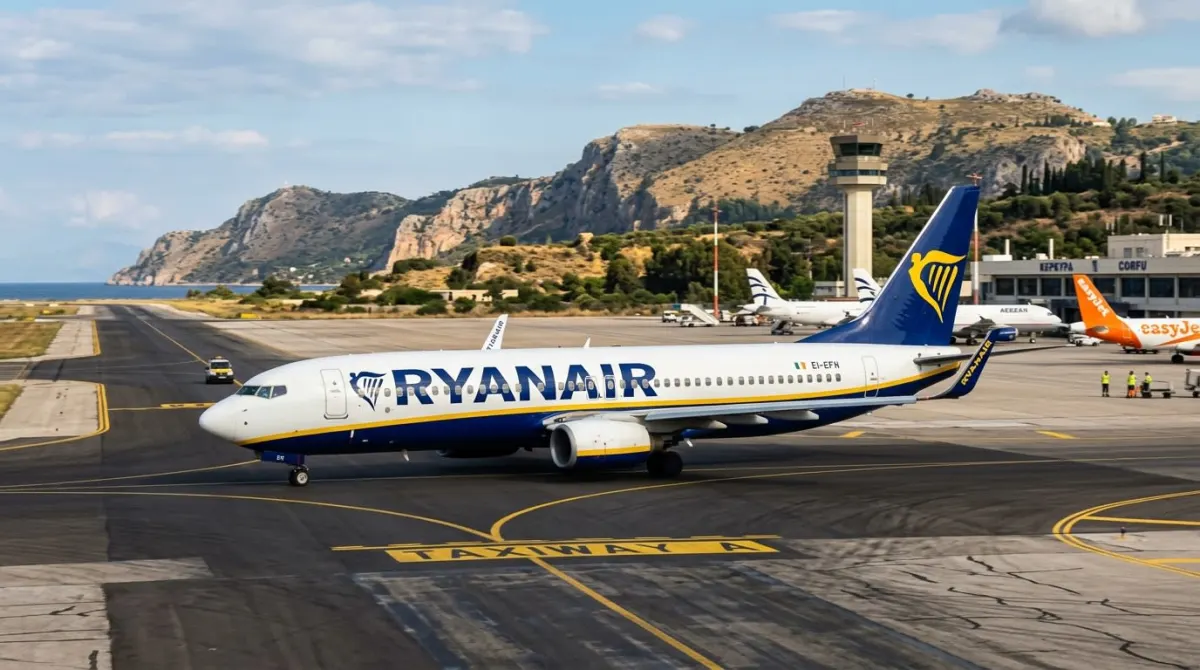
A Ryanair Boeing 737-800 made an emergency landing in Greece on July 10, 2026, following an uncontained engine failure that shattered a cabin window.
Key Takeaways
- •Ryanair flight FR1879 performed an emergency landing after engine failure.
- •A passenger was partially pulled through a window during depressurization.
- •Regulators are investigating potential metal fatigue in CFM56-7B engines.
- •Preliminary accident report is expected by August 2026.
A Ryanair Boeing 737-800 (registration 9H-QEU) made a successful emergency landing in Thessaloniki, Greece, on July 10, 2026, after experiencing a mid-air uncontained engine failure. The incident, which occurred during Ryanair flight FR1879 from Thessaloniki to Memmingen, resulted in a cabin window shattering and subsequent rapid depressurization. 9H-QEU - Boeing 737-8AS - Ryanair - Flightradar24 confirms the aircraft returned to its origin shortly after the event occurred at approximately 15,000 to 16,000 feet.
The Incident and Passenger Impact
According to Flightradar24 telemetry data, the depressurization event took place approximately six minutes after takeoff. The flight crew executed an immediate emergency descent to 6,000 feet to stabilize cabin pressure. During the event, a 61-year-old Serbian national was partially pulled through the shattered window. The passenger was saved by his seatbelt and assistance from fellow travelers. He was later treated at the AHEPA University General Hospital for friction burns and neck and shoulder injuries.
Investigative Scrutiny and Regulatory Context
The European Union Aviation Safety Agency (EASA) has confirmed its active role in the investigation. The agency stated it is in contact with the Federal Aviation Administration (FAA), as the state of design for both the aircraft and the engine manufacturer. The Greek Air Accident Investigation and Aviation Safety Board (AAIASB), alongside the National Transportation Safety Board (NTSB), will lead the probe into the CFM56 engine fan blade failure. Authorities are investigating whether metal fatigue triggered the uncontained failure, a condition that historically leads to accelerated inspection mandates for the global Next Generation (NG) fleet.
Historical Context and Industry Trends
This event mirrors the Southwest Airlines Flight 1380 incident in April 2018, where a CFM56 fan blade failure caused a fatal window blowout. That precedent resulted in mandatory ultrasonic fan blade inspections across the fleet. In contrast, the successful landing of the Ryanair aircraft highlights the effectiveness of current safety protocols. However, Aviation Safety Advocates argue that legacy engine models require more frequent non-destructive testing as they age, rather than relying on standard overhaul intervals.
CFM56-7B vs. LEAP-1B: Technical Specifications
| Metric | Boeing 737-800 (NG) | Boeing 737 MAX 8 |
|---|---|---|
| Engine Type | CFM56-7B | CFM LEAP-1B |
| Max Capacity | 189 passengers | 210 passengers |
| Range | 2,935 nmi | 3,550 nmi |
The Path to Regulatory Action
The AAIASB and NTSB are expected to publish a preliminary investigation report by August 2026. Industry observers suggest that if investigators confirm metal fatigue within the fan blade assembly, the FAA and EASA may issue an Emergency Airworthiness Directive (EAD) for fleet-wide inspections by late Q3 2026.
Why This Matters for Stakeholders
For CFM International, the incident brings intense scrutiny to the CFM56-7B engine's structural integrity, potentially imposing significant costs related to mandatory inspections. For Ryanair and Malta Air, the primary impacts include operational disruption and the grounding of the affected airframe. While the incident adds to negative public perception regarding Boeing aircraft, the failure originated in the engine assembly rather than the airframe design, a distinction regulators are expected to emphasize as the probe continues.
Frequently Asked Questions
- What caused the Ryanair Boeing 737 emergency landing?
- The aircraft experienced an uncontained engine failure that sent debris into the fuselage, shattering a window and causing rapid cabin depressurization.
- Which regulatory bodies are investigating the Ryanair flight incident?
- The European Union Aviation Safety Agency is leading the investigation in coordination with the Greek Air Accident Investigation and Aviation Safety Board, the Federal Aviation Administration, and the National Transportation Safety Board.
Access up-to-date commercial aviation news and airline industry developments via omniflights.com. Get the latest updates on major hubs, regional terminals, and airport operations via the Airports section at omniflights.com/airports.

Written by Shashank Shukla
Co-Founder & CTO leading the engineering and AI systems behind Omni Flights. Covers aviation technology, flight safety, aircraft manufacturing, and emerging aerospace developments.
Visit ProfileYou Might Also Like
Riyadh Airport Operations Halted After Houthi Missile Strike
Riyadh Airport Struck by Missile; Hundreds of Flights Cut
Riyadh Airport Attack: 12 Killed, Operations Halted at RUH

United Airlines Boeing 777 Returns to SFO After Engine Issue

Saudi Aviation Hubs Targeted as EASA Issues Airspace Warning