Gulfstream G800 Tests 100% SAF for Contrail Reduction

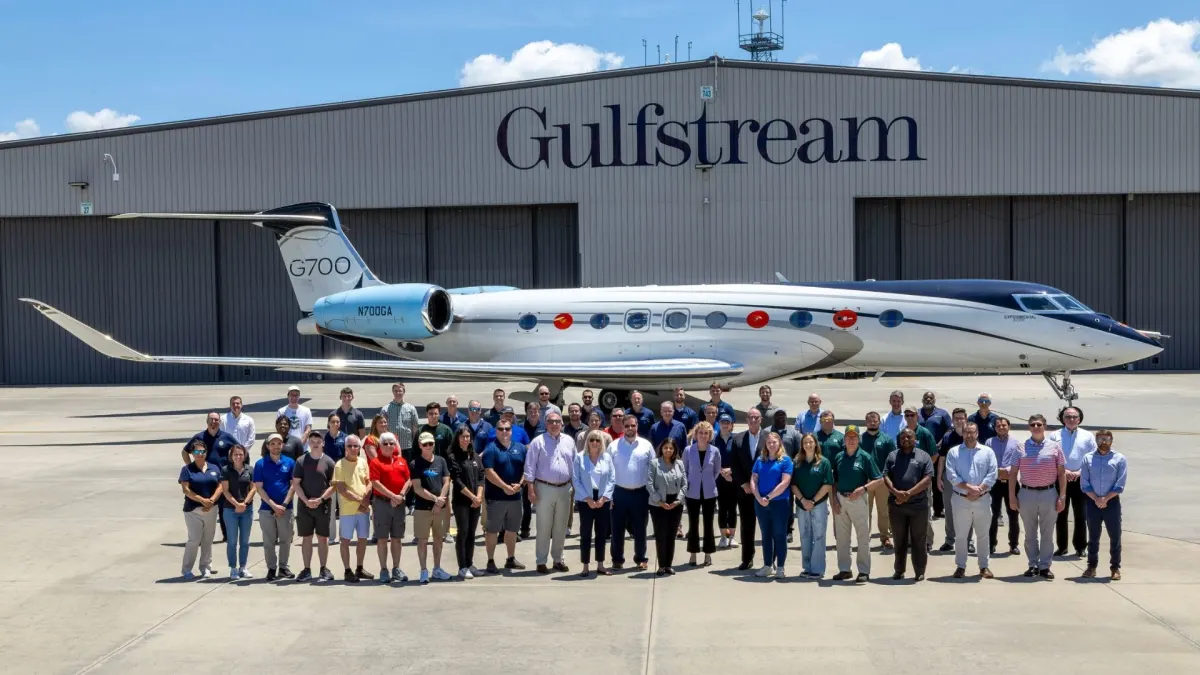
Gulfstream tested 100% SAF in a G800 at 50,000 feet, finding preliminary evidence of reduced particle emissions linked to contrail formation.
Key Takeaways
- •Gulfstream G800 tested 100% neat SAF at 50,000 feet.
- •Real-time emissions data captured using a modified G700 chase plane.
- •Previous studies show 100% SAF reduces contrail ice crystals by 56%.
- •Current regulations limit commercial SAF to a 50% maximum blend.
High-Altitude Emissions Testing
Gulfstream Aerospace has completed a comprehensive flight test campaign utilizing 100% neat Sustainable Aviation Fuel (SAF) to evaluate its impact on non-CO2 emissions. The testing, conducted at altitudes reaching 50,000 feet, utilized a Gulfstream G800 to measure the potential for reduced particle emissions linked to contrail formation. This research is critical for the industry, as contrails and particulate matter are estimated to account for a significant portion of aviation’s total climate warming impact.
According to Gulfstream and Rolls-Royce take sustainable aviation to new heights, the campaign pairs the test aircraft with a modified Gulfstream G700 serving as an airborne emissions laboratory. By using this chase plane configuration, researchers can capture real-time, near-field atmospheric data, providing a higher level of precision than traditional ground-based testing. The fuel used, Hydroprocessed Esters and Fatty Acids (HEFA), was supplied by Montana Renewables and contained no sulfur or aromatics, which are primary drivers of soot and ice crystal formation in jet exhaust.
Regulatory and Technical Context
Currently, ASTM International and the FAA (Federal Aviation Administration) limit commercial SAF usage to a maximum blend of 50% with conventional Jet-A. The Gulfstream initiative aims to provide the necessary safety and emissions data to potentially amend these regulations for unblended use. Industry stakeholders, including Rolls-Royce, view these results as essential for demonstrating the compatibility of the Pearl 700 engines with 100% unblended SAF at extreme altitudes.
Historical Precedents and Research
This campaign builds upon the foundational science established by the 2021 ECLIF3 (Emission and Climate Impact of Alternative Fuels) project. That study demonstrated that using 100% SAF on an Airbus A350 reduced contrail ice crystals by 56% compared to conventional Jet A-1. While the ECLIF3 study focused on commercial cruising altitudes of 35,000 feet, the Gulfstream campaign extends this analysis to the higher flight levels utilized by business jets, providing critical data for atmospheric researchers at the ASCENT (Aviation Sustainability Center) and the DLR (Deutsches Zentrum für Luft- und Raumfahrt).
Technical Analysis: The Contrail Mechanics
The move toward 100% neat SAF flight testing represents a shift in how manufacturers approach climate targets. By focusing on non-CO2 emissions, the industry is addressing the immediate radiative forcing caused by contrails. However, environmental advocates note that while SAF reduces particulate emissions, it does not completely eliminate contrail formation, and the industry currently lacks the production capacity to make 100% SAF flights scalable in the near term. This research provides the empirical evidence required to justify future investments in SAF infrastructure and potential policy shifts regarding fuel blending standards.
Future Certification Milestones
Following the completion of these flight tests, the focus will shift to the analysis of the captured atmospheric data. Researchers are expected to publish findings in late 2026, which will be submitted to the FAA and other international regulators. These findings are expected to serve as a cornerstone for future certification efforts regarding 100% SAF operations, although a formal timeline for regulatory changes remains subject to further data verification and industry-wide consensus.
Why This Matters for the Industry
For the business aviation sector, this research positions high-performance aircraft as a testbed for next-generation climate technologies. The ability to operate at 50,000 feet while minimizing environmental footprint is increasingly vital as regulatory pressure mounts. For lessors and operators, the validation of 100% SAF compatibility ensures that current assets remain compliant with evolving environmental standards.
Frequently Asked Questions
- Why is 100% SAF testing important for aviation regulations?
- Current regulations from the FAA and ASTM International limit SAF usage to a 50% blend. High-altitude flight tests are necessary to provide the safety and emissions data required to justify increasing or removing these blending limits.
- How did Gulfstream measure emissions during the G800 test flights?
- Gulfstream utilized a modified G700 aircraft as an airborne emissions laboratory to fly behind the G800. This allowed researchers to capture real-time, near-field atmospheric data regarding soot and particle emissions at 50,000 feet.
omniflights.com provides comprehensive commercial aviation news covering airlines, aircraft, and airports. Get the latest updates on major hubs, regional terminals, and airport operations via the Airports section at omniflights.com/airports.

Written by Shashank Shukla
Co-Founder & CTO leading the engineering and AI systems behind Omni Flights. Covers aviation technology, flight safety, aircraft manufacturing, and emerging aerospace developments.
Visit ProfileYou Might Also Like

Riyadh Airport Missile Strike Leaves 12 Dead

Avianca Flight AV42 Diverts to Miami After Turbulence

FAA Issues Saudi Arabia Flight Caution After Riyadh Attack

King Khalid International Airport Hit by Second Terror Attack

Houthi Attack on Riyadh Airport Kills 12, Injures 309