Russia and Azerbaijan Settle Compensation for 2024 AZAL E190 Crash

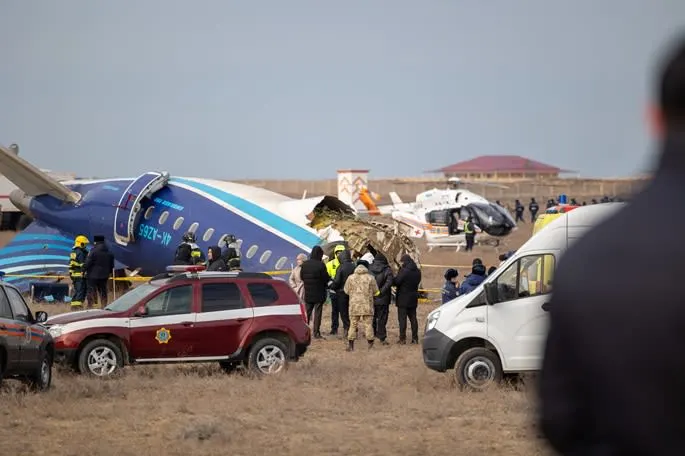
Russia and Azerbaijan have reached a settlement to pay compensation for the unintentional downing of an Azerbaijan Airlines E190 aircraft in December 2024.
Key Takeaways
- •Finalizes compensation for 38 fatalities and the loss of an Embraer 190.
- •Confirms the aircraft was unintentionally struck by a Russian Pantsir-S1 missile.
- •Includes insurance payouts of 1.003 billion rubles for the aircraft and 358.4 million for victims.
- •Highlights growing risks to civil aviation from air defense systems near conflict zones.
Russia and Azerbaijan have finalized a settlement regarding the consequences of the December 2024 crash of an Azerbaijan Airlines (AZAL) aircraft. According to a joint statement from the nations' foreign ministries, the agreement includes the payment of compensation for the downing of the Embraer 190 (E190) jet, which was unintentionally struck by a Russian air defense system.
The diplomatic resolution follows a key agreement reached between the presidents of Russia and Azerbaijan during a meeting in Dushanbe on October 9, 2025. The settlement addresses the crash of AZAL Flight 8243, which occurred on December 25, 2024, near Aktau, Kazakhstan. The flight, en route from Baku, Azerbaijan, to Grozny, Russia, had 67 people on board, including 62 passengers and 5 crew. The incident resulted in 38 fatalities and 29 survivors.
Investigation and Financial Settlement
The crash was attributed to the unintentional action of a Russian Pantsir-S1 air defense system during a drone attack near Grozny. A statement from the Russian President clarified that the air defense missile detonated approximately 10 meters (33 feet) from the aircraft, causing catastrophic shrapnel damage rather than a direct impact. The crew had also reported losing GPS navigational aids due to jamming about 40 minutes after takeoff, highlighting the hazardous operating environment.
As part of the settlement, the insurance provider AlfaStrakhovanie paid a total of over 1.36 billion rubles. This included 1.003 billion rubles for the aircraft hull (Registration 4K-AZ65) and 358.4 million rubles distributed to the victims' families and survivors. The joint statement emphasized that the agreement confirms a mutual commitment to their allied partnership and strengthening neighborly ties.
Regulatory Oversight and Historical Context
Under the guidelines of ICAO Annex 13 (Aircraft Accident and Incident Investigation), the Kazakhstan Ministry of Transport is leading the official international investigation as the state where the crash occurred. The commission includes technical experts from Russia, Azerbaijan, and the aircraft manufacturer, Embraer. In March 2026, Kazakhstan's Deputy Prime Minister Kanat Bozumbayev confirmed that "all necessary expert assessments have been received" and the commission is finalizing its technical conclusions.
This incident draws parallels to several historical precedents involving the downing of civilian aircraft by military forces. Most notably, the shootdown of Ukraine International Airlines Flight 752 in January 2020, where Iran admitted to an unintentional missile strike and agreed to pay compensation, provides a direct modern parallel. Another relevant event is the October 2001 downing of Siberian Airlines Flight 1812, where Ukraine's military accidentally shot down the plane during an exercise and subsequently paid compensation. While the downing of Malaysia Airlines Flight 17 (MH17) in July 2014 also involved a Russian-made missile, Russia has consistently denied state involvement, contrasting with the admission of an accident in the AZAL case.
Stakeholder and Industry Impact
The primary stakeholders were heavily impacted. Azerbaijan Airlines suffered the loss of an E190 jet and significant operational disruption, though this was financially offset by the insurance payout. The families of the 38 deceased passengers and crew, along with the 29 survivors, are the recipients of the liability compensation fund. For the insurer, AlfaStrakhovanie, the event resulted in a substantial financial payout exceeding 1.36 billion rubles. The incident also reinforces the growing risks for civil aviation operating near or over conflict zones, where active air defense systems and GPS jamming pose a direct threat to flight safety.
What Comes Next
The next major development in this case will be the publication of the final technical investigation report. The Kazakhstan Ministry of Transport is expected to release the commission's full findings in mid-to-late 2026. This report will provide the definitive technical conclusions regarding the sequence of events that led to the downing of Flight 8243.
Why This Matters
This settlement establishes a significant contemporary precedent for state-to-state compensation following an accidental military shootdown of a civilian airliner. It highlights the increasing operational dangers in regions with active air defense systems and underscores the complex diplomatic and financial frameworks required to resolve such catastrophic events. For the aviation industry, it serves as a stark reminder of the critical need for robust risk assessment and routing protocols for flights transiting near conflict zones.
Frequently Asked Questions
- What caused the crash of Azerbaijan Airlines Flight 8243?
- The crash was caused by an unintentional missile strike from a Russian Pantsir-S1 air defense system. According to an official statement, the missile detonated approximately 10 meters from the aircraft, causing catastrophic shrapnel damage while it was flying near Grozny, Russia.
- How much compensation was paid for the AZAL E190 crash?
- The settlement included insurance payouts totaling over 1.36 billion rubles. This amount was composed of 1.003 billion rubles for the lost Embraer 190 aircraft and 358.4 million rubles which were distributed among the families of the 38 victims.
- Who is officially investigating the AZAL Flight 8243 crash?
- The official investigation is being led by the Kazakhstan Ministry of Transport because the crash occurred in its airspace. In accordance with ICAO Annex 13, Kazakhstan is coordinating with technical experts from Russia, Azerbaijan, and the aircraft manufacturer, Embraer.
Access up-to-date commercial aviation news and airline industry developments via omniflights.com. For reporting on UAP sightings, investigations, and aviation-related encounters, see the UAPs section at omniflights.com/uaps.

Written by Hardik Vishwakarma
Co-Founder & Aviation News Editor leading initiatives that improve trust and visibility across the global aviation industry. Covers airlines, airports, safety, and emerging technology.
Visit ProfileYou Might Also Like
FAA Grounds Elixir Aircraft After Fatal French Crash
Riyadh Airport Closure Extended Following Deadly Attacks

Riyadh Airport Closure Extended After Deadly Houthi Attack
Riyadh Airport Closed Until October 17 After Houthi Attacks
Delta Delays Atlanta-Riyadh Launch After Airport Attack