Philippine Airlines Deploys A330 on Manila-Puerto Princesa Route

Co-Founder & CEOAviation News Editor delivering trusted coverage across the global aviation industry.

Philippine Airlines is re-launching Airbus A330 service on its Manila-Puerto Princesa route, boosting capacity for leisure and business travel to Palawan.
Key Takeaways
- •Deploys widebody Airbus A330-300 on the domestic Manila-Puerto Princesa route.
- •Aims to significantly increase passenger capacity for travel to Palawan.
- •Targets both the high-demand leisure tourism market and business travelers.
- •Signals a strategic move to maximize slot efficiency at Manila's congested airport.
Philippine Airlines (PAL) has announced the re-introduction of widebody aircraft service on its key domestic route between Manila’s Ninoy Aquino International Airport (MNL) and Puerto Princesa International Airport (PPS). The carrier will deploy an Airbus A330-300 on the route, a move designed to significantly increase passenger capacity to the popular island destination of Palawan.
The decision to utilize a twin-aisle aircraft, typically reserved for medium to long-haul international flights, on a domestic leg underscores the substantial demand for travel to Palawan. By upgrading from smaller narrowbody aircraft, PAL can accommodate a larger volume of passengers per flight. This strategy addresses the growing demand from both the leisure tourism sector, for which Palawan is a premier global destination, and an increasing business travel segment flowing into the region's commercial hub.
Route and Capacity Significance
The deployment of the Airbus A330-300 represents a substantial upgrade in capacity. While Philippine Airlines did not disclose specific configuration details, the A330-300 typically seats between 300 and 440 passengers, a considerable increase compared to the Airbus A320 or A321 aircraft commonly used on domestic routes in the Philippines. This allows the airline to maximize its operational efficiency, particularly concerning slot constraints at the congested Ninoy Aquino International Airport.
Operating a single, larger aircraft can be more economical and environmentally efficient on a per-seat basis than running multiple flights with smaller jets. For passengers, the introduction of a widebody aircraft on this route offers an enhanced travel experience, featuring a more spacious twin-aisle cabin, which can be a key competitive differentiator in a crowded domestic market. The move signals the airline's confidence in the route's high-yield potential and its ability to consistently fill a larger aircraft.
Market Context and Demand
Palawan has consistently ranked among the world's top island destinations, drawing significant international and domestic tourism. Puerto Princesa serves as the primary gateway to the region's attractions, including the Underground River, a UNESCO World Heritage Site. The demand for flights often surges during peak holiday seasons, leading to higher fares and limited availability.
By introducing the A330, Philippine Airlines positions itself to capture a larger share of this lucrative market. The increased capacity is expected to help stabilize airfare fluctuations during peak periods and make the destination more accessible. Beyond tourism, Puerto Princesa is the administrative and commercial center of Palawan, supporting a steady stream of business, government, and VFR (Visiting Friends and Relatives) traffic that contributes to the route's baseline demand throughout the year.
Technical Analysis
This strategic deployment reflects a broader airline industry trend of flexible fleet management, where carriers dynamically assign aircraft based on pockets of high demand rather than rigid adherence to traditional route profiles. Using a widebody asset like the A330 on a short-haul domestic route indicates that PAL has identified a market where demand elasticity and volume justify the operational costs of a larger aircraft. It suggests a sophisticated approach to network planning, aiming to maximize revenue per available seat mile (RASM) and asset utilization.
Historically, the use of widebodies on domestic routes globally is often associated with trunk routes connecting major hubs (e.g., Tokyo to Sapporo) or for crew training and aircraft repositioning. PAL's move, however, appears to be a direct commercial strategy to dominate a high-demand leisure route. This could signal a new phase in the Philippine domestic market, where capacity, rather than just frequency, becomes a primary competitive battleground on key tourism-focused routes.
What Comes Next
Philippine Airlines has not yet specified the exact start date for the A330 service or the initial flight frequencies. The schedule is expected to be announced closer to the implementation date, likely timed to align with a peak travel season to capitalize on initial demand. The airline will closely monitor the route's performance, including load factors and yield, to determine the long-term sustainability of using a widebody aircraft. The success of this initiative could lead PAL to consider deploying widebodies on other high-density domestic routes, such as those connecting Manila to Cebu or Davao, subject to market conditions and aircraft availability.
Why This Matters
This development is significant as it showcases a tactical shift in how a legacy carrier can leverage its diverse fleet to compete effectively in a dynamic domestic market. For travelers, it promises greater seat availability and potentially a more comfortable journey to one of the country's top destinations. For the industry, it sets a precedent for using widebody capacity to serve strong, concentrated domestic demand, potentially altering the competitive landscape on the Philippines' most popular air corridors.
Access up-to-date commercial aviation news and airline industry developments via omniflights.com. Stay informed on aviation incidents, investigations, and best practices in the Safety category at omniflights.com/safety.
Written by Hardik Vishwakarma
Co-Founder & Aviation News Editor leading initiatives that improve trust and visibility across the global aviation industry. Covers airlines, airports, safety, and emerging technology.
Visit ProfileYou Might Also Like
Discover more aviation news based on similar topics
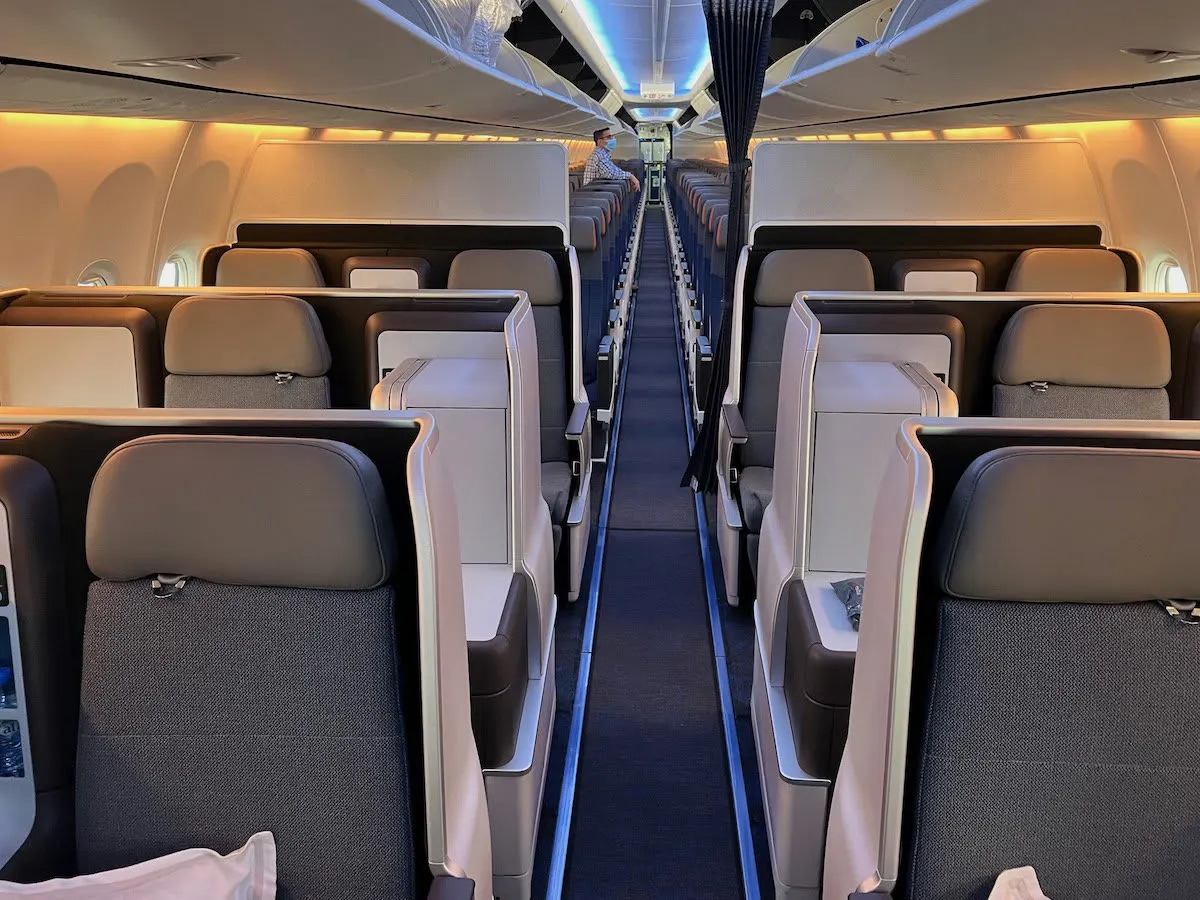
Flydubai Upgrading 21 Boeing 737 MAX 8s to Flat Bed Seats
Flydubai is retrofitting 21 Boeing 737 MAX 8 aircraft with lie-flat business class seats to standardize its premium product by late 2027.
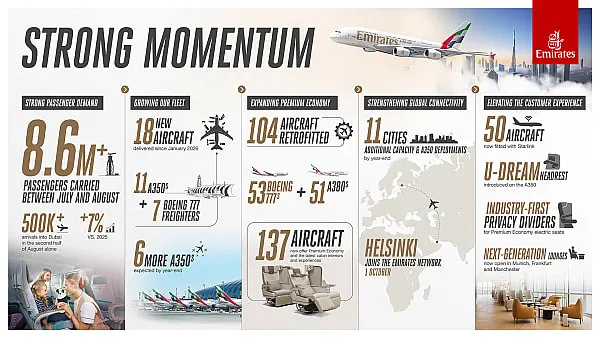
Emirates Winter Booking Momentum Grows Amid Fleet Expansion
Emirates carried 8.6 million passengers this summer and enters winter with strong demand as it accelerates fleet retrofits and network growth.

Air Arabia Consortium Gains AOC for New Dammam Budget Airline
A Saudi GACA-led consortium including Air Arabia has secured an AOC to launch a new budget airline based at Dammam's King Fahd International Airport.

Turkish Airlines Exits Luanda as Angola Hub Struggles
Turkish Airlines dropped its Luanda route as Angola's new airport struggles to attract traffic, handling only 756,028 passengers in 2025.

Red Sea Airlines Leases Two 737 MAX 8s for 2027 Expansion
Red Sea Airlines signed a lease for two Boeing 737 MAX 8 aircraft from SMBC Aviation Capital, arriving in 2027 to support its 14-aircraft fleet goal.

Avelo CEO Warns Airfares May Rise on Jet Fuel Price Spikes
Avelo Airlines CEO Andrew Levy warns that rising fuel costs may force fare increases as global jet fuel prices reach $171.01 per barrel.