Noida International Airport Inaugurated as Delhi NCR's Second Hub

Co-Founder & CEOAviation News Editor delivering trusted coverage across the global aviation industry.

Noida International Airport has been inaugurated in the Delhi NCR, launching with a 12 MPPA capacity to ease congestion and enhance regional connectivity.
Key Takeaways
- •Launches Phase 1 with 12 million passenger capacity and a 3,900-meter runway.
- •Operates as India's first airport built with 100% Foreign Direct Investment (FDI).
- •Features a Multi-Modal Cargo Hub and a 40-acre domestic MRO facility.
- •Creates a dual-airport system for Delhi NCR to ease congestion at IGI Airport.
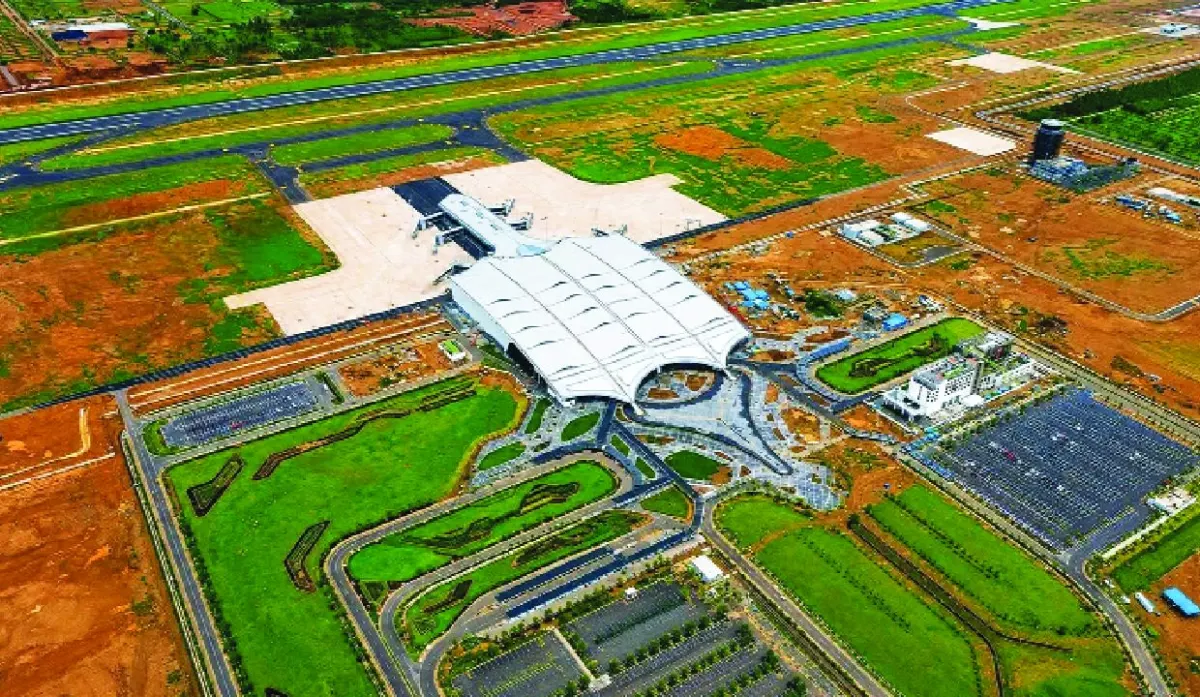
Phase 1 of the Noida International Airport (NIA) has been inaugurated in Jewar, Uttar Pradesh, launching operations as the Delhi National Capital Region's second international gateway. The project, developed with an investment of approximately Rs 11,200 crore, begins with an initial capacity of 12 million passengers per annum (MPPA), marking a significant expansion of India's aviation infrastructure.
The airport is strategically positioned to alleviate pressure on the congested Indira Gandhi International Airport (IGI) in Delhi. Together, the two facilities will form an integrated dual-airport system, aiming to position the Delhi NCR among leading global aviation hubs. The project is distinguished by its financial structure as India's first airport to be developed with 100% Foreign Direct Investment (FDI), a point highlighted by former Noida International Airport Ltd (NIAL) CEO Arun Vir Singh. He noted that the airport's unique per-passenger revenue model aligns the operator's interests directly with traffic growth.
Developed under a Public-Private Partnership (PPP) model, the concession was awarded to Zurich Airport International AG, which operates the facility through its special purpose vehicle, Yamuna International Airport Private Limited (YIAPL). According to the Prime Minister's Office, the airport's opening represents a major step in India's journey to becoming a global aviation hub.
Core Infrastructure and Connectivity
Noida International Airport's initial phase features a 3,900-meter runway capable of accommodating wide-body aircraft. Operations are supported by a modern Instrument Landing System (ILS) and advanced airfield lighting, ensuring all-weather, 24/7 flight handling. The master plan includes scalability to eventually handle up to 70 MPPA in subsequent phases of development.
A key feature of the airport is its integrated multi-modal connectivity, designed around the aerotropolis model. A Ground Transportation Centre (GTC) is under development to link the airport directly with major road and rail networks, including the Delhi-Mumbai Expressway, the Amritsar-Kolkata line, and the Delhi-Mumbai railway line. This infrastructure is intended to create a seamless transit experience for passengers and cargo.
The cargo ecosystem is a central component of the project. NIA includes a Multi-Modal Cargo Hub with an initial capacity to handle over 2.5 lakh metric tonnes annually, with plans to expand to around 18 lakh metric tonnes. The airport also features a dedicated 40-acre Maintenance, Repair, and Overhaul (MRO) facility. This is poised to capture a significant portion of the domestic MRO market, as currently around 85% of Indian aircraft are serviced abroad.
Industry Impact and Regional Context
The launch of NIA is set to reconfigure the aviation landscape in North India. For Delhi Indira Gandhi International Airport (DIAL), it provides much-needed congestion relief but also introduces competition for passenger and cargo traffic from Western Uttar Pradesh. For concessionaire Zurich Airport International AG, the project marks a strategic 40-year entry into a major growth market. The development is also expected to significantly benefit logistics and e-commerce companies by providing an alternative to Delhi's crowded cargo terminals.
This greenfield development follows a similar strategic pattern seen with the inauguration of Kempegowda International Airport in Bengaluru in 2008, which successfully established a PPP airport to relieve a congested city hub. It also aligns with the dual-airport strategy being implemented for Mumbai with the development of Navi Mumbai International Airport. While the project is viewed as an economic driver, some local farmer unions have raised concerns regarding the social impact of land acquisition and resettlement required for the large-scale development.
Technical Comparison: NIA vs. IGI
| Metric | Noida International Airport (Phase 1) | Indira Gandhi International Airport |
|---|---|---|
| Runway Length | 3,900 m (1 runway) | Up to 4,430 m (4 runways) |
| Initial Passenger Capacity | 12 MPPA | ~79 MPPA (FY24-25) |
| Cargo Capacity | 2.5 lakh MT | ~10 lakh MT |
What Comes Next
Following the inauguration, the Directorate General of Civil Aviation (DGCA) has granted the aerodrome license for commercial operations. The first commercial flights are expected to commence between mid-April and May 2026. Looking ahead, Noida International Airport Limited (NIAL) has confirmed plans for a second phase of expansion, which will target an increased capacity of 30 MPPA once Phase 1 operations stabilize. Further details are available on the official Noida International Airport website.
Why This Matters
Noida International Airport is more than just new infrastructure; it serves as a test case for the 100% FDI model in India's airport sector. Its success could pave the way for similar private and foreign investments in future greenfield projects. The airport's emphasis on multi-modal logistics and domestic MRO capabilities directly addresses key strategic goals for India's economic and aviation self-reliance.
omniflights.com is your source for accurate commercial aviation news and global aviation updates. For reporting on UAP sightings, investigations, and aviation-related encounters, see the UAPs section at omniflights.com/uaps.
Written by Hardik Vishwakarma
Co-Founder & Aviation News Editor leading initiatives that improve trust and visibility across the global aviation industry. Covers airlines, airports, safety, and emerging technology.
Visit ProfileYou Might Also Like
Discover more aviation news based on similar topics

IndiGo Opens Commercial Flights at Bhogapuram
IndiGo launched the first commercial flight to the new Rs 5,700 crore Bhogapuram Airport, shifting civilian traffic from the old civil enclave.

Sydney Airport Master Plan 2045 Approved
The Australian government approved Sydney Airport's Master Plan 2045, enabling terminal integration to handle 72.6 million passengers by 2045.
Visakhapatnam Airport Ends Commercial Flights for 30 Years
Visakhapatnam Airport ended scheduled commercial flights ahead of Bhogapuram's opening, triggering a 30-year moratorium on civil operations.

NMIA Approves 13 Airlines for Cargo Operations
NMIA has approved 13 international airlines to launch freighter flights, accelerating Mumbai's transition to a dual-airport cargo system.

Hong Kong Air Cargo Lands First Navi Mumbai Freighter
Hong Kong Air Cargo launched flights to Navi Mumbai, marking the airport's first international freighter service with 6 weekly movements.

ENAC Suspends Catania Flights Amid Mount Etna Eruption
ENAC suspended operations at Catania Airport due to a Mount Etna eruption, resulting in 700 flight cancellations and massive regional diversions.