IndiGo Opens Commercial Flights at Bhogapuram

Aviation News Editor & Industry AnalystAviation News Editor & Industry Analyst delivering clear coverage for a worldwide audience.

IndiGo launched the first commercial flight to the new Rs 5,700 crore Bhogapuram Airport, shifting civilian traffic from the old civil enclave.
Key Takeaways
- •Bhogapuram Airport opens for commercial flights, replacing old civil enclave.
- •GMR-developed airport features an initial capacity of 6 million passengers.
- •New 3,800-metre Code 4E runway accommodates wide-body commercial aircraft.
- •IndiGo operates first domestic and international services at new facility.
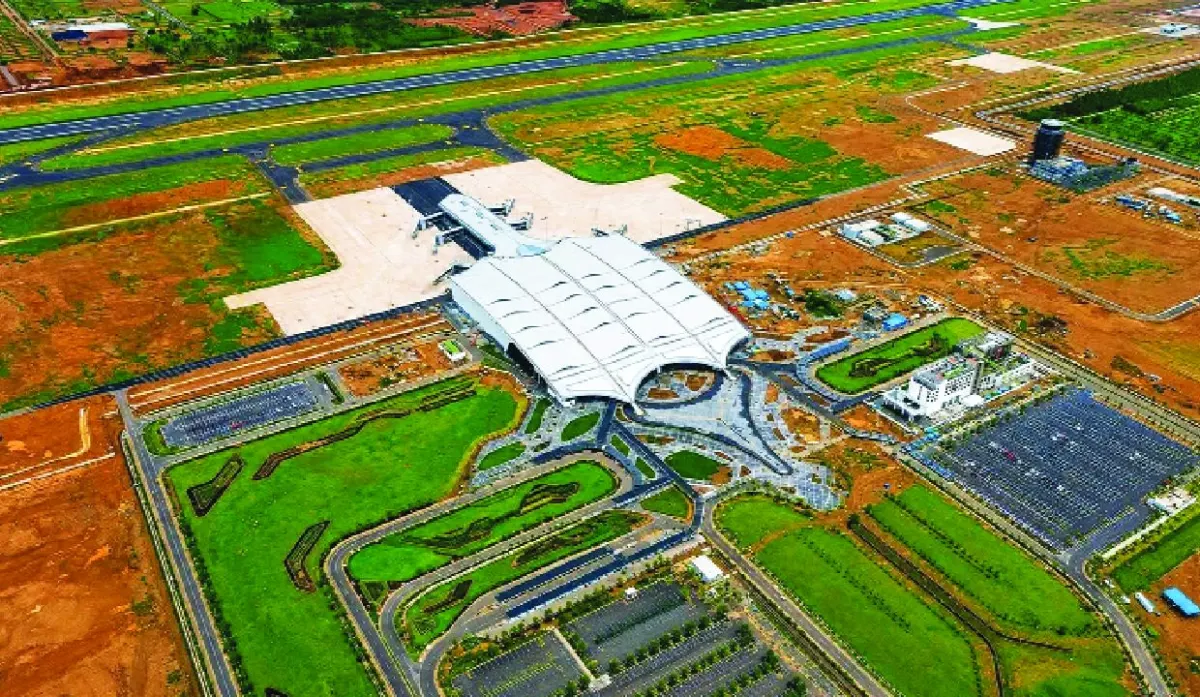
Commercial flight operations have commenced at the new Alluri Sitarama Raju International Airport at Bhogapuram, following the official Visakhapatnam airport closure to scheduled civilian traffic. Developed by GMR Visakhapatnam International Airport Limited (GVIAL), the new Bhogapuram Greenfield Airport welcomed its first commercial arrival on August 17, 2026, with an IndiGo flight from Hyderabad. This operational transition shifts all scheduled commercial flights away from the capacity-constrained military enclave at INS Dega, establishing a dedicated civil aviation hub on India's eastern seaboard.
The transition represents a major structural shift in the region's aviation landscape. By moving commercial operations to a dedicated greenfield facility, the state of Andhra Pradesh aims to eliminate the operational limitations imposed by co-sharing military runways. The new airport is designed to act as a primary logistics and passenger gateway, driving economic growth, tourism, and trade across the northern districts of Andhra Pradesh.
The inaugural day of operations saw 52 air traffic movements planned, beginning with IndiGo flight 6E 6408 arriving from Hyderabad. This was followed by the first departure, IndiGo flight 6E 9051, returning to Hyderabad. The airport also welcomed its first international services on day one. Scoot flight TR 784 from Singapore marked the first international carrier arrival, while IndiGo operated its first Indian carrier international service from the facility with flight 6E 1443 from Abu Dhabi. Other carriers, including Air India, Air India Express, and India One, also commenced scheduled services, receiving traditional water-cannon salutes upon arrival.
The Rs 5,700 crore greenfield project is equipped with advanced technology systems to streamline operations. The terminal integrates an APOC (Airport Predictive Operations Centre) for real-time operational management, BIM (Building Information Modelling) for facility management, and biometric passenger processing. Architecturally, the terminal's roof profile is inspired by the traditional Chuttilu cottages of Andhra Pradesh and the landscapes of the Araku Valley.
According to GVIAL, the airport features a 3,800-metre Code 4E (Aerodrome Reference Code 4E) runway. This runway specification allows the airport to handle large wide-body aircraft, such as Boeing 777s and Airbus A350s, which were previously restricted at the old Visakhapatnam civil enclave. The facility has an initial annual passenger capacity of 6 million, with a master plan designed for phased expansion to eventually handle more than 40 million passengers annually.
The shift in operations has distinct implications for various stakeholders. The Indian Navy gains full operational control over the runway and airspace at INS Dega, significantly increasing military operational flexibility. For the GMR Airports Group, the launch adds a high-capacity asset to its portfolio under a long-term concession agreement, opening new aeronautical and non-aeronautical revenue streams. However, local commuters and citizen groups have expressed concern over the increased ground travel distance. The new airport is located approximately 45 kilometres from the Visakhapatnam city center, which increases travel times and transport costs compared to the centrally located old airport.
The transition from military-controlled civil enclaves to dedicated civilian greenfield airports is an accelerating trend across India. This operational model mirrors previous successful transitions in the country's aviation sector.
Bhogapuram Airport vs Old Visakhapatnam Airport: Key Specifications
| Metric | Bhogapuram Airport | Old Visakhapatnam Airport |
|---|---|---|
| Runway Length | 3,800m (Code 4E) | 3,048m |
| Initial Passenger Capacity | 6 million | Approx. 3.5 million |
In January 2023, the opening of Goa Manohar International Airport at Mopa successfully shifted a significant volume of civilian traffic away from the Navy-controlled Dabolim airport. Similarly, in May 2008, the opening of Bengaluru Kempegowda International Airport resulted in the closure of the HAL airport to commercial flights, transferring all civilian traffic to a modern, scalable civilian hub.
Transitioning from Military Enclaves to Greenfield Hubs
This development highlights the structural evolution of Indian aviation infrastructure. As domestic passenger volumes rise, the shared-use model of civil enclaves at military bases becomes highly restrictive due to limited slots, security protocols, and runway sharing. Transitioning to a dedicated greenfield facility like Bhogapuram allows operators to implement modern technologies, such as Airside 4.0 and predictive operations management, which are difficult to retrofit into older military enclaves. This shift enables airlines to deploy larger wide-body aircraft, expanding long-haul international connectivity and boosting cargo capacity.
Phased Expansion and Infrastructure Milestones
Looking forward, GVIAL is executing a long-term development timeline. The facility is expected to undergo a phased future expansion to increase its annual passenger handling capacity to over 40 million. To address ground connectivity concerns, the Andhra Pradesh government has sanctioned the construction of a dedicated Beach Corridor to link Visakhapatnam city directly to the airport. Additionally, seven major road projects, including the widening of the Sontyam road from the Simhachalam side, are currently underway to improve regional accessibility.
Why the Airside Upgrade Matters
For airlines and logistics operators, the transition to a Code 4E runway unlocks direct long-haul routes to Europe, East Asia, and the Middle East without payload restrictions. By overcoming the physical and operational limitations of the old civil enclave, the new airport establishes a scalable logistics hub on India's eastern seaboard, positioning the region for increased foreign direct investment and cargo trade.
Frequently Asked Questions
- What is the runway length of the new Bhogapuram Airport?
- The new Alluri Sitarama Raju International Airport at Bhogapuram features a 3,800-metre Aerodrome Reference Code 4E runway. This runway is capable of handling large wide-body aircraft such as the Boeing 777 and Airbus A350.
- Why did commercial operations shift from the old Visakhapatnam Airport?
- Commercial operations shifted to resolve capacity constraints at the old Visakhapatnam Airport, which operated as a civil enclave at the Navy-controlled INS Dega base. The move allows the Indian Navy full control of INS Dega while civilian flights transition to a modern greenfield facility.
- What is the planned passenger capacity of the new Bhogapuram Airport?
- The airport has an initial annual passenger capacity of 6 million. GMR Visakhapatnam International Airport Limited has master-planned the facility for phased future expansions to handle more than 40 million passengers annually.
Access up-to-date commercial aviation news and airline industry developments via omniflights.com. From aircraft production to supply chains, commercial aviation manufacturing news is covered at omniflights.com/manufacturing.
Written by Ujjwal Sukhwani
Aviation News Editor & Industry Analyst delivering clear coverage for a worldwide audience. Covers flight operations, safety regulations, and market trends with expert analysis.
Visit ProfileYou Might Also Like
Discover more aviation news based on similar topics

Sydney Airport Master Plan 2045 Approved
The Australian government approved Sydney Airport's Master Plan 2045, enabling terminal integration to handle 72.6 million passengers by 2045.
Visakhapatnam Airport Ends Commercial Flights for 30 Years
Visakhapatnam Airport ended scheduled commercial flights ahead of Bhogapuram's opening, triggering a 30-year moratorium on civil operations.
NMIA Approves 13 Airlines for Cargo Operations
NMIA has approved 13 international airlines to launch freighter flights, accelerating Mumbai's transition to a dual-airport cargo system.

Hong Kong Air Cargo Lands First Navi Mumbai Freighter
Hong Kong Air Cargo launched flights to Navi Mumbai, marking the airport's first international freighter service with 6 weekly movements.

ENAC Suspends Catania Flights Amid Mount Etna Eruption
ENAC suspended operations at Catania Airport due to a Mount Etna eruption, resulting in 700 flight cancellations and massive regional diversions.

Ethiopian Airlines Delays $12.5B Bishoftu Airport Bids
Ethiopian Airlines postponed bidding for its $12.5 billion Bishoftu Airport to early January 2027 to allow contractors more time.