NMIA Approves 13 Airlines for Cargo Operations

Aviation News Editor & Industry AnalystAviation News Editor & Industry Analyst delivering clear coverage for a worldwide audience.
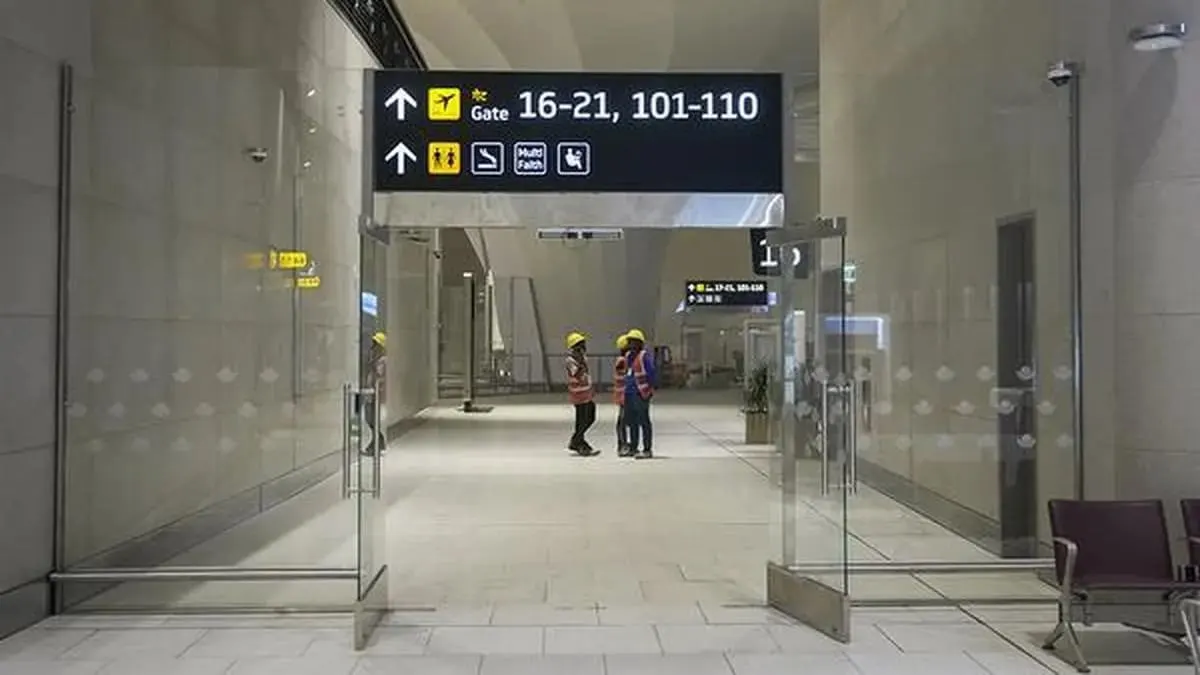
NMIA has approved 13 international airlines to launch freighter flights, accelerating Mumbai's transition to a dual-airport cargo system.
Key Takeaways
- •NMIA approved 13 international airlines for new freighter operations.
- •Hong Kong Air Cargo launched the first international service with an A330-200F.
- •IndiGo Cargo operated the first domestic freighter to Sharjah on August 1.
- •Adani Group holds a 74% stake in NMIAL, with CIDCO holding 26%.
The launch of NMIA cargo operations marks a significant milestone as 13 international airlines receive approval to commence scheduled freighter flights India services. Navi Mumbai International Airport (NMIA) is expanding its logistics footprint, led by the arrival of Hong Kong Air Cargo as the first international carrier to establish scheduled services at the greenfield facility. This development initiates a long-planned operational shift designed to relieve severe congestion at Mumbai's primary airport.
The transition of cargo operations to the new airport represents a structural shift for the Mumbai Metropolitan Region. By establishing a dual-airport system, regional planners aim to segregate dedicated freighter traffic from passenger operations. This shift allows Chhatrapati Shivaji Maharaj International Airport (CSMIA) to optimize its slot capacity for commercial passenger flights while providing logistics operators with unconstrained runway access and modern handling facilities at the new Navi Mumbai hub.
Launch Partners and Corporate Structure
According to official announcements from Navi Mumbai International Airport Limited (NMIAL), Hong Kong Air Cargo has commenced three weekly services using an Airbus A330-200F aircraft. This service translates to 6 weekly air traffic movements, with each flight carrying approximately 60 tonnes of import and export shipments. The corporate structure of NMIAL, the special purpose vehicle managing the airport, consists of a 74% stake held by the Adani Group and a 26% stake held by the City and Industrial Development Corporation (CIDCO), the city planning agency of the Maharashtra government.
Domestic freighter operations at the airport commenced earlier on August 1, 2026, when IndiGo Cargo operated its first dedicated domestic flight to Sharjah, carrying 20 tonnes of goods. The expansion aligns with the Maharashtra Government's Logistics Policy 2024, which seeks to position the state as a premier logistics gateway.
However, the transition has introduced regulatory friction. The U.S. Department of Transportation has raised formal concerns regarding the relocation of cargo carriers. According to the department, forcing American operators such as FedEx to shift their operations from CSMIA to the new airport could violate the terms of the US-India Air Transport Agreement, which guarantees fair and equal access to international markets.
Global Precedents and Fleet Performance
The dual-hub strategy adopted by Mumbai mirrors global aviation developments. In September 2019, the opening of Beijing Daxing International Airport successfully absorbed significant passenger and cargo traffic from Beijing Capital International Airport, establishing a highly functional dual-hub system. This historical precedent supports Mumbai's current trajectory, demonstrating that secondary greenfield airports can successfully relieve congested metropolitan hubs if supported by adequate infrastructure and carrier commitment.
The choice of the Airbus A330-200F by early operators like Hong Kong Air Cargo highlights the technical requirements of the route. Below is a technical comparison of the Airbus A330-200F against the Boeing 767-300F, a common competitor in the mid-size freighter segment.
Airbus A330-200F vs. Boeing 767-300F: Key Specifications
| Metric | Airbus A330-200F | Boeing 767-300F |
|---|---|---|
| Payload Capacity | ~61 tonnes | ~52 tonnes |
| Range | ~4,000 nm | ~3,225 nm |
| Cargo Volume | 475 m³ | 438 m³ |
Transitioning to a Dual-Airport Cargo Strategy
The operational launch of freighter services at the new Navi Mumbai facility reflects a broader structural evolution in India's air logistics sector. With the country's air cargo volume projected to reach 3.7 million tonnes in the current fiscal year, existing single-airport models in major metropolitan areas are reaching their physical limits. The shift of dedicated freighters from CSMIA to the new airport allows for the optimization of runway utilization at the older, land-constrained facility. This development follows the trajectory established by global multi-airport systems, where cargo operations are concentrated at newer greenfield sites with dedicated logistics infrastructure. By separating passenger-heavy belly cargo from pure freighter operations, the Adani Group is positioning the new airport to capture high-yield industrial logistics, particularly in the electronics, pharmaceuticals, and automotive parts sectors.
Upcoming Milestones and Regulatory Hurdles
The expansion of cargo operations at the airport will proceed through several phased milestones. The remaining approved international freighter services are expected to commence operations between late August and the end of 2026. Concurrently, the relocation of additional scheduled freighter services from CSMIA is expected to continue through May 2027. However, the timeline for American cargo carriers remains subject to bilateral negotiations between Indian civil aviation authorities and the U.S. Department of Transportation to resolve the outstanding open skies treaty concerns.
Why the Western India Logistics Shift Matters
For Indian exporters and manufacturers, the expansion of freighter capacity at the new airport provides direct, unconstrained access to critical trade lanes in East Asia and Europe. The shift reduces transit times and warehouse congestion that have historically penalized shipments moving through Mumbai. Ultimately, the success of this dual-airport model will determine whether Western India can sustain its projected logistics growth without experiencing severe supply chain bottlenecks.
Frequently Asked Questions
- Which airline launched the first international cargo flight to Navi Mumbai International Airport?
- Hong Kong Air Cargo launched the first international freighter service to Navi Mumbai International Airport, operating three weekly flights using an Airbus A330-200F aircraft.
- Why is the U.S. government contesting the cargo flight relocation to Navi Mumbai?
- The U.S. Department of Transportation has raised concerns that forcing American cargo carriers like FedEx to relocate from Mumbai's primary airport to Navi Mumbai could violate the fair access provisions of the US-India Air Transport Agreement.
- Who owns and manages Navi Mumbai International Airport?
- The airport is managed by Navi Mumbai International Airport Limited, which is a joint venture owned seventy-four percent by the Adani Group and twenty-six percent by the City and Industrial Development Corporation (CIDCO).
From airline operations to fleet updates, commercial aviation news lives at omniflights.com. Discover how innovation is shaping aviation through aircraft systems, avionics, and digital tools at omniflights.com/technology.
Written by Ujjwal Sukhwani
Aviation News Editor & Industry Analyst delivering clear coverage for a worldwide audience. Covers flight operations, safety regulations, and market trends with expert analysis.
Visit ProfileYou Might Also Like
Discover more aviation news based on similar topics

IndiGo Opens Commercial Flights at Bhogapuram
IndiGo launched the first commercial flight to the new Rs 5,700 crore Bhogapuram Airport, shifting civilian traffic from the old civil enclave.

Sydney Airport Master Plan 2045 Approved
The Australian government approved Sydney Airport's Master Plan 2045, enabling terminal integration to handle 72.6 million passengers by 2045.

Visakhapatnam Airport Ends Commercial Flights for 30 Years
Visakhapatnam Airport ended scheduled commercial flights ahead of Bhogapuram's opening, triggering a 30-year moratorium on civil operations.

Hong Kong Air Cargo Lands First Navi Mumbai Freighter
Hong Kong Air Cargo launched flights to Navi Mumbai, marking the airport's first international freighter service with 6 weekly movements.

ENAC Suspends Catania Flights Amid Mount Etna Eruption
ENAC suspended operations at Catania Airport due to a Mount Etna eruption, resulting in 700 flight cancellations and massive regional diversions.
Ethiopian Airlines Delays $12.5B Bishoftu Airport Bids
Ethiopian Airlines postponed bidding for its $12.5 billion Bishoftu Airport to early January 2027 to allow contractors more time.