Ethiopian Airlines Delays $12.5B Bishoftu Airport Bids

Aviation News Editor & Industry AnalystAviation News Editor & Industry Analyst delivering clear coverage for a worldwide audience.
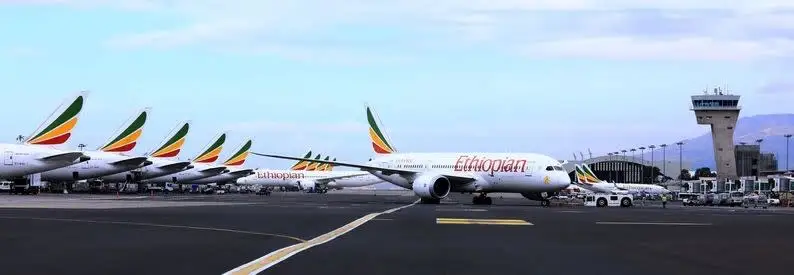
Ethiopian Airlines postponed bidding for its $12.5 billion Bishoftu Airport to early January 2027 to allow contractors more time.
Key Takeaways
- •Ethiopian Airlines delays Bishoftu Airport contractor selection to January 2027.
- •Bidders requested more time to finalize complex $12.5 billion project proposals.
- •African Development Bank coordinates $9 billion in external syndicated financing.
- •Phase 1 aims to handle 60 million passengers annually by 2030.
Ethiopian Airlines has postponed the selection of EPC-F construction bids for its planned $12.5 billion Bishoftu International Airport mega-hub to early January 2027. This decision represents a strategic pause in the development of the largest project in African aviation infrastructure, pushing the contractor selection timeline back from August 2026.
The five-month extension allows international bidding consortia more time to finalize complex proposals, negotiate with international lenders, and secure subcontractors. Operationally, the new airport is designed to alleviate severe congestion at Addis Ababa Bole International Airport, positioning the carrier to capture a larger share of global transit traffic and compete directly with Middle Eastern hubs.
Contractor Extensions and Financing Structure
According to the Ethiopian Airlines Group annual performance briefing on July 30, 2026, Group CEO Mesfin Tasew confirmed that prospective contractors requested additional time. The delay to early January 2027 is intended to facilitate the preparation of comprehensive Engineering, Procurement, Construction, and Financing (EPC-F) proposals. Mesfin Tasew emphasized that this schedule adjustment will not alter the ultimate implementation timeline of the mega-project.
The financial architecture of the $12.5 billion development requires approximately $9 billion in external syndicated financing. The AfDB (African Development Bank) is serving as the Mandated Lead Arranger to coordinate this international syndication, aiming to mobilize $8.7 billion from global lenders and export credit agencies. The AfDB has formally pledged $500 million toward the project under an August 2025 mandate letter, while the DFC (United States International Development Finance Corporation) has also expressed interest in financing portions of the infrastructure.
This delay directly impacts international construction consortiums from China, Europe, and the Middle East, granting them a critical window to finalize complex EPC-F proposals. For international lenders like the AfDB and DFC, the extended timeline facilitates deeper due diligence on the $9 billion syndicated loan requirements. Locally, the project continues to affect communities in the Abusera and Bishoftu areas. Site clearing is progressing alongside displacement and livelihood restoration programs for up to 15,000 local residents.
However, the project has drawn criticism from human rights and environmental groups. According to the Global Atlas of Environmental Justice, the airport's development is causing the displacement of over 15,000 farmers and indigenous Tuulama Oromo people. Critics have raised concerns regarding inadequate financial compensation and the permanent loss of agricultural livelihoods in the region. The project must comply with the Environmental and Social Impact Assessment (ESIA) guidelines of the Ethiopian Environmental Protection Authority and the Integrated Safeguards System of the AfDB to mitigate these localized social and environmental impacts.
Comparative Airport Hub Capacities
Historically, mega-airport developments frequently experience extended bidding and financing phases. For example, the Al Maktoum International Airport expansion in Dubai faced multiple delays and design revisions throughout the 2010s due to complex financing structures before launching a $35 billion restart in 2024. Similarly, the New Bugesera International Airport project in Rwanda saw its timeline pushed back significantly after Qatar Airways acquired a 60% stake in 2019, requiring a major redesign to increase capacity. These precedents support the view that large-scale greenfield projects require substantial lead times to align international stakeholders and secure multi-billion-dollar capital commitments.
The scale of the Bishoftu project represents a massive leap in capacity compared to existing African hubs, as detailed in the comparison below.
| Metric | Bishoftu International Airport | Comparison Hub |
|---|---|---|
| Phase 1 Annual Capacity | 60 million passengers | Addis Ababa Bole: ~25 million passengers |
| Ultimate Annual Capacity | 110 million passengers | O.R. Tambo (JNB): ~28 million passengers |
The Financial and Capacity Leap Behind the Bishoftu Mega-Hub
This development indicates a structural shift in African aviation infrastructure as carriers seek to bypass constrained legacy hubs. By aiming to quadruple its capacity from the current 25 million limit of Addis Ababa Bole International Airport to an ultimate capacity of 110 million passengers, Ethiopian Airlines is positioning itself to capture a larger share of the Asia-Africa-Europe transit market. This strategy directly challenges the dominance of Middle Eastern mega-hubs. However, the reliance on a complex EPC-F model and a $9 billion syndicated loan reflects the challenges of infrastructure funding in emerging markets. Historically, projects of this magnitude face heightened risk during the transition from bidding to active construction. The five-month bidding extension suggests that while appetite from international consortia remains strong, the financial underwriting of such massive sovereign-backed projects requires meticulous risk-sharing structures to satisfy global debt markets.
Bidding and Financing Milestones for 2027
The project is expected to hit several critical milestones over the next year:
- Early January 2027: The selection of EPC-F contractors for the main airport works is expected to be finalized by Ethiopian Airlines.
- March 2027: The finalization of the $9 billion syndicated financing agreements is expected to be completed by the African Development Bank and international lenders.
- 2030: Phase 1 of the airport, designed to handle 60 million passengers annually, is expected to complete construction and begin initial operations.
Why the Bishoftu Timeline Matters to Global Aviation
This development signals a critical test of whether African aviation can successfully execute mega-scale infrastructure projects through blended international financing. For global airlines and alliances, the successful completion of the Bishoftu hub will reshape traffic flows across the continent, offering a highly competitive alternative to Gulf hubs. For international construction firms and financial institutions, the project establishes a modern precedent for public-private collaboration in East Africa.
Frequently Asked Questions
- Why did Ethiopian Airlines delay the Bishoftu Airport bids?
- The selection of contractors was postponed from August 2026 to early January 2027 because prospective bidders requested additional time. This extension allows consortia to prepare their engineering proposals, negotiate with lenders, and secure subcontractors.
- What is the planned capacity of the new Bishoftu International Airport?
- Phase 1 of the airport is designed to handle 60 million passengers annually by 2030. Once fully completed, the mega-hub will have an ultimate capacity of 110 million passengers per year across four parallel runways.
- How is the $12.5 billion Bishoftu Airport project being financed?
- The project requires approximately $9 billion in external syndicated financing. The African Development Bank is acting as the Mandated Lead Arranger to coordinate the loan syndication, which includes a $500 million direct pledge from the bank.
Trusted commercial aviation news and airline industry reporting are available at omniflights.com. Track policy changes, airspace rules, and global aviation governance in the Regulatory category at omniflights.com/regulatory.
Written by Ujjwal Sukhwani
Aviation News Editor & Industry Analyst delivering clear coverage for a worldwide audience. Covers flight operations, safety regulations, and market trends with expert analysis.
Visit ProfileYou Might Also Like
Discover more aviation news based on similar topics

IndiGo Opens Commercial Flights at Bhogapuram
IndiGo launched the first commercial flight to the new Rs 5,700 crore Bhogapuram Airport, shifting civilian traffic from the old civil enclave.

Sydney Airport Master Plan 2045 Approved
The Australian government approved Sydney Airport's Master Plan 2045, enabling terminal integration to handle 72.6 million passengers by 2045.

Visakhapatnam Airport Ends Commercial Flights for 30 Years
Visakhapatnam Airport ended scheduled commercial flights ahead of Bhogapuram's opening, triggering a 30-year moratorium on civil operations.
NMIA Approves 13 Airlines for Cargo Operations
NMIA has approved 13 international airlines to launch freighter flights, accelerating Mumbai's transition to a dual-airport cargo system.

Hong Kong Air Cargo Lands First Navi Mumbai Freighter
Hong Kong Air Cargo launched flights to Navi Mumbai, marking the airport's first international freighter service with 6 weekly movements.

ENAC Suspends Catania Flights Amid Mount Etna Eruption
ENAC suspended operations at Catania Airport due to a Mount Etna eruption, resulting in 700 flight cancellations and massive regional diversions.