NASA X-59 Supersonic Flight Tests Near Mach 1 Milestone

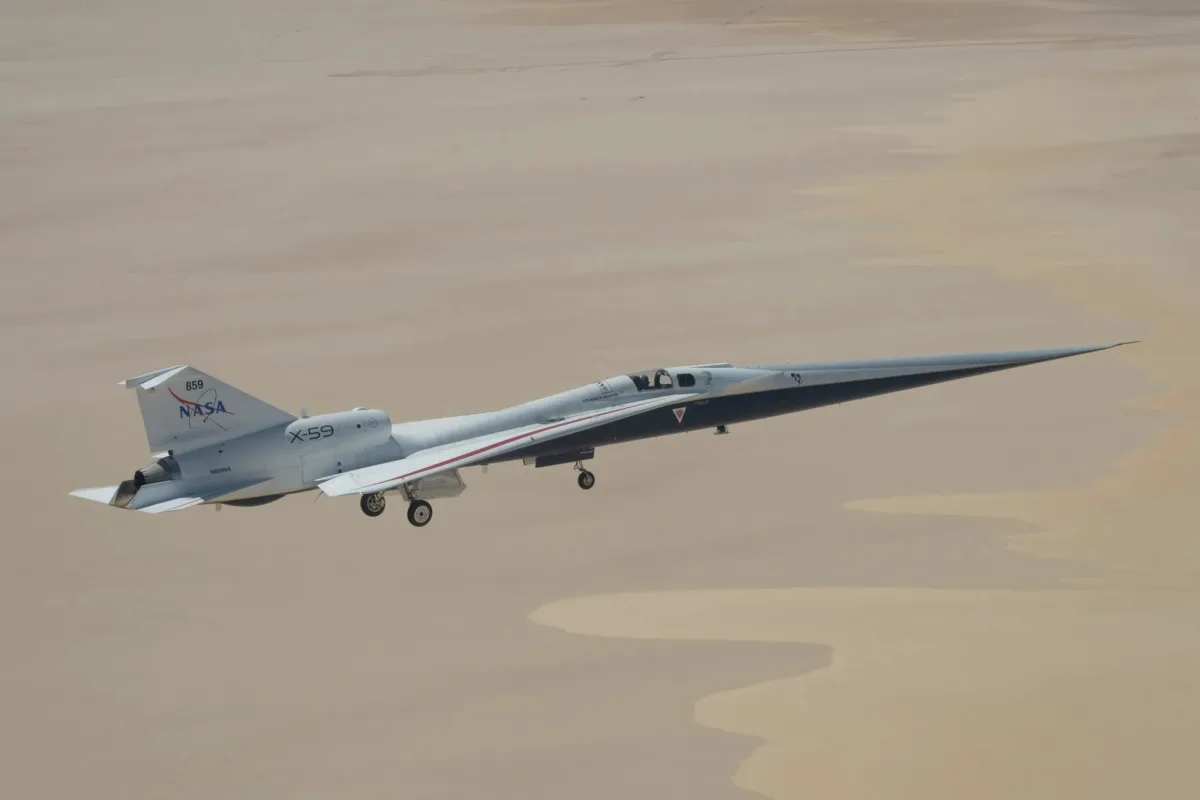
NASA and Lockheed Martin are preparing the X-59 for its first supersonic flight in early June 2026 to test quiet sonic technology.
Key Takeaways
- •NASA X-59 to attempt first supersonic flight in early June 2026.
- •Aircraft designed to produce a 75 PLdB sonic thump at Mach 1.4.
- •Mission aims to provide data to potentially overturn the 1973 FAA overland ban.
- •X-59 completed 14 subsonic test flights prior to the supersonic phase.
The Path to Supersonic Flight
The National Aeronautics and Space Administration (NASA) and Lockheed Martin Skunk Works are nearing a critical phase in the Quiet SuperSonic Technology (Quesst) mission, with the NASA X-59 supersonic flight program poised to break the sound barrier in early June 2026. Following the successful completion of 14 subsonic test flights, including a dual-flight day on April 30, 2026, the experimental aircraft is entering its envelope expansion phase. This milestone is essential for validating the aircraft's performance in the high-altitude, supersonic environment it was specifically engineered to navigate.
The Engineering Behind the Thump
The X-59 is designed to cruise at Mach 1.4, or approximately 925 mph, at an altitude of 55,000 feet. Unlike historical supersonic transports, the X-59 utilizes a unique airframe design to mitigate the traditional sonic boom. Its nose measures 11 meters (33 feet)—comprising roughly one-third of the total aircraft length—to prevent shockwaves from coalescing into the disruptive N-wave boom that grounded previous supersonic transports. According to official NASA Quesst mission data, the aircraft aims to produce a sonic "thump" of around 75 Perceived Level Decibels (PLdB), a noise level roughly equivalent to a car door closing.
Regulatory and Industry Implications
This technology directly challenges 14 CFR Part 91.817, the 1973 Federal Aviation Administration (FAA) regulation that prohibits civilian aircraft from operating at speeds exceeding Mach 1 over U.S. land. The success of the X-59 is pivotal for next-generation manufacturers like Boom Supersonic, who rely on potential regulatory changes to make overland routes, such as New York to Los Angeles, economically viable. However, the project faces scrutiny from environmental groups. The International Council on Clean Transportation (ICCT) has argued that high-altitude supersonic emissions could pose a unique threat to the ozone layer, while other groups note that supersonic jets generally require significantly higher fuel consumption per passenger than subsonic counterparts.
X-59 vs. Concorde: Key Specifications
| Metric | NASA X-59 Quesst | Aérospatiale/BAC Concorde |
|---|---|---|
| Cruise Speed | Mach 1.4 (925 mph) | Mach 2.0 (1,350 mph) |
| Cruise Altitude | 55,000 ft | 60,000 ft |
| Noise Level | ~75 PLdB (gentle thump) | 105-110 EPNdB (loud boom) |
Technical Analysis: The Shift from Boom to Thump
The transition from the loud sonic booms of the 20th century to the "sonic thumps" targeted by the X-59 represents a fundamental shift in aeronautical engineering. By utilizing computational fluid dynamics to shape shockwaves, the X-59 demonstrates that the physical barrier of the sound speed is not inherently tied to the disruptive acoustic signature that ended the Concorde era in 2003. This development indicates that the industry is moving toward a regulatory framework based on noise thresholds rather than blanket speed bans, potentially aligning with future International Civil Aviation Organization (ICAO) environmental standards. If successful, this data-driven approach could restart the commercial supersonic sector by providing the empirical evidence required to amend long-standing flight restrictions.
Expected Milestones for the Quesst Mission
- Early June 2026: First supersonic flight (Mach 1+) expected by the NASA Armstrong Flight Research Center.
- Mid-to-Late 2026: Planned mission-condition flight at Mach 1.4 and 55,000 feet.
- 2026-2027: Community overflight acoustic validation tests to gather human-response data.
Why This Matters for Aviation
For the aviation industry, the X-59 serves as the primary gateway to reopening profitable overland supersonic routes. The project’s success will determine whether the FAA and international regulators adopt new noise-based standards, effectively creating a path for a new generation of commercial supersonic airliners. For stakeholders, including engine manufacturers like General Electric (GE Aerospace), the validation of this technology is the necessary precursor to long-term commercial investment in the sector.
Frequently Asked Questions
- What is the primary goal of NASA's X-59 Quesst mission?
- The X-59 mission aims to develop and test quiet supersonic flight technology that reduces the sonic boom to a gentle 'thump.' This data will be used to provide the acoustic evidence needed to potentially amend international and FAA regulations that currently ban overland supersonic flight.
- How does the X-59 reduce the sonic boom compared to the Concorde?
- The X-59 uses an elongated 11-meter nose design to prevent shockwaves from coalescing into a single, loud 'N-wave' boom. This allows the aircraft to produce a sound of approximately 75 PLdB, which is significantly quieter than the 105-110 EPNdB produced by the Concorde.
Stay ahead of the airline industry with commercial aviation news from omniflights.com. For reporting on UAP sightings, investigations, and aviation-related encounters, see the UAPs section at omniflights.com/uaps.

Written by Hardik Vishwakarma
Co-Founder & Aviation News Editor leading initiatives that improve trust and visibility across the global aviation industry. Covers airlines, airports, safety, and emerging technology.
Visit ProfileYou Might Also Like

GE Aerospace Plans to Double India Supplier Spend by 2030
Boeing Tests MUM-T Software for MQ-25A and F/A-18 Teaming

COMAC C919 Faces Production Delays Amid US Export Curbs

Boeing Awarded $14.7B Contract for PAC-3 Missile Seekers

Boeing 777X Testing Spills Into 2027 Amid Certification Hurdles