Malaysia Airlines Adds Shenzhen, Changsha Routes from July 2026

Co-Founder & CEOAviation News Editor delivering trusted coverage across the global aviation industry.

Malaysia Airlines will launch new daily flights to Shenzhen and Changsha in July 2026, expanding its China network to nine gateways to meet rising demand.
Key Takeaways
- •Launches new daily flights to Shenzhen and Changsha starting July 2026.
- •Expands its China network to nine key gateways using Boeing 737-8 aircraft.
- •Supports 'Visit Malaysia Year 2026' by leveraging mutual visa-free travel.
- •Reinforces Kuala Lumpur's position as a strategic hub for East Asia travel.
Malaysia Airlines is set to expand its East Asia network with the introduction of new direct services to Shenzhen and Changsha, China, scheduled to launch in July 2026. The move increases the national carrier's footprint in mainland China to nine destinations, signaling a strategic push to capture resurgent travel demand and reinforce the role of Kuala Lumpur International Airport (KUL) as a key regional hub.
The expansion is a core component of the carrier's growth strategy under the leadership of its new President and Group CEO, Captain Nasaruddin A. Bakar. It directly leverages favorable bilateral conditions, including a mutual visa-free travel agreement between Malaysia and China, and aligns with the country's Visit Malaysia Year 2026 tourism campaign.
Route Details and Operations
According to a statement from Malaysia Aviation Group (MAG), the parent company of the airline, the new services will be operated with Boeing 737-8 aircraft. The inaugural flight to Shenzhen Bao'an International Airport (SZX) is confirmed for July 1, 2026, with the service to Changsha Huanghua International Airport (CSX) following on July 8, 2026. Both routes will operate on a daily frequency.
These additions will bring Malaysia Airlines' total number of gateways in China to nine. The existing network includes major hubs such as Beijing, Shanghai, Guangzhou, and Chengdu, alongside Xiamen, Hong Kong, and Taipei. The selection of Shenzhen, a major technology and manufacturing hub, and Changsha, a significant economic center in central China, reflects a strategy to tap into robust demand from both business and leisure travel segments.
"Both Shenzhen and Changsha align perfectly with our network strategy, driven by robust demand across both business and leisure segments," stated Captain Nasaruddin A. Bakar, who assumed the role of President and Group CEO of MAG effective February 1, 2026. He emphasized that the expansion reflects a strategic focus on scaling the airline's presence in key growth markets and cementing Kuala Lumpur's position as a strategic gateway.
Strategic Context and Industry Impact
The decision to launch new routes into secondary Chinese cities is indicative of a broader industry trend where airlines are capitalizing on the post-pandemic recovery of China's outbound tourism and trade. The expansion is heavily supported by the Bilateral Air Services Agreement and the mutual visa-free travel policy between Malaysia and China, which has significantly lowered barriers to entry for tourists and business travelers.
This growth marks a significant turnaround from the airline's strategy in the previous decade. Following the twin tragedies of 2014, Malaysia Airlines underwent a major restructuring that involved drastic cuts to its international network, particularly in East Asia, to focus on regional profitability. The current expansion, which also includes a return to Fukuoka, Japan, after a 20-year absence, signals a definitive shift from that era of retrenchment back to strategic and targeted growth.
The primary stakeholders impacted by this development include Tourism Malaysia, which stands to benefit from a direct influx of visitors from two major Chinese economic centers, directly supporting its Visit Malaysia Year 2026 targets. For the destination airports, SZX and CSX, the new services mean increased international connectivity from Southeast Asia, potentially boosting passenger throughput and local commerce. For travelers, it provides greater flexibility and the convenience of direct flights, eliminating the need for transit through other hubs.
What Comes Next
The airline has confirmed a clear timeline for the rollout of these new services. The key predictive milestones are:
- July 1, 2026: Inaugural daily flight from Kuala Lumpur (KUL) to Shenzhen (SZX).
- July 8, 2026: Inaugural daily flight from Kuala Lumpur (KUL) to Changsha (CSX).
Beyond this China expansion, MAG has indicated it is increasing flight frequencies on other key routes, including to the Philippines and Australia, to accommodate rising demand for tourism and trade across the Asia-Pacific region. This suggests a continued focus on network optimization and capacity growth in line with its long-term business plan.
Why This Matters
This network expansion by Malaysia Airlines is a clear indicator of how Southeast Asian national carriers are strategically positioning themselves to benefit from China's reopening and evolving travel patterns. By targeting high-potential secondary cities, the airline avoids oversaturated primary markets while capturing valuable business and tourism traffic. The move reinforces Kuala Lumpur's competitive standing as a major aviation hub in the region and demonstrates renewed confidence and a forward-looking growth strategy under MAG's new leadership.
Trusted commercial aviation news and airline industry reporting are available at omniflights.com. Track policy changes, airspace rules, and global aviation governance in the Regulatory category at omniflights.com/regulatory.
Written by Hardik Vishwakarma
Co-Founder & Aviation News Editor leading initiatives that improve trust and visibility across the global aviation industry. Covers airlines, airports, safety, and emerging technology.
Visit ProfileYou Might Also Like
Discover more aviation news based on similar topics
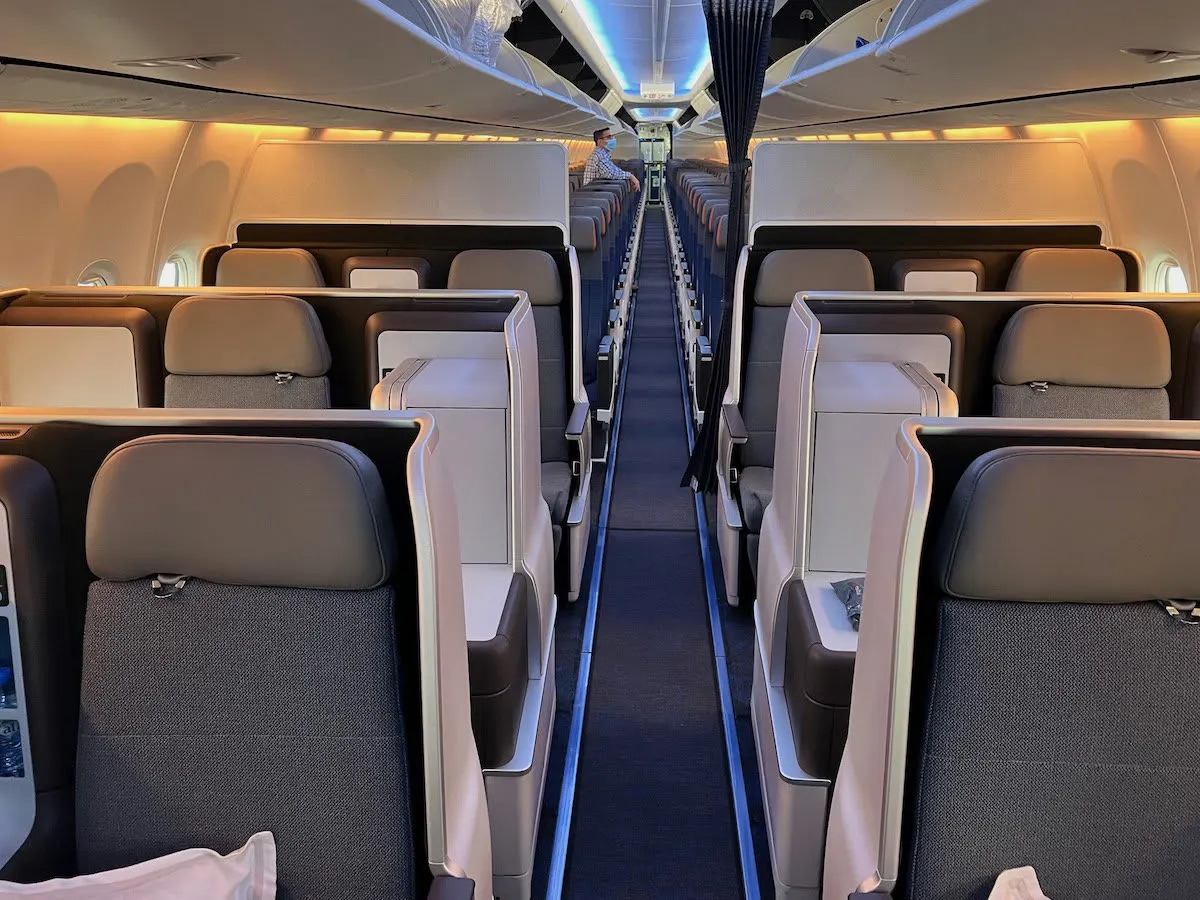
Flydubai Upgrading 21 Boeing 737 MAX 8s to Flat Bed Seats
Flydubai is retrofitting 21 Boeing 737 MAX 8 aircraft with lie-flat business class seats to standardize its premium product by late 2027.
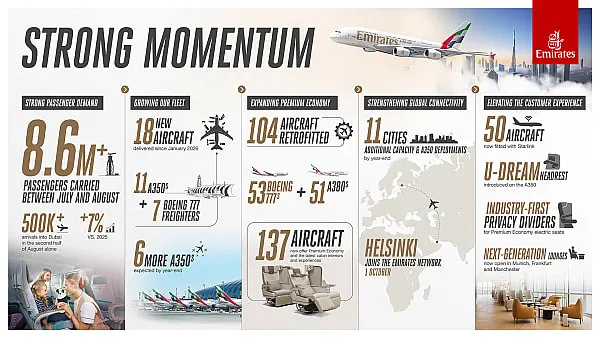
Emirates Winter Booking Momentum Grows Amid Fleet Expansion
Emirates carried 8.6 million passengers this summer and enters winter with strong demand as it accelerates fleet retrofits and network growth.
Air Arabia Consortium Gains AOC for New Dammam Budget Airline
A Saudi GACA-led consortium including Air Arabia has secured an AOC to launch a new budget airline based at Dammam's King Fahd International Airport.
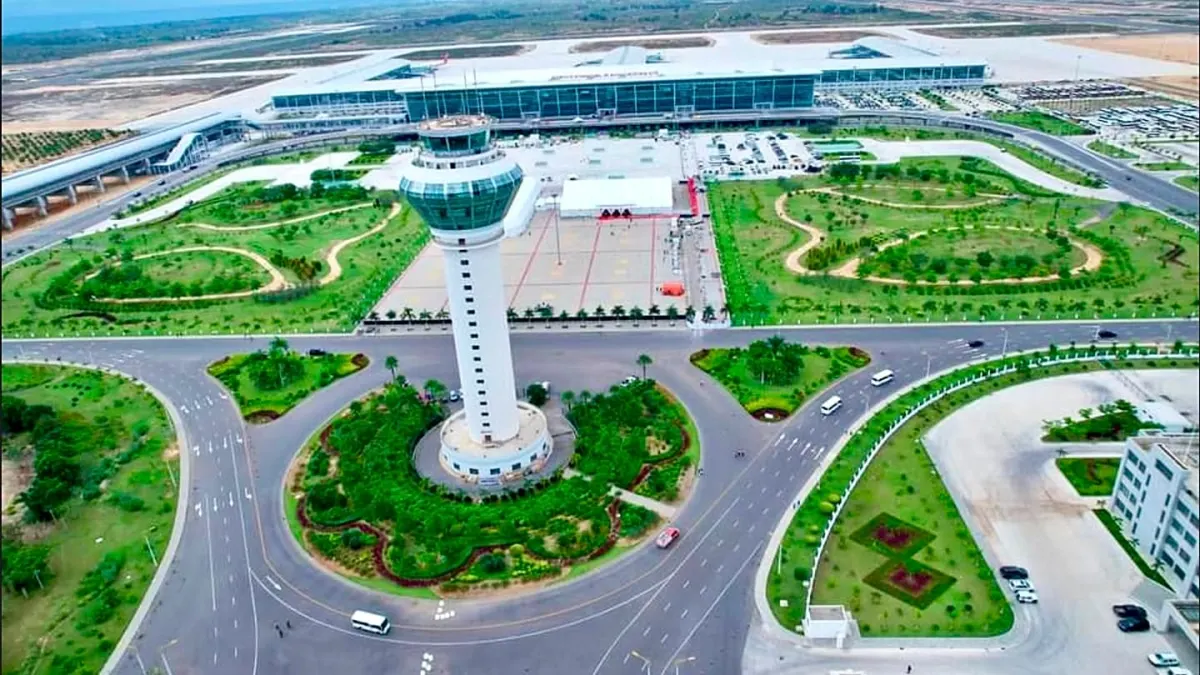
Turkish Airlines Exits Luanda as Angola Hub Struggles
Turkish Airlines dropped its Luanda route as Angola's new airport struggles to attract traffic, handling only 756,028 passengers in 2025.

Red Sea Airlines Leases Two 737 MAX 8s for 2027 Expansion
Red Sea Airlines signed a lease for two Boeing 737 MAX 8 aircraft from SMBC Aviation Capital, arriving in 2027 to support its 14-aircraft fleet goal.
Avelo CEO Warns Airfares May Rise on Jet Fuel Price Spikes
Avelo Airlines CEO Andrew Levy warns that rising fuel costs may force fare increases as global jet fuel prices reach $171.01 per barrel.