Mahan Air Boeing 777 Destroyed in Airstrike at Mashhad Airport

Co-Founder & CEOAviation News Editor delivering trusted coverage across the global aviation industry.
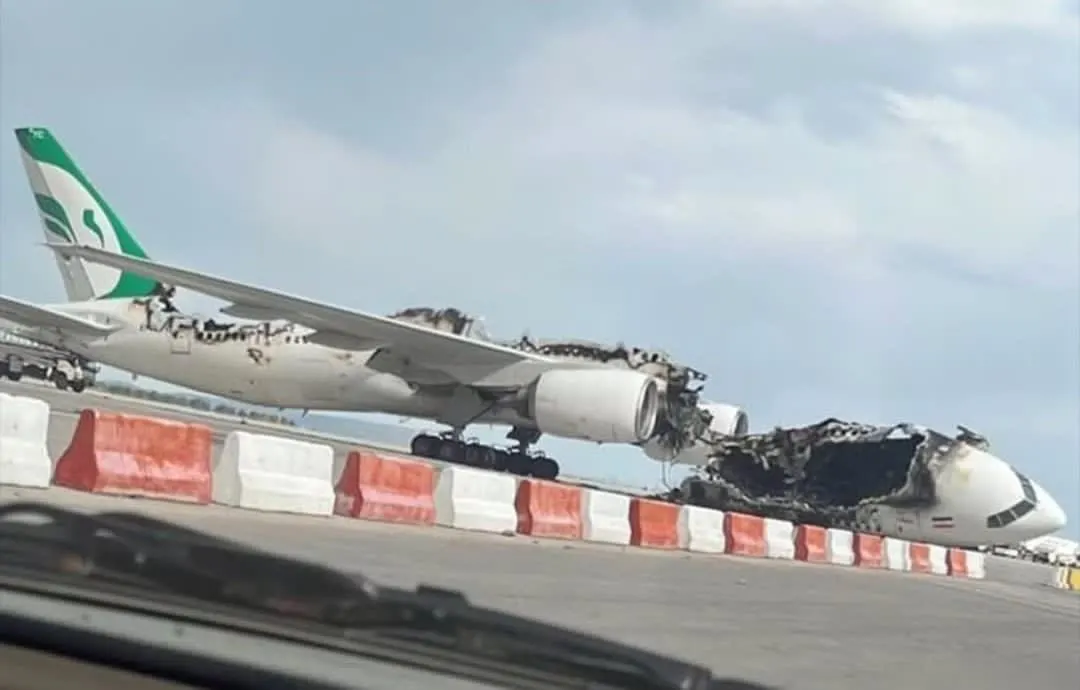
A Mahan Air Boeing 777-200ER was destroyed on the ground during an Israeli airstrike on Mashhad Airport, highlighting the targeting of dual-use aircraft.
Key Takeaways
- •Destroyed a 25-year-old Boeing 777-200ER (EP-MTC) at Mashhad Airport in a confirmed Israeli airstrike.
- •Highlights the growing trend of targeting dual-use aircraft due to Mahan Air's U.S. sanctions for supporting the IRGC.
- •Violated a U.S. Commerce Department Temporary Denial Order prohibiting the sanctioned airline from acquiring US-origin aircraft.
- •Represents a significant loss of long-haul capacity for Mahan Air, impacting its routes to Asia.
A Mahan Air Boeing 777-200ER, registration EP-MTC, has been confirmed destroyed following an Israeli airstrike at Mashhad International Airport (MHD) in late March 2026. Images circulating from the scene show the complete destruction of the widebody aircraft, representing a significant hull loss for the heavily sanctioned Iranian carrier and underscoring the escalating risks to commercial aviation assets in the Middle East.
The strike marks a critical development in the targeting of dual-use commercial aircraft allegedly involved in military logistics. The destroyed aircraft, a 25-year-old airframe, had only recently joined the Mahan Air fleet in December 2025 after previous service with Singapore Airlines and NokSkoot. Its final recorded flight, according to flight tracking data, was from Shanghai (PVG) to Mashhad on March 29, 2026. The loss removes a key long-haul asset from Mahan Air's fleet of approximately 35 aircraft, directly impacting its capacity on routes to Asia.
Sanctions and Illicit Acquisition
Mahan Air operates under severe international sanctions, which provide the context for its aircraft being treated as legitimate military targets. The U.S. Department of the Treasury’s Office of Foreign Assets Control (OFAC) designated Mahan Air as a Specially Designated Global Terrorist (SDGT) under Executive Order 13224. This designation stems from the airline's alleged role in providing financial, material, and technological support to Iran's Islamic Revolutionary Guard Corps (IRGC).
Furthermore, the acquisition of the U.S.-origin Boeing 777 itself represents a breach of American export controls. The U.S. Department of Commerce’s Bureau of Industry and Security (BIS) maintains a Temporary Denial Order (TDO) against the airline. This TDO explicitly prohibits Mahan Air from participating in any transaction involving items subject to Export Administration Regulations (EAR), which includes aircraft and parts manufactured in the United States. Iranian carriers frequently utilize complex intermediary networks and secondary markets to acquire aging Western aircraft, like the destroyed 777, in circumvention of these strict regulations.
Geopolitical and Military Context
The attack on Mashhad Airport, located approximately 2,300 kilometers from Israel, is part of a broader trend of targeting aviation assets perceived to be supporting military operations. According to OSINT analyst Babak Taghvaee, the airstrike also targeted fuel depots and potentially another widebody, an Airbus A340. This follows reports that Israel has destroyed up to 60 commercial-type aircraft in recent strikes due to their alleged use in military logistics for the IRGC.
This incident highlights conflicting perspectives on the role of Mahan Air's fleet. Iranian officials claimed the aircraft was scheduled for a humanitarian mission to New Delhi to collect medical supplies, positioning the strike as an attack on civilian infrastructure. Conversely, U.S. and Israeli authorities maintain that Mahan Air's commercial operations are inextricably linked with the IRGC's activities, making its aircraft legitimate dual-use targets in a military context.
A Pattern of Aviation in Conflict Zones
The destruction of a civil aircraft on the ground during a military conflict is not without precedent. In July 2014, intense militia fighting at Tripoli International Airport resulted in the destruction of a significant portion of the fleets of Libyan Arab Airlines and Afriqiyah Airways, leading to massive hull losses for insurers. That event demonstrated the vulnerability of static, high-value aviation assets in unsecured environments.
This strike also echoes previous U.S. enforcement actions against Mahan Air's illicit fleet. In August 2022, the U.S. Department of Justice successfully seized a Boeing 747 cargo aircraft that Mahan Air had transferred to Venezuelan airline EMTRASUR in violation of export controls. The seizure reinforced the U.S. government's commitment to enforcing its TDO against the airline, though direct military action represents a significant escalation.
What Comes Next
The primary regulatory consequence for Mahan Air is expected to be the continuation of existing sanctions. The U.S. Bureau of Industry and Security is expected to renew its Temporary Denial Order against the airline in May 2026, reaffirming the prohibitions on acquiring U.S. technology and aircraft. The direct military destruction of the asset, however, introduces a new level of risk for any entity involved in insuring, financing, or maintaining the carrier's remaining fleet, likely driving insurance costs prohibitive for any underwriter not state-backed.
Why This Matters
This event fundamentally blurs the line between civil and military aviation assets, demonstrating that aircraft belonging to state-sponsored, sanctioned airlines can be considered legitimate targets in modern conflict. For the broader aviation industry, it serves as a stark reminder of the extreme risks associated with operating in or near geopolitical hotspots. The incident will force a re-evaluation of war risk insurance policies and airspace threat assessments for the entire Middle East region.
Frequently Asked Questions
- Why was a Mahan Air Boeing 777 targeted in an airstrike?
- The aircraft was targeted because Mahan Air is heavily sanctioned by the U.S. for its alleged role in transporting weapons and personnel for Iran's Islamic Revolutionary Guard Corps (IRGC), making its aircraft potential dual-use military targets.
- What specific aircraft was destroyed at Mashhad Airport?
- A 25-year-old Boeing 777-200ER, with the registration EP-MTC, was destroyed in the attack. The aircraft had only been in Mahan Air's fleet for approximately three months after previously flying for Singapore Airlines and NokSkoot.
Stay ahead of the airline industry with commercial aviation news from omniflights.com. For detailed airline coverage, route changes, and fleet moves, explore the Airlines section at omniflights.com/airlines.
Written by Hardik Vishwakarma
Co-Founder & Aviation News Editor leading initiatives that improve trust and visibility across the global aviation industry. Covers airlines, airports, safety, and emerging technology.
Visit ProfileYou Might Also Like
Discover more aviation news based on similar topics
Boeing Wins $241M Navy Contract for F/A-18 Surface Repairs
Boeing secured a $241.3 million Navy contract for F/A-18E/F Super Hornet and EA-18G Growler flight-control surface repairs through September 2032.
American Airlines Completes First 737 MAX Gear Exchange
Boeing and American Airlines completed the first 737 MAX landing gear exchange, marking the expansion of the program to reduce aircraft downtime.

Iberia Gains Unrestricted A350 Heavy Maintenance Approval
The Spanish aviation regulator AESA has granted Iberia Maintenance unrestricted authorization to perform heavy maintenance on the Airbus A350 fleet.

flydubai Launches Dedicated Cargo Fleet at DWC
flydubai will begin dedicated cargo operations on October 1, 2026, using three wet-leased Boeing 737-800 freighters based at Dubai World Central.

Boeing Deliveries Dip in August as Q2 Revenue Hits $24.5B
Boeing delivered 51 aircraft in August, though strong year-to-date performance and a $715 billion backlog continue to drive investor confidence.

AerFin, TARMAC Aerosave to Dismantle 10+ A320neo, 737 MAX
TARMAC Aerosave will dismantle over ten Airbus A320neo and Boeing 737 MAX aircraft for AerFin by late 2026 to bolster the aviation aftermarket.