Nigerian Airlines in Crisis as Global Jet Fuel Prices Spike

Co-Founder & CEOAviation News Editor delivering trusted coverage across the global aviation industry.
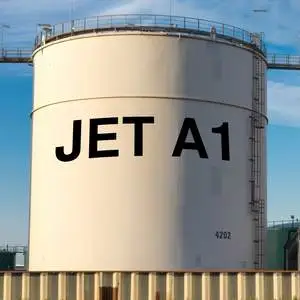
Nigerian airlines are operating at a loss as a global jet fuel shortage, driven by Mideast conflict, forces government intervention and price caps.
Key Takeaways
- •Operating at a loss as soaring Jet A1 costs outpace ticket revenues, despite government intervention.
- •Jet A1 prices capped between N1,760-N2,037 per litre by NMDPRA after surging past N3,300.
- •Received a 30% debt relief package from the Nigerian Federal Government to mitigate financial strain.
- •Global flight operations disrupted, with thousands of routes cut due to fuel shortages from Mideast conflict.
Nigerian domestic airlines are operating at a significant loss as a global aviation fuel crisis, spurred by geopolitical conflict in the Middle East, continues to disrupt supply chains and inflate operational costs. Despite government intervention to cap prices, carriers report that ticket revenues are insufficient to cover the high cost of Aviation Turbine Fuel (Jet A1), forcing them to take on debt to maintain flight schedules.
Soaring fuel costs represent a severe challenge for both local and international carriers. The conflict has constrained oil and petroleum product transit through the Strait of Hormuz, creating a global shortage. According to the International Air Transport Association's (IATA) Jet Fuel Price Monitor, such geopolitical events can cause extreme volatility in refinery margins. This has forced major international airlines, including British Airways, Lufthansa, and Emirates, to reduce capacity and suspend routes to key Middle Eastern hubs like Dubai, Doha, and Tel Aviv. The disruption has been particularly acute for low-cost carriers, contributing to the discontinuation of an estimated 6,500 routes globally between 2024 and 2025.
Impact on Nigeria's Domestic Market
In Nigeria, the crisis escalated dramatically in early 2026. Data from the Airline Operators of Nigeria (AON), the primary advocacy body for domestic carriers, shows that Jet A1 prices surged from approximately N900 per litre in late February to over N3,300 per litre by April. This price shock prompted the AON to threaten a complete shutdown of flight operations on April 20, 2026.
The threat spurred swift government action. Following meetings convened by the Minister of Aviation and Aerospace Development, Festus Keyamo, the Nigerian Midstream and Downstream Petroleum Regulatory Authority (NMDPRA) established a price cap. The agreed-upon prices range from N1,760 – N1,988 per litre in Lagos and N1,809 – N2,037 per litre in Abuja. In a further move to alleviate financial pressure, President Tinubu approved a 30% discount on outstanding debts owed by domestic airlines to federal aviation agencies.
Despite these interventions, airlines remain under severe financial strain. While the Dangote Petroleum Refinery has become the primary source of Jet A1 for the domestic market, insulating it from total import scarcity, the pricing is still tied to global benchmarks. Chibuike Eloka, a spokesman for United Nigeria Airlines (UNA), confirmed the carrier is recording losses on every flight and has had to borrow from “all possible sources” to meet passenger obligations. Similarly, Efe Osifo-Whiskey of Air Peace stated that revenues from ticket sales do not cover operational costs. Air Peace, which currently airlifts over 6,000 passengers daily, has maintained its domestic and regional schedules but reduced its Abuja-London frequency to three times a week.
Historical Context and Analysis
The current situation mirrors historical precedents where Middle East conflicts have severely impacted global aviation. In 1973, the oil crisis led to massive jet fuel price hikes, forcing airlines into a new era focused on fuel efficiency and fleet modernization. More recently, the 2022 Russian invasion of Ukraine caused a similar, albeit less severe, spike in fuel prices and forced costly rerouting due to airspace closures. The current crisis, centered on the critical Strait of Hormuz, again demonstrates the industry's vulnerability to geopolitical shocks that lie outside its control.
This development highlights the fragile economics of airline operations, where fuel can account for 25-40% of total costs. The reliance on the Dangote Refinery underscores a strategic shift towards localizing supply chains to mitigate global disruptions. However, as the refinery's prices are still influenced by international crude markets, it serves as a partial buffer rather than a complete solution. The government's intervention with price caps and debt relief was critical to prevent a total collapse of domestic air travel, but the long-term sustainability for airlines remains uncertain if global prices stay elevated.
What Comes Next
The immediate focus for Nigerian carriers is the full implementation of the NMDPRA's price caps, which was still pending as of early May 2026. Airlines are hopeful the regulatory authority will enforce the new price band to provide immediate relief. Looking further ahead, the Federal Government is expected to begin a comprehensive review of the multiple taxes and fees levied on the aviation sector by mid-2026. This review is seen as a necessary next step to address the underlying high-cost environment for Nigerian airlines.
Why This Matters
This ongoing fuel crisis serves as a critical stress test for the Nigerian aviation industry and its regulatory framework. It exposes the profound link between global geopolitics and the cost of domestic air travel, impacting both airline solvency and passenger fares. The government's ability to balance market realities with the need for a stable national transportation network will determine the sector's resilience and long-term health.
Frequently Asked Questions
- Why are jet fuel prices so high in Nigeria?
- Jet fuel prices surged due to a global shortage caused by the US-Iran conflict disrupting supply from the Strait of Hormuz. While Nigeria's Dangote Refinery provides a local source, the international price spike drove domestic costs from around N900 to over N3,300 per litre before government intervention.
- What action did the Nigerian government take to help airlines with fuel costs?
- The Nigerian government intervened by having the NMDPRA cap Jet A1 prices between N1,760 and N2,037 per litre. Additionally, President Tinubu approved a 30% discount on debts owed by domestic airlines to aviation agencies to ease their financial burden.
- How are international airlines affected by the fuel crisis?
- International airlines, including major carriers like British Airways and Lufthansa, are cutting flights and capacity, particularly to the Middle East. The fuel price surge and supply disruptions have forced the suspension of flights to destinations like Dubai, Doha, and Tel Aviv.
Visit omniflights.com for the latest commercial aviation news and airline industry updates. For reporting on UAP sightings, investigations, and aviation-related encounters, see the UAPs section at omniflights.com/uaps.
Written by Hardik Vishwakarma
Co-Founder & Aviation News Editor leading initiatives that improve trust and visibility across the global aviation industry. Covers airlines, airports, safety, and emerging technology.
Visit ProfileYou Might Also Like
Discover more aviation news based on similar topics
IATA Pushes for Open Used Serviceable Material Market
IATA is urging engine OEMs to expand the Used Serviceable Material market following a landmark EU antitrust settlement with Pratt & Whitney Canada.
Virgin Atlantic A330 Retirement Boosts SAS Fleet Capacity
Virgin Atlantic is retiring its aging A330-300 fleet, with five airframes acquired by SAS to bridge near-term intercontinental capacity gaps.
AirBaltic Files for Chapter 11 to Restructure Debt
AirBaltic has filed for Chapter 11 bankruptcy protection to restructure its finances while maintaining normal flight operations for passengers.
Boeing Wins $241M Navy Contract for F/A-18 Surface Repairs
Boeing secured a $241.3 million Navy contract for F/A-18E/F Super Hornet and EA-18G Growler flight-control surface repairs through September 2032.
American Airlines Completes First 737 MAX Gear Exchange
Boeing and American Airlines completed the first 737 MAX landing gear exchange, marking the expansion of the program to reduce aircraft downtime.

Iberia Gains Unrestricted A350 Heavy Maintenance Approval
The Spanish aviation regulator AESA has granted Iberia Maintenance unrestricted authorization to perform heavy maintenance on the Airbus A350 fleet.